

The dream of a human footstep on Mars captures the public imagination, but the reality of exploring the Red Planet is far more pragmatic. For now, our greatest emissaries are not astronauts, but sophisticated robotic explorers.
The Robotic Vanguard
For decades, a fleet of
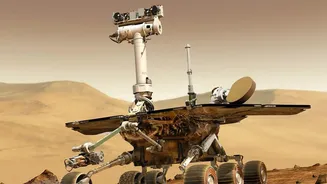
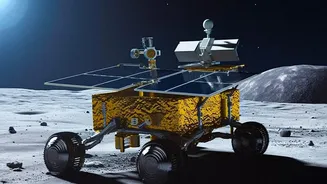
robotic orbiters, landers, and rovers have acted as humanity's eyes, ears, and hands on Mars. From the trailblazing Sojourner in 1997 to the car-sized Perseverance rover today, these machines have fundamentally reshaped our understanding of the Martian environment. They diligently map the surface, analyze the thin atmosphere, search for signs of ancient life, and even test future technologies. These robotic missions provide a constant stream of invaluable data, operating for years in conditions that would be lethal to humans. They are the scouts, the cartographers, and the scientists working tirelessly millions of miles from home.
The Overwhelming Case for Machines
When comparing mission types, the practical advantages of robots are staggering. The most significant factor is cost. A crewed mission to Mars is estimated to cost orders of magnitude more than a robotic one, with some figures approaching $600 billion. This is largely due to the immense challenge of keeping humans alive. Astronauts require life support systems, food, water, and perhaps most critically, a return ticket—all of which add immense weight, complexity, and fuel requirements. Robots, by contrast, can be sent on one-way trips, require no life support, and can be built to withstand the harsh radiation and extreme temperatures of space and the Martian surface with far less shielding than a human crew would need.
The Irreplaceable Human Element
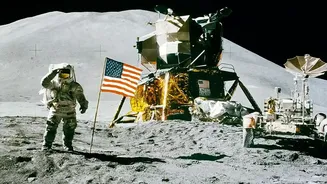
Despite the efficiency of robots, they have significant limitations. A key drawback is the communication delay; signals between Earth and Mars can take up to 40 minutes round-trip, making real-time control impossible. This results in slow, deliberate progress. Rovers like Curiosity travel at a crawl, covering in years what a human could traverse in days. Humans possess an unmatched ability for on-the-spot problem-solving, intuition, and adaptability. An astronaut can react to an unexpected discovery, improvise a tool, or perform complex physical tasks that are far beyond the capabilities of a pre-programmed machine. As retired astronaut Tony Antonelli puts it, 'Robots don't explore, humans explore'.
The Perils of a Human Mission
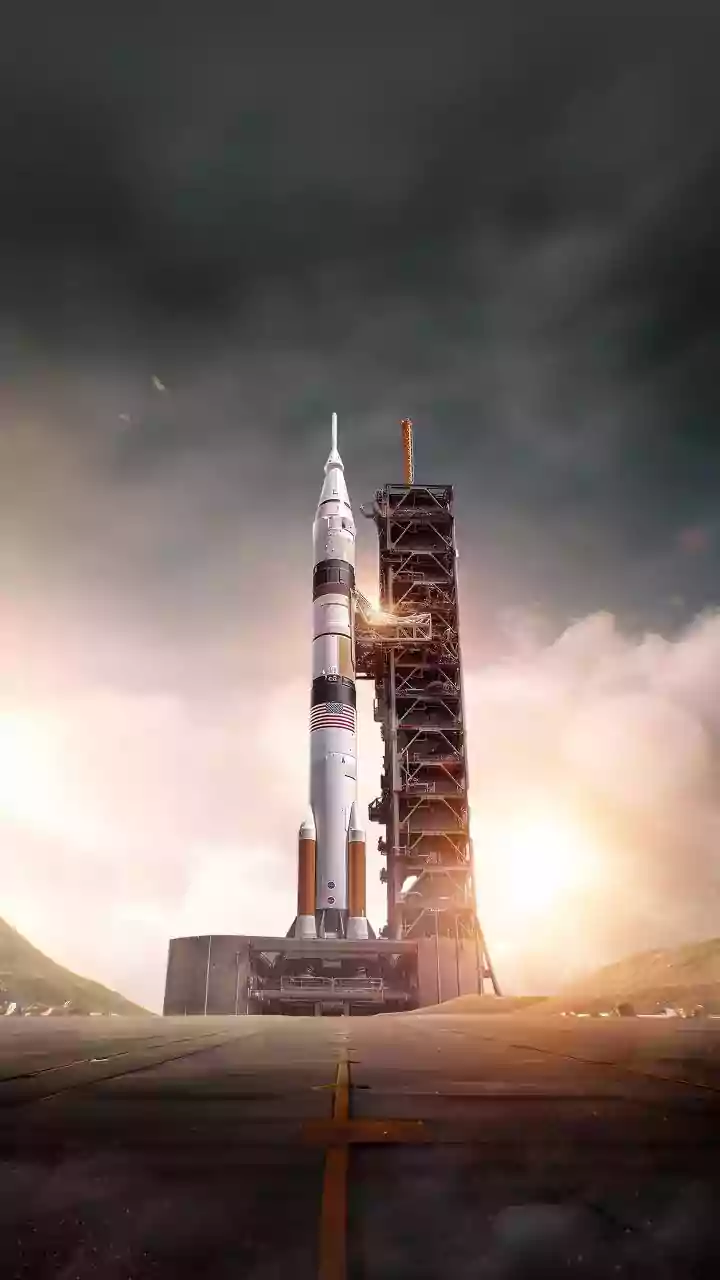
The journey to Mars is not just expensive; it is profoundly dangerous for the human body. During the 6-9 month trip each way, astronauts would be exposed to significant levels of cosmic radiation, increasing their lifetime cancer risk. The long-term effects of microgravity include bone density loss and muscle atrophy. Beyond the physical toll, there are the immense psychological challenges of confinement and isolation, millions of miles from any possible rescue. Furthermore, the technical challenge of landing a heavy, crewed spacecraft on Mars and then launching it again for the return journey is a hurdle that engineers are still working to overcome.
A Partnership, Not a Rivalry
Ultimately, the 'robots vs. humans' framing is a false choice. The most effective strategy, and the one actively pursued by agencies like NASA, is a synergistic partnership. Robots are not replacements for humans, but essential precursors. They are sent ahead to do the dangerous and preparatory work. Robotic missions are currently mapping potential landing sites, identifying resources like water ice, and even testing technology to produce oxygen from the Martian atmosphere, as demonstrated by the MOXIE experiment on the Perseverance rover. This approach allows us to reduce the risks for when humans finally arrive, ensuring they land in a well-understood location with key resources and technologies already tested.