






The New $750 'Paid Expedite' Option
The most significant change is the introduction of a new $750 'Paid Expedite' option for B-1 (business) and B-2 (tourism) visa applicants. This is a pilot program running from July 1, 2026, through December 31, 2026. For an additional fee of $750, paid
on top of the standard visa application fee, applicants can secure an interview appointment within 10 business days, subject to availability. This is designed to help those with urgent travel needs bypass long waiting times for interview slots. It is crucial to understand that this fee only fast-tracks the interview appointment, not the visa processing time or the final decision. The total cost for someone using this option would be the standard $185 application fee plus the $750 expedite fee, totaling $935. This service will only be available at select U.S. embassies and consulates, which will be announced by the State Department.
Potential Rise In Standard Visa Costs
Beyond the optional expedited service, Indian applicants should also brace for potential increases in standard visa costs. A proposed 'Visa Integrity Fee' of $250 may be added to most non-immigrant visa applications, including visitor, student, and work visas. This fee would be in addition to the standard application fee, which currently stands at $185 for most categories. The stated purpose of this fee is to enhance security screenings and cover administrative costs. Furthermore, a recent adjustment in the consular exchange rate by the U.S. Embassy in India, effective May 25, 2026, has already slightly increased the rupee-based cost of all dollar-denominated fees.
Major Shake-Up for H-1B Work Visas
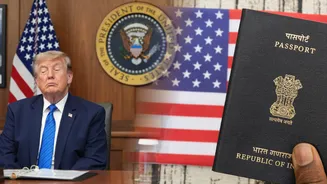
For skilled professionals from India, the H-1B visa landscape is facing a potential seismic shift. The Trump administration has issued a proposed regulation to set a new fee of $103,265 for new, cap-subject H-1B petitions. This rule, published on August 25, 2026, aims to make permanent a previous temporary measure that was blocked by courts. If implemented, this would dramatically increase the cost for companies, particularly those in the tech sector, to hire foreign talent from abroad. Immigration experts note this would make it significantly harder for early-career professionals to secure sponsorship and could lead employers to be much more selective. The proposal is currently in a public comment period and will likely face legal challenges if finalized.
Changes Affecting Indian Students
Indian students applying for or holding F-1 visas also face new rules starting September 15, 2026. The Department of Homeland Security is ending the long-standing 'Duration of Status' (D/S) system, which allowed students to remain in the US as long as they were enrolled in their program. Under the new system, students will be admitted for a fixed period, generally not to exceed four years. To stay longer for program extensions or Optional Practical Training (OPT), students will need to formally apply for an extension with USCIS, a more complex and costly process. The grace period for F-1 visa holders to depart the US after completing their studies is also being reduced from 60 to 30 days.
What is 'India's Status'?
While none of these changes are exclusively targeted at India, their impact is magnified due to the sheer volume of applicants. Indians consistently account for a large percentage of US visitor, student, and H-1B visas. The new $750 expedited option may be attractive in a country with historically high demand and long wait times. However, the proposed H-1B fee hike is seen as a significant blow to the Indian IT industry and aspiring tech professionals. For other visa categories, like the EB-2 immigrant visa, backlogs remain a serious issue, with the category recently becoming 'unavailable' for Indian applicants in mid-2026, meaning no new green cards could be issued until numbers become available again. Applicants are advised to keep a close watch on official announcements from the U.S. Embassy and the State Department.