




The Magic of Rolling: Why It Works
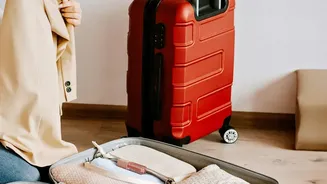
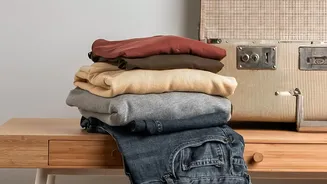
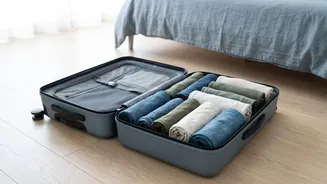
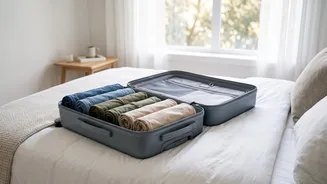
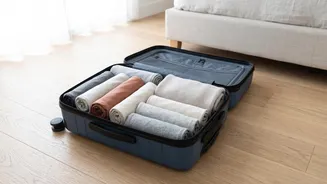
Seasoned travellers and even military personnel often swear by rolling clothes instead of folding them. The logic is simple but effective. Tightly rolled garments take up significantly less volume than flat-folded ones. This method allows you to fit everything
into your bag like a game of Tetris, using every available inch of space. Beyond just saving space, rolling is your best defence against wrinkles. When you fold clothes, you create hard creases that set in during transit. Rolling, on the other hand, avoids these sharp folds, resulting in smoother clothes upon arrival. While it won't remove existing wrinkles, it's highly effective at preventing new ones from forming, especially on casual items.
Mastering the Basic Roll: T-Shirts and Jeans
The foundation of this technique starts with your most common travel items: t-shirts and trousers. For a t-shirt, lay it on a flat surface. Fold the sleeves in, then fold the entire shirt in half lengthwise. Starting from the bottom hem, roll it up as tightly as you can. For jeans or casual trousers, lay them flat and fold one leg over the other. Smooth out any wrinkles. Fold the crotch area inward to create a straight rectangular shape. Then, starting from the waistband, roll down tightly towards the hems. The result for both is a compact, firm cylinder that won't easily unroll in your bag.
The Method for Collared Shirts and Blouses
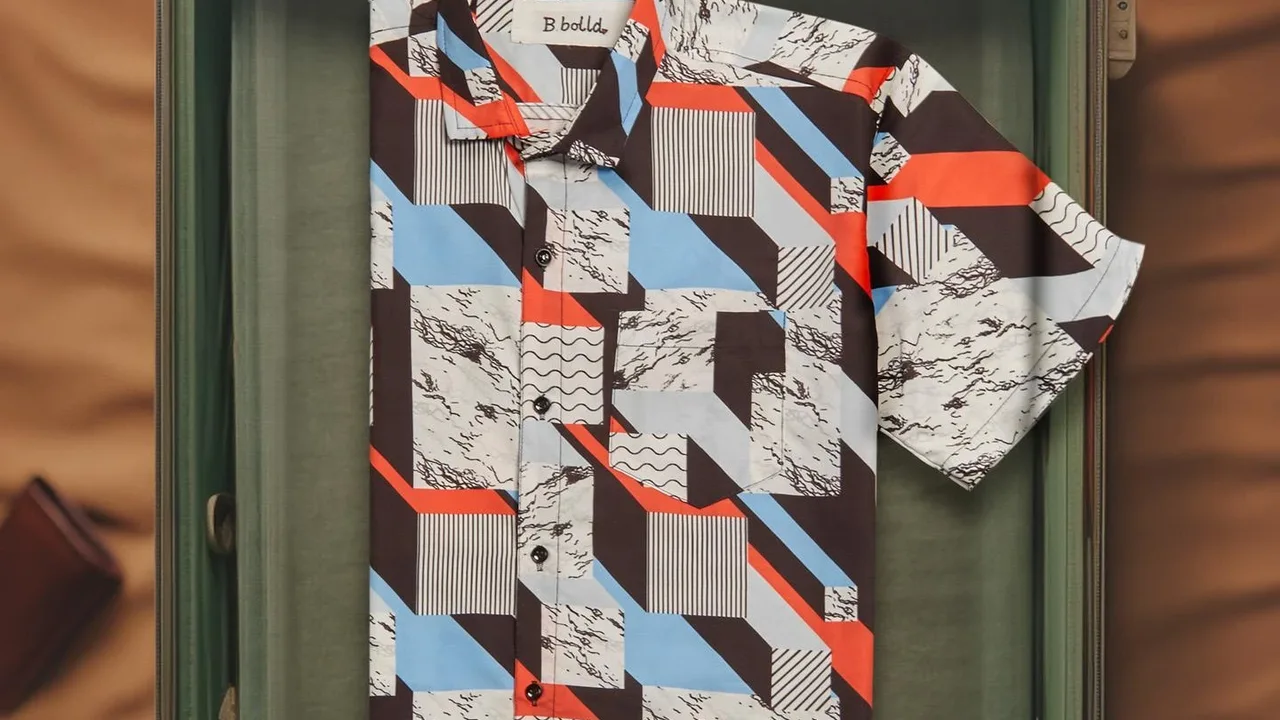
Packing collared shirts requires a bit more care to protect their structure. Start by buttoning up the shirt to help it keep its shape. Lay it face down on a flat surface. Fold the sleeves towards the centre, creating a rectangle. Some travellers prefer folding at this point, but a loose roll can still work. From the bottom hem, gently but firmly roll the shirt upwards. The key is to not roll so tightly that you crush the collar. This method works best for casual button-ups; for formal dress shirts, traditional folding or a dedicated garment folder might still be preferable to avoid any creasing.
Handling Skirts, Dresses, and Delicates
The rolling technique is versatile enough for most wardrobe items. For skirts and dresses, the principle is the same. Lay the item flat, fold it in half lengthwise (or in thirds for wider items) to create a long rectangle, and then roll tightly from one end to the other. For very delicate fabrics like silk or rayon, you can place a sheet of tissue paper on the garment before rolling. This reduces the friction between the fabric layers, offering extra protection against snags and wrinkles. This little extra step ensures even your finer pieces arrive in good condition.
Your 4-Day Packing Checklist
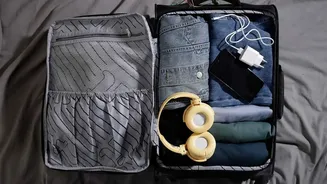
Now that you know how to roll, what should you pack for a four-day trip? The key is versatile, multi-use items. A good rule of thumb is the 5-4-3-2-1 method: five sets of socks and underwear, four tops, three bottoms, two pairs of shoes, and one accessory like a watch or hat. For a typical trip, this might look like: four t-shirts or tops, one pair of jeans, one pair of shorts or a skirt, and one versatile dress or pair of smart trousers. Add a light jacket or sweater that you can wear during travel. This provides enough options without over-packing. Roll each item and you’ll be surprised how little space it all takes up.
Level Up with Packing Cubes
To take your organization to the next level, combine rolling with packing cubes. These zippered bags help compress your clothes even further and keep your suitcase incredibly tidy. You can designate cubes for different categories: one for tops, one for bottoms, one for underwear and socks. When you arrive at your destination, you can simply move the cubes into the hotel drawers, making unpacking and repacking a breeze. It also contains your neatly rolled clothes, so they don't unspool inside your main luggage compartment. This combination is the ultimate packing strategy for efficiency and order.