






The Spiritual Heartbeat of the Full Moon
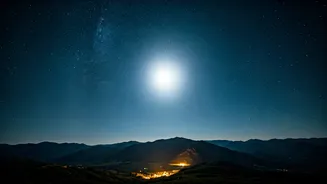
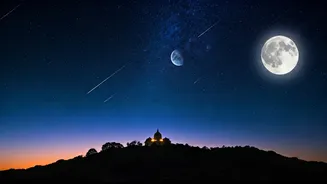
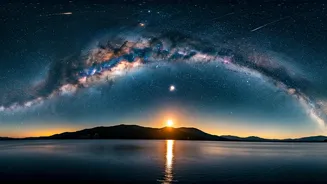
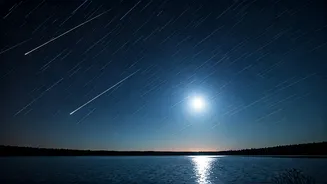
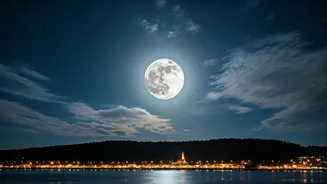
In Hinduism, Purnima, derived from the Sanskrit for “full moon,” represents wholeness, prosperity, and divine illumination. [2, 7] This phase of the moon is believed to radiate peak positive energy, making it an especially auspicious time for prayer,
meditation, and spiritual practices. [7, 15] It is a period symbolizing the removal of darkness and the triumph of light, often associated with deities like Lord Vishnu. [7, 16] Many believe that actions performed on this day, from fasting to charity, carry amplified merit, helping to purify the mind and soul. [7, 24] The full moon's brilliance serves as a powerful metaphor for enlightenment and wisdom, encouraging devotees to focus on spiritual growth and self-purification. [15]
A Celestial Alignment
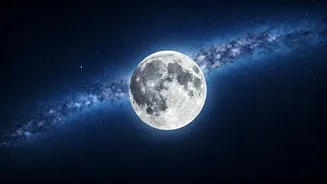
Beyond its spiritual reverence, Purnima is a precise astronomical event. It occurs when the Moon, Earth, and Sun align in a straight line, a configuration known as syzygy. [2, 29] With the Earth positioned between the Sun and the Moon, the lunar hemisphere facing us becomes fully illuminated by the Sun's rays. [29, 31] This alignment not only gives us the magnificent spectacle of a full moon but also has tangible effects, such as creating higher spring tides due to the combined gravitational pull of the Sun and Moon. [4, 38] This interplay between the cosmic and the terrestrial adds another layer to the reverence surrounding this monthly event.
A Calendar of Celebrations
Nearly every Purnima of the year is linked to a significant festival, showcasing a rich tapestry of traditions. [2, 34] Ashadha Purnima is celebrated as Guru Purnima, a day for honoring teachers and spiritual guides across Hindu, Buddhist, and Jain traditions. [5, 11] It marks the day Veda Vyasa, compiler of the Mahabharata, was born and when Lord Shiva is said to have become the Adi Guru, or first teacher. [5, 9, 10] Vaishakha Purnima is globally revered as Buddha Purnima, commemorating the birth, enlightenment, and passing of Gautama Buddha. [3, 6, 8] Another key celebration is Sharad Purnima in the month of Ashwin, which marks the end of monsoon and the harvest. [17, 19] On this night, the moon is believed to shower the earth with a healing nectar, and it is famously associated with Lord Krishna's divine dance, the Maha-Raas. [19, 20, 21]
The Observance: Fasting and Rituals
Observing Purnima often involves specific practices, most notably the Purnima Vrat, or fast. [16] Devotees typically fast from sunrise until the moon is sighted in the evening. [23, 25] The fast is believed to help balance the body's metabolism and cleanse the digestive system. [4, 25] Many households perform the Satyanarayan Puja, a ritual dedicated to Lord Vishnu to seek his blessings for happiness and prosperity. [15, 16] Other common rituals include taking a holy dip in sacred rivers, offering prayers to the Moon God (Chandra Deva), and engaging in acts of charity. [4, 28] These practices are not just about abstinence but are a means to enhance mental clarity and devotion. [24]
A Universal Symbol of Light
While central to Hinduism, the significance of the full moon extends to other faiths that originated in India. In Buddhism, besides Buddha Purnima, the full moon day of Ashadha is when Buddha gave his first sermon at Sarnath. [5, 37] For Jains, Guru Purnima is when Mahavira made his first disciple, and the Kartik Purnima full moon commemorates his attainment of nirvana. [2, 37] This shared reverence underscores the full moon's universal role as a symbol of enlightenment, completion, and spiritual significance across different paths. [22, 30] It is a celestial event that unites diverse traditions in a shared moment of reflection and celebration.