






The Balcony Gardener’s Dilemma
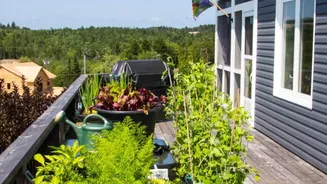
Creating a lush, green oasis on a balcony is a joy, but it comes with unique challenges. Unlike plants in the ground, potted plants have a limited root environment, making them highly susceptible to overwatering. In India, this problem is amplified. The
intense summer sun can make soil appear dry on top, tempting you to water frequently, while monsoon humidity means soil stays wet for longer. This cycle of guesswork often leads to root rot, fungal diseases, and ultimately, unhappy plants. Overwatering is consistently cited as one of the leading reasons container gardens fail, as it starves roots of the oxygen they need to survive. Many gardeners use the classic ‘finger test’—poking a finger into the soil to gauge dampness—but this method is subjective and often inaccurate for judging moisture levels deeper in the pot where it counts.
An Introduction to Smart Soil Sensors
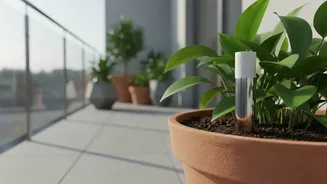
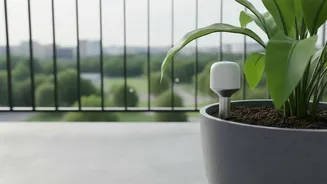
Enter the soil moisture sensor. These high-tech gadgets take the guesswork out of watering by providing objective, real-time data about the conditions in your plant’s pot. These devices work by measuring a specific property of the soil that correlates to its water content. Most consumer-friendly sensors are 'capacitive,' meaning they measure the soil's ability to store an electric charge. Water-rich soil can store more charge, so by measuring this property, the sensor can calculate a precise moisture percentage. The most advanced sensors go a step further. While not directly measuring microbes, their sophisticated readings of the soil's dielectric constant or electrical conductivity account for the entire soil ecosystem. This includes the presence of nutrients and organic matter, which are influenced by microbial activity. This holistic data provides a far more accurate picture of your plant's environment than a simple moisture reading alone.
The Power of Real-Time Data
The true game-changer with these smart sensors is their ability to connect to an app on your smartphone. Instead of a single, static reading, you get a continuous stream of information. You can see graphs showing how quickly your soil dries out after watering, receive alerts when moisture drops below a customized threshold, and even access databases with specific care recommendations for your plant species. This data allows you to move from a rigid watering schedule to a responsive, needs-based approach. You will know for certain when your plants are thirsty, preventing both the risk of root rot from overwatering and the stress caused by underwatering. This level of precision helps conserve water and leads to visibly healthier, more resilient plants. Some systems even allow you to monitor your plants remotely, offering peace of mind when you're busy or away from home.
Choosing the Right Sensor for Your Balcony
As smart gardening technology becomes more popular, the market is filled with options. When choosing a sensor, consider a few key factors. First is connectivity; some sensors use Bluetooth, which requires you to be within a certain range, while others connect to your home Wi-Fi via a hub, allowing you to check in from anywhere. Next, look at the measurements offered. Basic models may only track soil moisture, while more advanced versions also monitor light levels, temperature, humidity, and even soil nutrient levels. The accompanying app is just as important. A user-friendly interface with clear graphs and actionable alerts will make the technology much more useful. Finally, consider probe length to ensure the sensor can reach the root zone of your specific pots and planters, and check the battery life to minimize maintenance.