







What Exactly Is Physical AI?
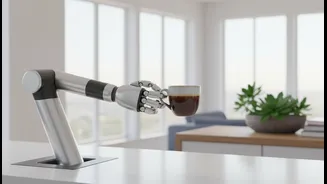
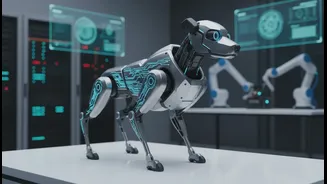
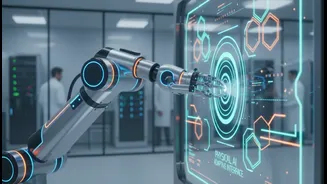
Physical AI refers to artificial intelligence systems that can perceive, reason, and act directly in the physical world. Unlike traditional AI models that exist purely in software to analyze data or generate text, Physical AI gives machines a body and the intelligence to use
it. Think of it as the difference between a chatbot that can answer questions and a robot that can understand the instruction "pick up that box" and then figure out how to do it, even if it's a box it has never seen before. These systems use sensors like cameras and lidar to see and understand their surroundings, AI algorithms to make decisions, and motors and grippers to perform actions. This continuous loop of sensing, thinking, and acting allows them to operate in messy, unpredictable real-world environments, not just controlled factory settings.
The Old Way vs. The New Way
Traditionally, programming a robot for a task, like welding a car door, has been a painstaking process. Engineers would need to write thousands of lines of code to script every single movement with high precision. This approach is rigid and brittle; if the position of the car door changes even slightly, the robot will fail. This has made automation expensive and slow to deploy, especially for complex tasks. Physical AI offers a fundamentally different method. Instead of being explicitly programmed for one task, robots can learn. Using techniques like imitation learning, a human can simply demonstrate a task, and the AI model learns to replicate and generalize it. This means a robot can learn to pick and pack a variety of items in a warehouse after being shown just a few examples, adapting its grip and motion for objects of different shapes and sizes. This shifts the paradigm from rigid programming to flexible learning, dramatically lowering the barrier to deploying robots for a wider range of applications.
The Startup Powering the Shift
While the concept of Physical AI is broad, a San Francisco-based startup named Physical Intelligence has emerged as a key player. Founded in 2024 by top researchers from labs like Google DeepMind, Stanford, and UC Berkeley, the company is building foundation models for robotics. Their goal is to create a general-purpose "brain" for robots, a software platform that can be used with different types of robot hardware. The company has attracted significant attention and investment, reportedly raising over a billion dollars from major backers. Their models, with names like π (pi), are vision-language-action (VLA) models, meaning they can understand text and video to perform physical tasks, such as folding laundry or using household appliances they weren't explicitly trained on.
Real-World Impact on Industries
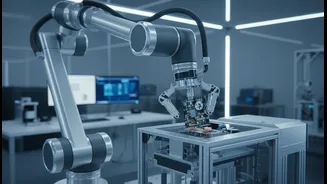
The applications for this technology are vast, with logistics and manufacturing being the first major beneficiaries. In warehouses, autonomous mobile robots (AMRs) powered by Physical AI can navigate dynamic environments, avoiding obstacles and collaborating with human workers to move goods efficiently. This is a huge step up from automated guided vehicles (AGVs) that follow fixed paths. In manufacturing, these intelligent robots can handle complex assembly tasks, perform quality inspections with computer vision, and even predict when a machine needs maintenance before it breaks down. The potential extends to healthcare with adaptive surgical robots, autonomous vehicles navigating city streets, and even humanoid robots performing chores in homes and assisting in hazardous environments.
What This Means for India
For India's rapidly growing economy, Physical AI could be a game-changer. The country's ambitious 'Make in India' initiative and its booming e-commerce sector rely on efficient manufacturing and logistics. Physical AI can help automate complex tasks on factory floors and in warehouses, boosting productivity and enabling Indian companies to compete on a global scale. By making robots easier to deploy and more flexible, this technology could accelerate automation in small and medium-sized enterprises (SMEs), not just large corporations. As the technology matures, it could also find applications in agriculture for precision farming and harvesting, and in infrastructure for maintenance and inspection, addressing key national priorities.