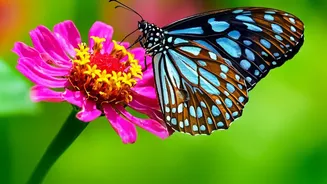






When a butterfly delicately lands on a flower, it isn't just resting. It's tasting. In one of nature’s most fascinating adaptations, these insects use sensory receptors on their feet to analyse the world beneath them.
A Different Kind of Taste Bud
Unlike humans, who have a tongue packed
with taste buds, butterflies taste their world through their legs. This incredible ability comes from specialised sensory organs called chemoreceptors, which are concentrated on the 'tarsi', the final segments of their feet. These receptors are essentially tiny, hollow hairs called sensilla, each containing a group of nerve cells. When a butterfly lands on a surface, these hairs make contact with chemicals on the plant. If the chemicals, such as sugars, lock into the receptors, it triggers an electrical signal that travels up the nerves to the butterfly's brain, delivering an instant chemical report. This system is remarkably sensitive, with some estimates suggesting it is up to 200 times more powerful than a human’s sense of taste.
The Search for a Sweet Meal
The primary purpose of this foot-tasting ability is to efficiently find food. Butterflies live on a liquid diet, primarily sipping nectar from flowers using their proboscis, a long, straw-like mouthpart. Before uncoiling its proboscis to drink, a butterfly first determines if the flower is worth the effort. By simply landing, its feet can detect the presence and concentration of sugars. If the chemoreceptors give a positive signal, the butterfly will likely stop to feed. If not, it conserves energy and flies off in search of a more promising bloom. This allows them to quickly sample many potential food sources without having to probe each one. They can also taste other things, like the salt on a person's sweaty skin if they happen to land on you.
More Than Just a Meal
For female butterflies, tasting with their feet is absolutely critical for reproduction. Most butterfly caterpillars are incredibly picky eaters, often able to survive on only one specific type of 'host plant'. For example, Monarch caterpillars exclusively eat milkweed. The mother butterfly must identify the correct plant to lay her eggs on, as her offspring cannot travel far to find food after they hatch. To do this, a female will often perform a behaviour known as 'tarsal drumming', where she rapidly taps her front legs against a leaf. This action scratches the leaf's surface, releasing its unique chemical juices and allowing her to get a clear 'taste' of its composition. Her receptors check for specific compounds that confirm the plant's identity, ensuring it's a safe and nutritious nursery for her young.
A Complex Sensory World
While tasting with their feet is a standout ability, it's part of a much larger sensory toolkit. Butterflies don't rely on one sense alone. Vision and smell, through receptors on their antennae, are used to locate potential plants from a distance. They are drawn in by a flower's colour and a plant's specific chemical scent. The taste receptors on their feet then act as the final, crucial checkpoint before committing to feed or lay eggs. Some taste receptors are also located on their antennae and at the tip of their proboscis, giving them a 'second opinion' on nectar quality as they drink. This multi-layered sensory approach—smelling from afar, then tasting upon contact—is an efficient and life-sustaining strategy that showcases the remarkable and complex adaptations of these beautiful insects.