





The Undeniable Appeal of the AI Assistant
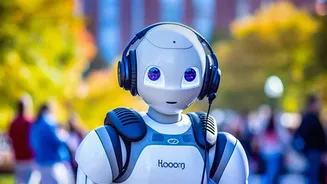
It’s easy to see why students and educators are embracing AI. These tools can act as powerful assistants, personalising study plans, offering instant feedback, and automating tedious tasks like summarising long texts. For students with diverse learning
needs, AI provides support through real-time translation and text-to-speech functions, increasing accessibility to information. By handling routine administrative work, AI can free up teachers to focus on more complex instructional activities that require uniquely human expertise, such as providing emotional support and fostering creativity in the classroom. The promise is one of enhanced efficiency and democratised access to information, helping to level the playing field. But efficiency isn't the only goal of education.
Drawing a Line to Protect Core Skills
The central question is not whether to use AI, but how. The line should be drawn where automation begins to interfere with the development of foundational cognitive skills. While AI can deliver a polished essay or a correct answer in seconds, it bypasses the essential mental processes that constitute real learning. Education is not merely about producing correct outputs; it is about building the brain's capacity to think critically, solve unfamiliar problems, and create something original. When we outsource these tasks to a machine, we risk what some researchers call "cognitive offloading," where students lose the ability to think for themselves because a tool has always done it for them. The real danger is that an overreliance on AI could diminish the very analytical and reasoning skills that education is meant to build.
Defending the 'Productive Struggle' of Thinking
Learning is often a struggle, and that is a feature, not a bug. The effort required to analyse a difficult text, work through a multi-step problem, or structure a complex argument is what builds intellectual muscle. When students turn to AI for immediate answers, they miss out on this crucial process. Studies have shown that students who heavily rely on AI tools may demonstrate poorer reasoning and argumentation skills compared to their peers. They may accept AI-generated answers without questioning the logic, leading to a superficial understanding. The goal of education should be to develop independent, critical thinkers, but overreliance on AI risks cultivating passive consumers of information who are unable to scrutinise or challenge what they are told.
Creativity and Originality Cannot Be Outsourced
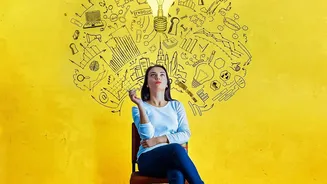
AI tools, particularly generative models, are trained on existing data. They excel at remixing and recycling content, but they cannot replicate original human thought. While AI can be a useful brainstorming partner, some studies note that it can also lead to a "fixation of the mind," where seeing the AI's ideas makes it harder for students to generate their own. The true value of a creative assignment isn't just the final product; it's the messy, iterative process of drafting, making mistakes, and refining ideas. This process fosters resilience, confidence, and a unique voice. By shortcutting this journey, AI deprives students of the opportunity to develop their own creative abilities and the satisfaction that comes from creating something that is truly their own.
Preserving the Human Connection in Learning
Perhaps the most important boundary is the one that protects the human element of education. Learning is not a simple transaction of information; it is a relationship. Automated systems lack the empathy, intuition, and mentorship that a human teacher provides. Teachers do more than just deliver content; they inspire curiosity, offer contextual understanding, and provide emotional support that algorithms cannot replicate. An overemphasis on automated tools risks weakening this vital student-teacher bond, reducing learning to an isolated, impersonal experience. Human oversight and judgment must remain central, with AI serving as a tool to augment—not replace—the connections that are the heart of a meaningful education.