





Demystify 'Making Charges'
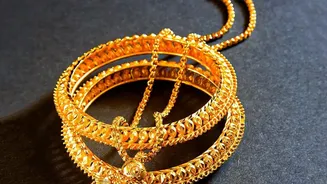
Making charges are the fees for the labour and craftsmanship required to transform raw gold into a piece of jewellery. These can be calculated as a percentage of the gold's value (from 5% to over 25%) or as a fixed rate per gram. The more intricate and handcrafted
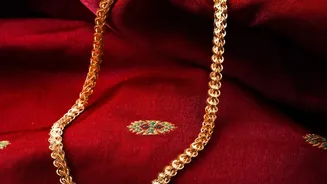
a design, the higher the making charge will be. However, this is one of the most negotiable parts of your bill. For simpler, machine-made items like plain chains or bangles, charges should be on the lower end, typically 5-10%. Don't hesitate to ask for a discount, especially if you are making a large purchase or buying during an off-peak season. Comparing the making charges across three different stores for a similar piece can give you significant bargaining power.
Challenge the 'Wastage' Fee
Wastage is a charge that jewellers add to compensate for the small amount of gold supposedly lost during the manufacturing process. Historically, when jewellery was made entirely by hand, some material loss was inevitable. Today, with modern machine-based production, actual wastage is minimal, often less than 0.5%. As a result, many in the industry consider the wastage charge to be an additional profit margin rather than a real cost. For machine-made jewellery, you should always try to negotiate this charge down, potentially to zero. For genuinely intricate, handmade pieces, a small wastage fee of 2-4% might be reasonable, but always ask the jeweller to justify it. Insist that making charges and wastage charges are listed as separate items on your bill for greater transparency.
Understand the Non-Negotiables: GST and Hallmarking
While you can negotiate on making and wastage charges, some costs are fixed. The Goods and Services Tax (GST) is set by the government. You will pay 3% GST on the value of the gold and 5% GST on the making charges. These are mandatory taxes. Another crucial, non-negotiable aspect is the BIS Hallmark. This is not a charge but a certification of purity from the Bureau of Indian Standards. Since 2021, it is mandatory for jewellers in India to sell hallmarked gold jewellery over 2 grams. A hallmarked piece will have the BIS logo, the purity grade (e.g., 22K916 for 22-karat gold), and a unique six-digit alphanumeric Hallmark Unique Identification (HUID) number. Never buy non-hallmarked gold to save a small amount, as you risk being sold impure metal.
Choose the Right Purity for Your Purpose
The purity of gold is measured in karats (K). 24K gold is the purest form but is too soft for most jewellery. That's why it is alloyed with other metals, resulting in 22K (91.6% pure gold, also known as '916 gold') or 18K (75% pure gold) jewellery. The lower the karat, the less pure gold it contains, and therefore, the lower the price. If you are on a tight budget, consider 18K gold. It is more durable and affordable than 22K gold, making it a popular choice for daily wear items, especially those studded with stones. For pure investment, buying gold bars or coins is more cost-effective as they do not have high making charges.
Leverage Old Gold and Compare Offers
One of the most effective ways to reduce your new jewellery bill is by exchanging old, unused gold pieces. Most jewellers will offer the full market rate for your old hallmarked gold, which can be directly offset against your new purchase. Before selling, ensure the jeweller isn't applying any hidden 'melting' or 'handling' charges. Additionally, always keep an eye out for festive season offers and promotions. Many branded stores offer discounts on making charges during festivals like Diwali, Akshaya Tritiya, or the wedding season. By timing your purchase and comparing offers from multiple jewellers, you can significantly reduce the overall cost and make your budget stretch further.