
The Current Bottleneck: Lithium-Ion Limits
For years, the lithium-ion battery has been the undisputed king of electric vehicles, powering everything from compact city cars to high-performance sedans. Its ability to pack a reasonable amount of energy into a relatively small and light package made
the first wave of the EV revolution possible. However, this technology is approaching its theoretical limits. The liquid electrolyte inside these batteries, which allows energy to flow, is flammable, posing a safety risk if damaged or overheated. Furthermore, the energy density—the amount of energy stored per kilogram—is a persistent challenge. This directly translates to the range of an EV, forcing manufacturers into a trade-off between a vehicle's weight, cost, and how far it can travel on a single charge. For drivers, this means frequent charging stops on long journeys and the lingering worry of running out of power, a phenomenon widely known as 'range anxiety'.
The Solid-State Revolution
Enter the solid-state battery, widely considered the holy grail of energy storage. By replacing the flammable liquid electrolyte with a solid, non-flammable material, these batteries promise a quantum leap in safety. This design change almost completely eliminates the risk of fires that have concerned some potential EV buyers. But the benefits don't stop there. Solid-state technology allows for a much higher energy density, with commercial targets aiming for 400-500 Wh/kg, nearly double that of many current lithium-ion batteries. For the average driver, this could mean EVs with a range of 1,000 kilometres or more, effectively ending range anxiety. As of 2026, this technology is moving from the lab to limited production, with some of the first real-world road tests now underway. This transition marks a pivotal moment, shifting the conversation from theoretical potential to tangible reality.
Charging in Minutes, Not Hours
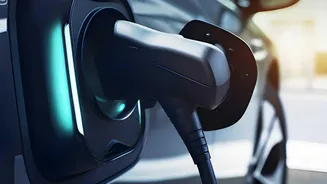
Perhaps the most dramatic change advanced batteries will bring is the end of long charging waits. Ultra-fast charging (UFC) systems, delivering power from 150 kW to over 350 kW, are becoming more common. These systems use direct current (DC) to bypass the car's internal converter, feeding power straight into the battery. While today's lithium-ion batteries can handle this, it generates significant heat and stress, potentially reducing their lifespan with excessive use. New battery chemistries are being designed specifically for this. Recent tests have demonstrated charging from 10% to 80% in under 20 minutes, with some Chinese automakers achieving a near-full charge in under 10 minutes in test conditions. This brings the EV refueling experience tantalizingly close to the time it takes to fill a petrol tank, making electric vehicles far more practical for long-distance travel and for those without access to overnight home charging.
Beyond Lithium: Sodium and Graphene
The future of energy storage isn't just about one technology. Researchers are actively developing alternatives that address the cost and supply chain issues of lithium. Sodium-ion batteries are a leading contender. Using abundant and inexpensive sodium, these batteries are generally safer and more sustainable to produce. While they currently offer lower energy density than lithium-ion, making them better suited for stationary storage or smaller vehicles, their fast-charging capabilities and excellent performance in extreme temperatures are compelling advantages. At the same time, graphene is emerging as a miracle material. When added to batteries, its incredible conductivity and strength can dramatically speed up charging, increase capacity, and extend the battery's lifespan. Some research suggests graphene-enhanced batteries could last up to five times longer than current lithium-ion cells.
What This Means for India's EV Ambitions
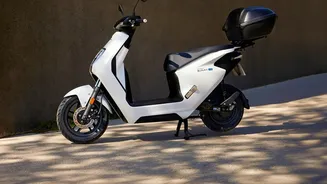
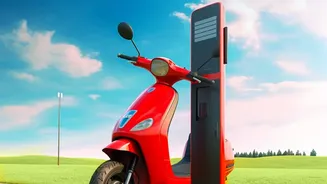
For India, these advancements are not just technical curiosities; they are critical enablers for a national priority. With a goal to reach net-zero emissions by 2070 and over 1.5 million EVs already on the road, the country's transition is well underway. However, barriers like unreliable grid access in some regions and high initial vehicle costs remain. Advanced energy storage is key to overcoming these hurdles. Stationary storage units paired with charging stations can provide reliable power even with an inconsistent grid supply. Cheaper and more sustainable battery chemistries like sodium-ion could significantly lower the upfront cost of EVs, which is currently inflated by the battery pack. As India builds its domestic battery manufacturing capacity through initiatives like the Production Linked Incentive (PLI) scheme, it has the opportunity to leapfrog older technologies and adopt these next-generation solutions directly.