




From Martian Air to Oxygen
The Martian atmosphere is a hostile, thin blanket of gas composed of about 96% carbon dioxide (CO2). For humans, it’s unbreathable. However, for scientists and engineers, that abundance of CO2 represents an opportunity. The concept is known as In-Situ
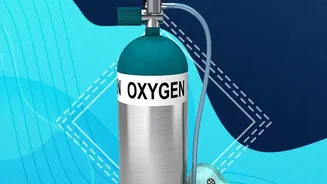
Resource Utilization (ISRU), which is a technical term for living off the land. Instead of transporting massive quantities of oxygen from Earth—a prohibitively expensive task—the goal is to create it directly from Martian resources. The key technology for this process is solid oxide electrolysis. In simple terms, a machine pulls in Martian air, heats it to around 800 degrees Celsius, and uses an electrochemical process to split the CO2 molecules into oxygen and carbon monoxide.
MOXIE: A Toaster-Sized Proof of Concept
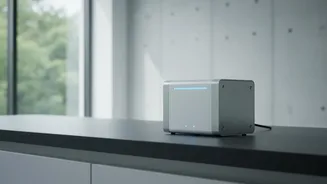
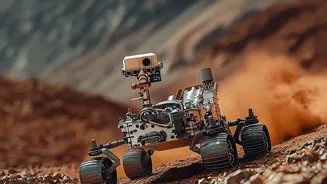
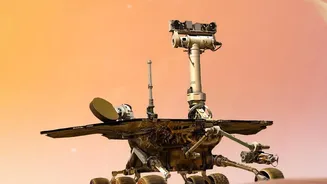
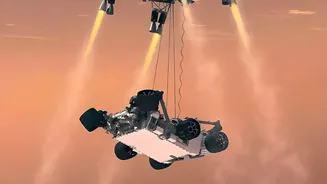
NASA has already proven this concept works on Mars. Aboard the Perseverance rover, a small, toaster-sized instrument called the Mars Oxygen In-Situ Resource Utilization Experiment, or MOXIE, successfully produced oxygen from the Martian atmosphere. Between 2021 and 2023, MOXIE ran 16 times, proving it could operate in various Martian seasons and times of day. At its peak, it generated 12 grams of oxygen per hour—double its target—at a purity of over 98%. In total, MOXIE produced 122 grams of oxygen, enough to keep a small dog alive for about 10 hours. While a small amount, it was a landmark achievement, marking the first time a natural resource on another planet was harvested for human use.
The Immense Challenge of Scaling Up
Going from MOXIE's small-scale production to a system that can support a human crew is a colossal leap. A future oxygen factory would need to be hundreds of times larger, capable of producing not just grams, but multiple kilograms of oxygen per hour. This presents several formidable engineering challenges. First, there's the issue of power. The electrolysis process is extremely energy-intensive, and a full-scale plant could require over 25 kilowatts to operate—a huge amount of power that would need to be reliably generated on Mars, likely through a dedicated nuclear or large-scale solar power system. The system would also need to run continuously and autonomously for years, withstanding the harsh Martian environment, including temperature swings and pervasive dust that could clog machinery. Finally, the entire factory—compressors, heaters, and storage tanks—must be designed, built, and transported across millions of kilometers to Mars.
Building the Oxygen Factory of the Future
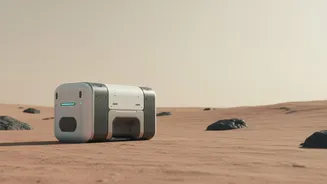
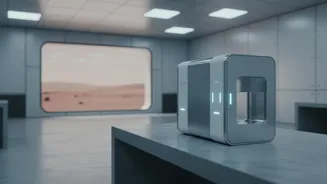
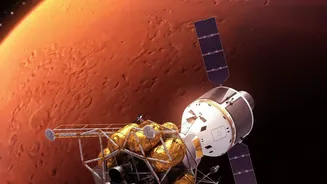
Researchers are now focused on designing this next-generation system. Instead of simply building a bigger MOXIE, the next step involves creating an integrated system that not only generates oxygen but also liquefies and stores it. This is because the primary consumer of oxygen on Mars won't be the astronauts, but their ride home. A Mars Ascent Vehicle would require about 25 to 33 metric tons of liquid oxygen to launch a crew from the surface back into orbit. In comparison, a crew of four might only need about one metric ton of oxygen for breathing over the course of a year. Consequently, any future oxygen plant would likely be sent to Mars well ahead of the first human mission, working for over two years to fill up the propellant tanks needed for the return journey.