

Thekua from Bihar
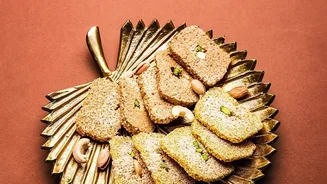
Hailing from Bihar and Jharkhand, Thekua is a rustic and robust sweet that holds a special place as a prasad during the Chhath Puja festival. This is not a delicate, melt-in-your-mouth mithai, but rather a delightfully crunchy, deep-fried biscuit made
from whole wheat flour, ghee, and sweetened with jaggery or sugar. The dough is often pressed into ornate wooden moulds, giving each piece a beautiful, intricate pattern. Infused with the aroma of cardamom and sometimes fennel, Thekua has a long shelf life, making it a perfect travelling snack and a symbol of enduring tradition. Its preparation is an act of devotion, often undertaken with great care and purity.
Patoleo from Goa
Patoleo is a unique Goan sweet that is as much about aroma as it is about taste. Prepared by both Hindu and Catholic communities for festivals like Nag Panchami, Ganesh Chaturthi, and the Feast of the Assumption, this dish is a celebration of fresh, seasonal ingredients. A paste of rice flour is spread thinly onto a fresh turmeric leaf, which is then filled with a fragrant mixture of freshly grated coconut and palm jaggery. The leaf is folded and the entire package is steamed. During steaming, the turmeric leaf imparts its incredible, earthy fragrance to the sweet rice casing, creating a delicacy that is subtle, aromatic, and deeply rooted in Goan culture.
Adhirasam from Tamil Nadu
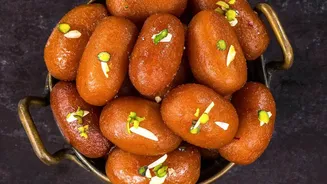
Often called the South Indian doughnut, Adhirasam is a beloved sweet from Tamil Nadu with a history stretching back centuries, even finding mention in inscriptions from the 16th-century Vijayanagara empire. Made primarily from rice flour and jaggery, it is a staple during Diwali and other significant celebrations. The process is an art form: rice is soaked, dried, and ground, then mixed with a carefully prepared jaggery syrup. This dough is often rested for a day or more to ferment slightly, which gives the final product its characteristic soft, slightly chewy texture. Deep-fried in ghee or oil until it's a dark golden brown, Adhirasam is rich, flavourful, and a true taste of tradition.
Ghevar from Rajasthan
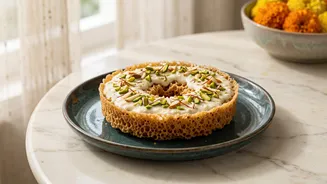
No monsoon festival in Rajasthan, like Teej or Raksha Bandhan, is complete without Ghevar. This visually stunning sweet is a disc-shaped cake with a distinctive honeycomb texture. It's made by skillfully drizzling a thin batter of flour into hot ghee, creating a porous, lace-like structure. Once fried to a golden crisp, the disc is soaked in sugar syrup. Ghevar can be enjoyed plain, allowing its simple sweetness to shine, or it can be lavishly topped with rabri (thickened sweetened milk), mawa, and a scattering of nuts and silver leaf, transforming it into a truly decadent dessert.
Pitha from Eastern India
Pitha is not a single sweet but a diverse family of cakes, dumplings, and crepes popular across Eastern India, especially in Bengal, Assam, and Odisha. Made during harvest festivals like Makar Sankranti and Bihu, pithas celebrate the abundance of new rice. The base is usually rice flour, used to create a dough or batter. From there, the variations are endless. They can be steamed, fried, or griddled. Fillings range from sweet concoctions of coconut and jaggery (like in Patishapta or Narikol Pitha) to savoury mixtures of lentils and vegetables. Whether it's a steamed Bhapa Pitha or a syrupy Gokul Pitha, each variety offers a unique taste of the region's culinary heritage.