





Choose Your Diyas Wisely
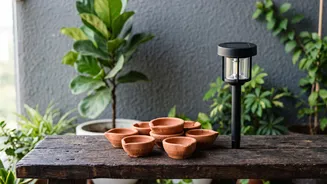
The foundation of sustainable diya lighting begins with the diya itself. Opt for traditional, unpainted terracotta or clay diyas sourced from local artisans. These diyas are biodegradable and return to the earth without leaving harmful residues. Mass-produced
diyas, especially those with chemical paints and glitter, can release toxins when heated and are difficult to recycle. By choosing simple, earthen lamps, you not only make an eco-conscious choice but also support local economies and centuries-old craft traditions. Plain clay diyas are also praised in traditions like Vastu Shastra for their connection to the earth element and their ability to purify a space.
Select Eco-Friendly Oils
The fuel you use is just as important as the vessel. For a clean, low-smoke burn, turn to traditional, plant-based oils. Mustard oil, sesame (til) oil, coconut oil, and ghee (clarified butter) are all excellent choices. These natural oils have been used for centuries and are known to burn cleanly without producing toxic fumes, making them safer for indoor and semi-enclosed spaces like balconies. Avoid synthetic or paraffin-based oils, which can compromise air quality. For an added sensory layer, you can infuse your chosen oil with a few drops of natural essential oils like sandalwood, jasmine, or lemongrass for a subtle, calming fragrance.
The Heart of the Flame: The Wick
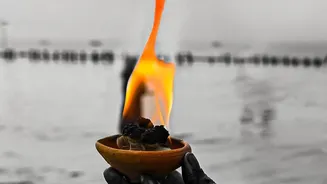
A good wick ensures a steady, long-lasting flame. The best and most traditional choice is a simple cotton wick. You can easily make your own by twisting a small piece of cotton into an elongated shape. Before lighting, it's crucial to fully saturate the wick with oil. This prevents the cotton from burning too quickly and producing smoke. Place the wick inside the diya, ensuring the base is submerged in the oil and only a small tip rests on the edge, ready to be lit. A well-soaked wick will draw oil efficiently, providing a consistent glow for hours.
Safe and Stunning Balcony Arrangements
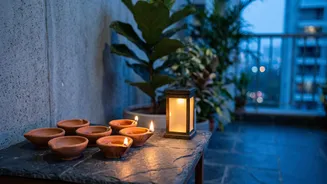
Your balcony is a canvas for your festive lights, but safety must always come first. Place each diya on a stable, flat, and heat-resistant surface. Keep them far from flammable materials like curtains, paper decorations, dry plants, or furniture. An attractive and safe way to display diyas is to place them in urli bowls filled with water and flower petals, which also adds a beautiful reflective quality to the light. Arrange them along railings (on a secure base), on a central table, or within a rangoli design. For windy balconies, consider placing diyas inside larger lanterns to protect the flame. Most importantly, never leave burning diyas unattended, especially around children and pets.
After the Festival: Give Your Diyas a New Life
Sustainability extends beyond the celebration itself. Once the festivities are over, don't throw away your used clay diyas. After cleaning them, they can be reused in numerous creative ways. Their porous nature makes them perfect mini-planters for succulents or for starting seeds. You can also paint them with non-toxic colours and repurpose them as decorative items for the following year. If you don't wish to reuse them, unpainted clay diyas can be crushed and returned to the soil in your garden, completing their natural lifecycle.