






The Story Woven into a Name
When you buy a handloom saree, you are acquiring more than just a piece of fabric; you are holding a story. Names like Paithani, Chanderi, or Patola are not simply style categories; they are geographical and cultural anchors. They tell you that a textile
was born in a specific town or region, created by artisans who inherit their skills through generations. A Chanderi saree, known for its glossy, sheer texture, gets its name directly from its hometown in Madhya Pradesh. Similarly, the regal Kanjeevaram saree originates from the temple town of Kanchipuram in Tamil Nadu, a weaving centre for over 400 years. These names are a testament to the intimate bond between a place, its people, and their unique artistic expression. They signify a deep-rooted heritage that cannot be replicated by a machine.
A Blueprint of Authenticity
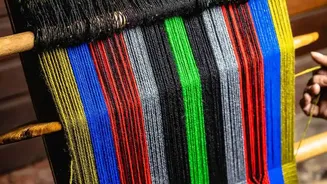
Each regional weave is defined by a distinct technique. A genuine Kanjeevaram, for instance, uses the 'Korvai' method, where the body and border are woven separately and then interlocked, creating a durable join. The Patan Patola from Gujarat is a marvel of mathematical precision, using a 'double ikat' technique where both the vertical (warp) and horizontal (weft) threads are dyed before weaving to create a perfectly reversible design. This process is so complex it can take up to six months for a single saree. A power loom simply cannot replicate these intricate, hands-on processes. The slight irregularities and imperfections found in a handwoven piece are not defects; they are the fingerprints of the artisan, a hallmark of authenticity that machine-made uniformity can never possess.
The Threat of Dilution and Deceit
The unfortunate reality is that the market is flooded with imitations. Power looms can churn out fabrics that mimic the appearance of handloom weaves at a fraction of the cost and time. These machine-made textiles are often sold using prestigious regional names, deceiving customers and severely undercutting genuine artisans. When a power-loom product from an entirely different region is labelled 'Banarasi', it erodes the brand equity built over centuries in Varanasi. This practice not only leads to a loss of income for weaver communities but also threatens the survival of the craft itself, as younger generations see little future in competing with mass-produced fakes. The word 'handloom' becomes a meaningless marketing term, and a rich cultural legacy is reduced to a mere style.
Protection Through Provenance
Fortunately, there is a powerful tool to combat this: the Geographical Indication (GI) tag. A GI tag is a form of intellectual property that legally certifies that a product originates from a specific geographical area and possesses qualities or a reputation due to that origin. Weaves like the Banarasi brocade, Kanchipuram silk, and Patan Patola have been granted GI status. This legal protection ensures that only textiles woven in the designated region using the traditional methods can be sold under that name. For consumers, the GI tag acts as a guarantee of authenticity, quality, and heritage. For artisans, it helps them command a fair price for their skill and protects their collective identity from counterfeiting.
How to Be a Conscious Consumer
As a buyer, you hold the power to support authentic craftsmanship. When shopping, always ask the seller questions: "Where was this woven?" and "How long did it take to make?". A seller of genuine handloom will know the story of their product. Look for the Handloom Mark, which certifies that the item was woven on a handloom, and the Silk Mark, which guarantees pure silk. Most importantly, inspect the fabric itself. Check the reverse side for the beautiful messiness of handwork—the small knots and thread floats that are absent in a clean, uniform power-loom finish. Feel the texture; authentic handloom fabric often has a softer, more breathable quality and slight, natural irregularities. By choosing wisely, you are not just buying a product but actively participating in the preservation of a priceless cultural heritage.