

Chandrayaan-4: A Mission of Many Firsts
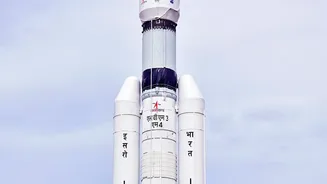
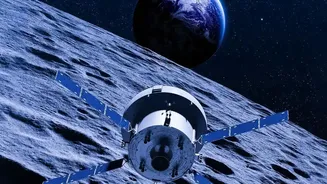
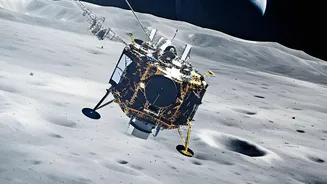
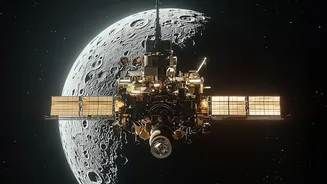
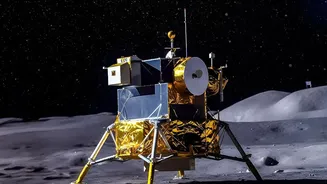
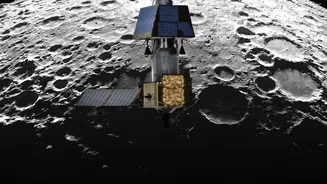
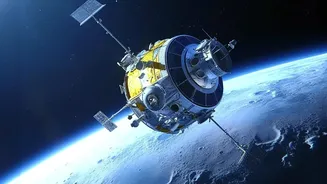
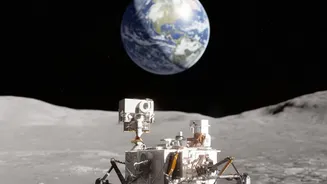
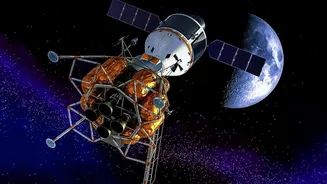
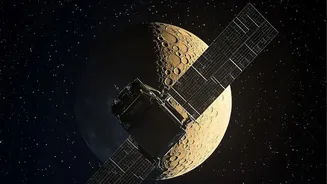
Set to launch around 2028, Chandrayaan-4 is a highly complex lunar sample-return mission. Unlike its predecessors, this mission will involve two separate rocket launches and a series of intricate manoeuvres in lunar orbit. The objective is to land on the
Moon, use a robotic arm to collect up to three kilograms of lunar soil and rock, and then launch a smaller module from the lunar surface to bring the precious cargo back to Earth. This would make India only the fourth country to achieve such a feat, demonstrating a new level of technological mastery. The mission will specifically target the Moon's south polar region, the same area where Chandrayaan-3 successfully landed. This location is no accident; it is believed to be rich in a resource that could change the future of space travel forever: water ice.
The Frozen Treasure of the Lunar Poles
For decades, scientists have theorized about the presence of water on the Moon. Evidence from multiple missions, including India's own Chandrayaan-1, has confirmed that water ice is concentrated in Permanently Shadowed Regions (PSRs) near the lunar poles. These are craters and depressions that have not seen direct sunlight for billions of years, creating 'cold traps' with temperatures plunging below -220°C, cold enough to preserve ice. Retrieving samples from these regions, a key goal for Chandrayaan-4, is vital for confirming the quantity and purity of this ice. While water is essential for supporting human life in future lunar bases, its true value lies in its chemical components: hydrogen and oxygen.
A Cosmic Gas Station on the Moon
The phrase "water is the oil of space" perfectly captures why lunar ice is so critical. Through a process called electrolysis, an electric current can split water (H₂O) into its constituent elements: hydrogen and oxygen. When liquefied, these two elements are the primary components of modern rocket propellant. The ability to mine ice and produce rocket fuel on the Moon is a concept known as In-Situ Resource Utilization (ISRU), and it's a complete game-changer. It means spacecraft could refuel on the Moon instead of having to carry all their fuel for a round trip from Earth. This drastically reduces the mass that needs to be launched, which in turn cuts mission costs and complexity enormously.
Escaping Earth's Gravity Well
Launching anything from Earth is incredibly difficult and expensive, largely due to our planet's strong gravity. It takes an enormous amount of energy to push a rocket out of Earth's atmosphere and into space. The Moon, however, has only about one-sixth of Earth's gravity. This means launching a spacecraft from the Moon to another destination requires significantly less fuel. A lunar base capable of producing its own rocket fuel could therefore serve as a cosmic launchpad. Missions to Mars or the outer solar system could be assembled and fueled in lunar orbit, allowing for larger and more ambitious spacecraft than what is currently feasible to launch directly from Earth. The Moon would become a vital staging post for humanity's expansion into the solar system.
India's Leap into a New Era of Exploration
By pursuing the Chandrayaan-4 mission, ISRO is not just conducting a scientific study; it is developing the key technologies needed for a sustained human presence on the Moon and beyond. The mission will validate robotic sample collection, automated docking in lunar orbit, and the ability to launch from another celestial body—all foundational steps for future human missions and resource extraction. If successful, Chandrayaan-4 could be the first mission to return samples from the lunar polar regions, giving India a leading edge in understanding and utilizing these valuable resources. This places India at the forefront of the new space race, one that is less about flags and footprints and more about building a sustainable, multi-planetary future. The data and technologies from this mission will pave the way for a future where the Moon is not just a destination, but a gateway to the stars.