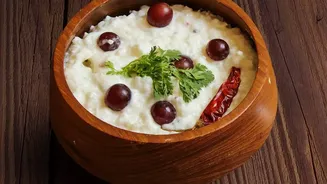



It’s a frustrating moment for any home cook: you add a spoonful of rich curd to your perfectly spiced gravy, only to see it break into grainy flecks. This separation, known as splitting or curdling, can spoil the texture of a dish.
Understanding Why Curd Splits
Before diving into the
solutions, it helps to understand the science. Curd, or dahi, is a delicate structure of milk proteins (casein) suspended in whey (the watery part). When these proteins are exposed to sudden, high heat or too much acid, they tighten, clump together, and squeeze out the whey. This results in the grainy, separated texture we want to avoid. The dramatic temperature difference between cold curd from the fridge and a sizzling pan is often the primary culprit.
Rule 1: Mind the Temperature
The most critical step is to reduce the temperature shock. Never add cold curd directly to a boiling or very hot gravy. Before you start cooking, take out the required amount of curd and let it sit on the counter. It doesn't need to be warm, but allowing it to lose its refrigerator chill will make it less prone to splitting when it hits the pan. Always lower the flame to a simmer or even turn it off completely for a moment before adding the curd. This gives you control and prevents the proteins from panicking.
Rule 2: Whisk It Smooth
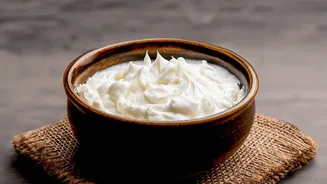
Never add curd to your dish straight from the container. Spoon it into a separate bowl and whisk it vigorously until it is completely smooth and free of lumps. Lumpy curd incorporates unevenly, meaning some parts cook much faster than others, leading to splitting. A smooth, uniform consistency ensures the curd can be stirred in quickly and evenly, which is key to a stable sauce.
Rule 3: Temper Your Curd
Tempering is a classic technique used to gently acclimate a temperature-sensitive ingredient. Instead of adding all the curd to the hot pan, do it the other way around. Add a spoonful of the hot curry liquid into your bowl of whisked curd and stir it in quickly. Repeat this two or three times. This process gradually raises the temperature of the curd, making it ready to be incorporated into the main dish without the shock that causes curdling.
Rule 4: Use a Stabiliser
For an almost foolproof method, especially in recipes that require longer cooking after adding curd, use a stabiliser. Adding a small amount of gram flour (besan) or cornstarch to your curd before it goes into the pan can work wonders. Whisk about a teaspoon of besan or cornstarch per cup of curd until it's completely smooth. The starch molecules protect the milk proteins from the harsh heat, helping to maintain a creamy, unified sauce. This is a traditional technique used in dishes like Kadhi, where curd is the base of the gravy.
Rule 5: Fat Content Matters
The type of curd you use can make a significant difference. Full-fat curd is far more stable than low-fat or non-fat versions. The fat acts as a buffer, protecting the proteins from direct heat and helping to create a richer, creamier sauce. Low-fat yogurts have a higher concentration of protein relative to fat, making them much more likely to split. While it's possible to use low-fat curd by being extra careful with temperature and using a stabiliser, full-fat dahi is your safest bet for smooth gravies.