





Putting 25.7 Million Tonnes in Perspective
That staggering 25.7 million metric tonne figure comes from a recent Harvard University study published in Nature Sustainability, which analysed 403 of the largest 'hyperscale' data centres in the United States. To make that number easier to grasp, it's
roughly equivalent to the entire annual carbon emissions of Denmark. The study, which covered the period from May 2024 to April 2025, found these facilities consumed about 1.8% of all electricity in the US. This is enough energy to power nearly seven million American homes for a year. Researchers noted this is a two-to-threefold increase from the last peer-reviewed assessment in 2018, and they warn it's likely a conservative estimate, as data centre construction has only accelerated since the study period ended.
Why Data Centres Are So Power-Hungry
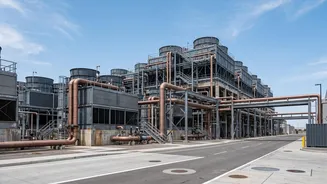
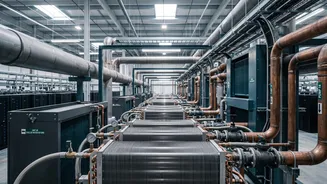
Data centres are the physical backbone of the internet, housing thousands of servers that power everything from cloud computing and video streaming to e-commerce and social media. These servers consume vast amounts of electricity to run computations, but they also generate immense heat. A significant portion of a data centre's energy use, sometimes as much as 40%, goes directly into cooling systems to prevent the hardware from overheating. The primary source of emissions is the electricity itself. The Harvard study found that about 54% of the power consumed by these facilities came from burning fossil fuels, with natural gas (38%) and coal (15%) being the main sources. Because many data centres are concentrated in regions with carbon-intensive power grids, their overall carbon intensity is often higher than the national average.
The AI Boom Adds Fuel to the Fire
While data consumption has been growing for years, the recent explosion in artificial intelligence is dramatically escalating energy demands. Training large AI models is an incredibly energy-intensive process, and as AI applications like ChatGPT become more integrated into daily life, the 'inference' workloads required to answer user queries add to the continuous power draw. A single server rack equipped with powerful GPUs for AI can consume 10 to 50 times more power than a traditional server rack. The International Energy Agency (IEA) projects that global data centre electricity consumption could double by 2030, with AI being a major driver of that growth. This surge is putting unprecedented strain on power grids, with some projections suggesting data centres could consume up to 12% of total US electricity by 2030.
A Greener Cloud on the Horizon?
The technology industry is not ignoring the problem. Major players are making significant investments in sustainability to mitigate their environmental impact. One of the primary strategies is a shift to renewable energy. Companies are signing Power Purchase Agreements (PPAs) for wind and solar energy, investing in on-site generation, and exploring emerging technologies like enhanced geothermal and next-generation nuclear power. Improving energy efficiency is another critical focus. This includes everything from more efficient server design and advanced cooling techniques, like liquid cooling, to using AI itself to dynamically manage power and cooling needs in real-time, shutting down idle servers and predicting heat loads. Furthermore, a 'circular economy' approach, which involves extending the life of hardware and responsibly recycling e-waste, helps reduce the overall environmental footprint. These efforts are crucial, as even small efficiency gains can have a major impact when operating at such a massive scale.