


The Nutritional Contenders
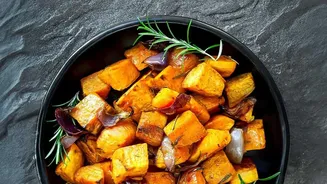
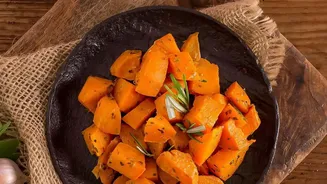
Sweet potato, a starchy root vegetable, and butternut squash, technically a fruit that grows on a vine, are both celebrated for their health benefits. Both are packed with nutrients, low in fat, and bring a natural sweetness to dishes ranging from savoury
curries to simple roasted sides. They are well-known for being excellent sources of fibre, potassium, and especially vitamin A, thanks to their orange hue derived from beta-carotene. But when it comes to vitamin C, an essential antioxidant that supports our immune system and skin health, the comparison gets more interesting.
A Head-to-Head Vitamin C Battle
Nutritional data can vary slightly depending on the specific variety and preparation method, but a clear trend emerges. In a direct comparison per cooked portion, butternut squash often comes out ahead in the vitamin C race. One cup of cooked butternut squash can provide around 31 mg of vitamin C. In contrast, some data shows a cup of cooked sweet potato provides slightly more, around 39 mg. However, other analyses per 100 grams show butternut squash (baked) containing about 15.1 mg while sweet potato has just 2.4 mg. The consensus from multiple sources suggests that while both are good sources, butternut squash generally offers a more significant vitamin C punch for fewer calories. A cup of cooked butternut squash has about 82 calories, whereas the same amount of sweet potato has around 180.
What 'Contribution' Really Means for Your Diet
So, what do these numbers mean in a practical sense? The Indian Council of Medical Research - National Institute of Nutrition (ICMR-NIN) recommends a daily dietary allowance of 80 mg of vitamin C for adult men and 65 mg for women (this increases during pregnancy and breastfeeding). Using these guidelines, a single cup of cooked butternut squash could provide nearly half of a woman's daily requirement and about 39% of a man's. While sweet potato's contribution is also valuable, you might need a larger portion to get the same amount of vitamin C. The key is to see these foods not in isolation, but as part of a varied diet where many sources contribute to your daily total. A single guava, for instance, contains over 200 mg of vitamin C, far exceeding the daily need.
The Critical Role of Your Cooking Method
How you cook these vegetables matters immensely. Vitamin C is water-soluble and sensitive to heat, meaning it can be easily lost during cooking. Boiling is often the biggest culprit, as the vitamin leaches into the cooking water, which is then discarded. One study found boiling could reduce vitamin C by a significant amount, while steaming and microwaving were much better at preserving it. For both sweet potatoes and butternut squash, roasting or steaming are preferable methods to retain the maximum amount of vitamin C. The less water and the shorter the cooking time, the more nutrients will make it to your plate.
The Final Verdict: And the Winner Is…
While butternut squash appears to be the more efficient source of vitamin C, especially when considering its lower calorie count, declaring it the absolute 'winner' would be misleading. Sweet potatoes offer more fibre, protein, and potassium per serving. They are also a powerhouse of vitamin A, providing a staggering amount in a single cup. The best approach is not to pick one over the other, but to enjoy both. Variety is the cornerstone of a healthy diet. You can use butternut squash in soups and lighter sides for a vitamin C boost with fewer carbs, and turn to the heartier sweet potato when you need a more filling, fibre-rich, and vitamin A-packed option. Both vegetables are fantastic, nutrient-dense choices that support overall health.