







Beyond the Fastest Route
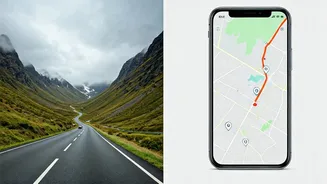
For years, navigation apps have focused on one thing: getting us to our destination in the shortest possible time. The concept of a 'green route' changes that priority. Platforms like Google Maps now offer eco-friendly routing in India, which prioritizes
fuel or energy efficiency over pure speed. By analysing factors like road gradients, traffic patterns, and constant speeds, these routes are designed to minimise your carbon footprint, whether you are driving a petrol, diesel, or electric vehicle (EV). Choosing this option, often marked with a green leaf icon, means your journey is optimised for lower fuel consumption, making your trip kinder to the planet and your wallet. It’s a fundamental shift from 'fastest' to 'most efficient'.
The EV Forecast: More Than Just Weather
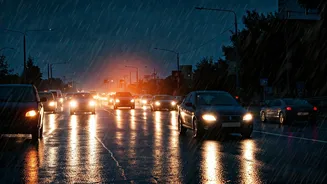
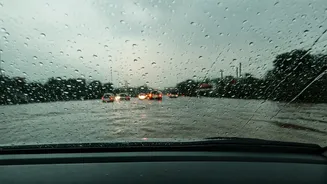
For electric vehicle owners, the term 'forecast' takes on a much deeper meaning. While eco-friendly routes are beneficial, the real challenge lies in predicting battery performance and charging opportunities. Extreme weather is a major factor; high temperatures can reduce an EV's range by up to 17%, while cold weather can slash it by over 20% as the battery works harder to maintain its temperature and heat the cabin. This means a journey planned in moderate weather could fall short during a heatwave or a cold snap. Therefore, forecasting the weather along your route is the first step in accurately predicting your vehicle's true range and avoiding the dreaded 'range anxiety' that can derail a long trip.
India's Charging Challenge
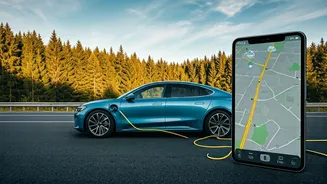
The biggest forecast an EV driver in India needs is not on a weather app, but on a charging app. While the charging network is expanding, its reliability remains a significant hurdle. A road trip can be quickly jeopardised if a planned charging station is occupied, out of service, or slower than advertised. This makes real-time data indispensable. It’s not enough to know where chargers are; you need to forecast their availability. This is where a new generation of apps comes into play, offering live status updates that are crucial for long-distance travel. Planning a journey requires checking not just one, but multiple charging points along your route to have backup options. Unlike a fuel stop, an EV recharge stop must be planned in advance.
Your Digital Toolkit for Green Travel
Successfully navigating a green road trip in India requires a suite of digital tools. For route planning, Google Maps' fuel-efficient setting is a great start. For EV drivers, dedicated charging apps are non-negotiable. Services like Statiq, ChargeZone, and Tata Power EZ Charge provide a map of charging stations, and more importantly, often show real-time availability, connector types, and charging speeds. Some apps like Statiq even allow you to reserve a charging slot in advance, taking the guesswork out of your journey. Using these apps to create a detailed charging itinerary, complete with primary and secondary options, transforms a hopeful trip into a well-executed, stress-free adventure. It’s about leveraging technology to make sustainable travel practical.
Smarter Driving, Greener Journey
Beyond apps and forecasts, your driving habits play a huge role in the efficiency of your trip. Green driving techniques apply to any vehicle. Maintaining a steady speed, avoiding aggressive acceleration and hard braking, and reducing idling time can significantly cut down fuel or energy consumption. If your car has a regenerative braking feature, use it to recapture energy during deceleration. Also, packing light is essential; extra weight forces your vehicle to work harder, reducing its efficiency. By combining smart route planning with mindful driving, you actively contribute to a more sustainable journey, ensuring that your adventure has the lowest possible impact on the environment.