






Ever notice how winter mornings in many Indian cities can be shrouded in a thick, persistent haze? It’s not just cold fog; it's a smog that seems to hang in the air for days. The reason is a fascinating weather phenomenon known as a temperature inversion.
How Air Normally Behaves
Typically, the air in our atmosphere gets cooler the higher you go. During the day, the sun heats the ground, which in turn warms the layer of air closest to it. This warm, less dense air rises, carrying pollutants like smoke and exhaust fumes with it. As it ascends, it cools and disperses into the wider atmosphere. This constant vertical mixing is like a natural ventilation system, helping to keep the air we breathe at ground level relatively clean. Think of it as a constant cycle where dirty air is carried up and away, replaced by cleaner, cooler air from above.
The Winter 'Lid': A Temperature Inversion
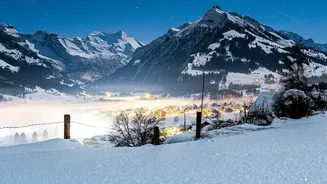
A temperature inversion flips this normal pattern on its head. It occurs when a layer of warm air settles above a layer of cooler, denser air near the ground. This warm air acts like an invisible lid or cap, preventing the cooler air below from rising. The atmosphere becomes stable and stagnant because the cold, heavy air at the bottom has no upward momentum, and the warm, light air is already on top. Any vertical mixing stops, and the natural ventilation system shuts down completely. This phenomenon is especially common during the winter months.
Why Winter Creates the Perfect Conditions
Winter is the prime season for temperature inversions for a few key reasons. The nights are longer and often clearer, allowing the ground to rapidly radiate its heat away into space after sunset. This process cools the ground and the layer of air just above it very effectively. Meanwhile, the air higher up remains warmer. Calm winds, another common feature of winter weather, prevent the different layers of air from mixing. The combination of long, cool nights and low wind speeds creates a strong and persistent layer of cold air near the surface, trapped beneath a warmer layer above. In many parts of North India, this effect is amplified by geography, as pollutants get trapped in the vast Indo-Gangetic Plain.
Trapping Pollutants Close to the Ground
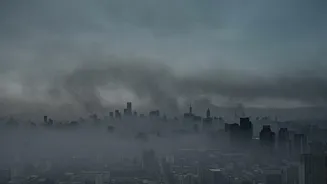
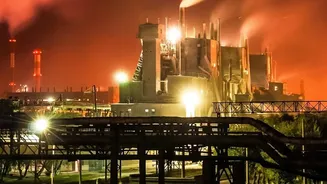
Once an inversion layer forms, it becomes a highly effective trap for air pollution. All the pollutants emitted at or near the ground—from vehicle exhaust, industrial processes, construction dust, and the burning of biomass—are released into the bottom layer of cold air. Since this air is blocked from rising by the warm 'lid' above, the pollutants have nowhere to go. They accumulate in this shallow layer, leading to a rapid and dramatic increase in concentrations of harmful substances like fine particulate matter (PM2.5), nitrogen oxides, and other toxins. The longer the inversion lasts, the more pollutants build up, leading to the thick, toxic smog that characterizes many winter days.
The Health and Environmental Impact
The consequences of these pollution-trapping inversions are severe. The high concentrations of fine particulate matter, or PM2.5, are particularly dangerous because these tiny particles can penetrate deep into the lungs and even enter the bloodstream. This can lead to a host of health problems, including respiratory infections, asthma attacks, bronchitis, and worsening of heart conditions. Studies show that hospital visits for respiratory and cardiac issues spike during these periods. Beyond human health, the dense smog reduces visibility, impacting transportation, and the pollutants can eventually settle on land and water, affecting the wider environment.