


When winter arrives, it transforms familiar landscapes into magical, otherworldly scenes. While many seek warmth, some of the world’s most breathtaking sights are found in the heart of the cold, where water turns to ice, creating natural art.
Lake Abraham, Alberta, Canada
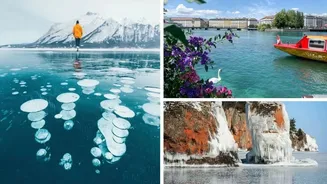
This man-made
lake in the Canadian Rockies is world-famous for a peculiar and beautiful phenomenon: frozen methane bubbles. Bacteria on the lakebed release methane gas after decomposing organic matter, and as this gas rises, it gets trapped in frozen layers. The result is stacks of white, suspended discs under the clear ice, creating a surreal spectacle. Strong winds often sweep the surface clear of snow, making it a perfect spot for photographers and sightseers, especially from mid-January to early February when the ice is thickest.
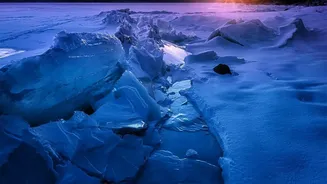
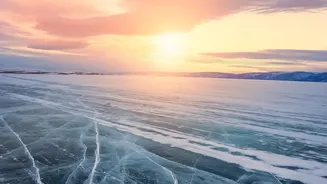
Lake Baikal, Siberia, Russia
As the world's oldest and deepest freshwater lake, Lake Baikal is a natural wonder year-round, but winter is when its magic truly surfaces. From January to May, it freezes over with ice so transparent you can see up to 40 metres below. The lake is renowned for its 'turquoice ice', large shards of broken ice that push up against each other to form glittering, gem-like hummocks. This phenomenon occurs as pressure and wind cause the thick ice sheet to crack, creating jagged blocks that glow a brilliant blue in the Siberian sun.
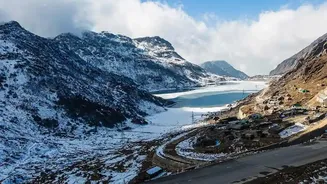
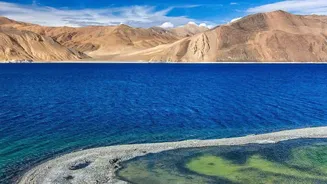
Pangong Tso, Ladakh, India
Situated at a breathtaking altitude of over 14,000 feet, Pangong Tso is a high-altitude saltwater lake that spans across India and Tibet. Despite its salinity, the lake freezes completely during the harsh winter months of January and February, when temperatures can plummet dramatically. The vast, frozen expanse, surrounded by the stark, snow-dusted peaks of the Himalayas, creates a serene and powerful landscape. For the truly adventurous, the annual Pangong Frozen Lake Marathon offers a unique way to experience this high-altitude wonder.
Jökulsárlón, Iceland
More a glacial lagoon than a simple lake, Jökulsárlón is one of Iceland's most iconic sights. It’s filled with massive icebergs that have calved off the Breiðamerkurjökull glacier. These ancient ice chunks, some over 1,000 years old, float in the deep, calm waters before drifting out to sea. In winter, the scene is especially dramatic. The lagoon rarely freezes completely solid, but the contrast between the blue-and-white icebergs, the dark water, and the adjacent black sand 'Diamond Beach' where smaller ice chunks wash ashore is truly cinematic.
Lake Superior, USA & Canada
The largest of North America's Great Lakes puts on a spectacular show in winter, particularly along the Apostle Islands National Lakeshore in Wisconsin. When conditions are just right—a rare occurrence—the lake freezes solid enough for people to walk across the ice to the mainland sea caves. Here, water seeping through the sandstone cliffs and waves splashing against the rock freeze into fantastical ice formations, creating magnificent columns and delicate icicles that transform the caves into a glistening wonderland.
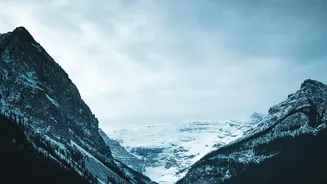
Lake Louise, Alberta, Canada
Nestled in Banff National Park, Lake Louise is postcard-perfect in any season, but winter offers a unique charm. The lake freezes solid, creating one of the world's most scenic outdoor ice-skating rinks, set against the backdrop of the majestic Victoria Glacier and snow-covered Rockies. Each winter, the lake also hosts the Ice Magic Festival, where intricate ice sculptures adorn the shoreline near an ice castle built on the lake, adding to the fairy-tale atmosphere.
Lake Bled, Slovenia
With its iconic island church and medieval castle perched on a cliff, Lake Bled is a storybook setting. In winter, this scene becomes even more tranquil. While the lake only freezes completely during exceptionally cold winters, its edges often ice over, and a dusting of snow on the surrounding Julian Alps creates a peaceful, serene panorama. Visitors can still take a traditional 'pletna' boat to the island or walk the 6km path around the lake for stunning, crisp winter views.
Blue Pond (Aoiike), Hokkaido, Japan
This man-made pond in Biei is famous for its ethereal blue water, a result of natural minerals in the water. In winter, that famous blue disappears under a blanket of snow and ice, but the scene becomes equally magical. The withered larch trees standing starkly in the frozen pond create a minimalist, serene landscape. From November to April, the pond is illuminated at night with a light show that cycles through different patterns, casting dynamic shadows and creating a fantastical experience for visitors braving the cold.
Grüner See (Green Lake), Austria
Grüner See is a fascinating case of seasonal transformation. In winter, it’s a very shallow body of water, with the surrounding area serving as a park complete with benches and walking trails. But come spring, snowmelt from the nearby Hochschwab mountains floods the basin, submerging the entire park under crystal-clear, emerald-green water. By winter, the water has receded again, and the frozen, snow-dusted park reappears, offering a tranquil and unique landscape where you can walk where a lake once was just months before.
Lake Inari, Finland
Located deep in Finnish Lapland, Lake Inari is a vast and wild body of water that transforms into an immense frozen plain during winter. Covered in a thick layer of ice and snow, it becomes a hub for winter activities like snowmobiling, cross-country skiing, and ice fishing. Its remote, northern location also makes it an exceptional spot for witnessing the Aurora Borealis, with the dancing green lights reflecting off the endless white expanse for a truly unforgettable Arctic experience.