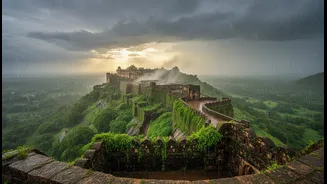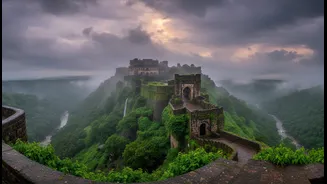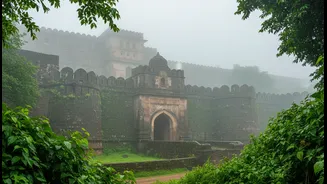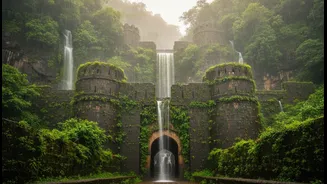






Kumbhalgarh Fort, Rajasthan: A Wall in the Clouds
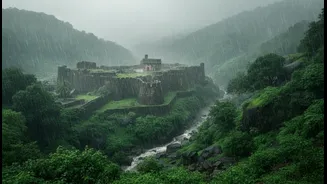
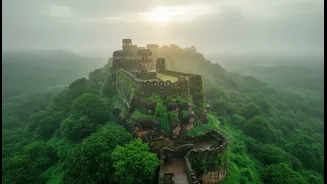
Home to the second-longest wall in the world, Kumbhalgarh Fort is a sight to behold in any season, but the monsoon elevates it to another realm. As clouds descend upon the Aravalli Hills, the fort’s massive 36-kilometre wall often disappears into the mist,
creating the illusion of a fortress floating in the sky. The surrounding wildlife sanctuary, usually a dry, arid landscape, transforms into a vibrant green carpet. The climb to the top is rewarded with panoramic views of valleys shrouded in fog and the cool, rain-washed air providing a welcome respite from the usual Rajasthani heat. The light and sound show in the evening, with the fort illuminated against a dramatic monsoon sky, is a truly magical experience.
Mehrangarh Fort, Jodhpur: The Citadel's Dramatic Skies
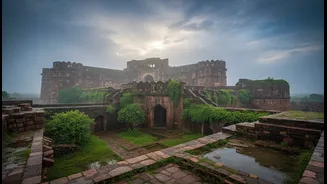
Towering over the Blue City of Jodhpur, Mehrangarh Fort’s red sandstone takes on a deeper, more burnished hue when washed by rain. The monsoon brings a dramatic change to the atmosphere, with dark clouds framing the imposing structure, making it feel even more formidable and grand. The Chokelao Garden within the fort comes alive with lush greenery, offering a stark, beautiful contrast to the stone architecture. From its ramparts, the view of Jodhpur's blue houses, freshly washed and vibrant against the grey sky, is a photographer's dream. The earthy scent after a downpour and the cooler temperatures make exploring its vast courtyards and palaces a far more pleasant experience than in the scorching summer months.
Amer Fort, Jaipur: Royal Reflections in the Rain
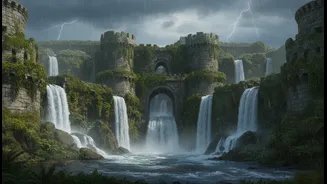
The magnificent Amer Fort, with its blend of Rajput and Mughal architecture, gains a reflective beauty during the monsoon. The Maota Lake at the foot of the fort fills to the brim, offering a stunning, shimmering reflection of the entire complex. The surrounding hills, once brown and dry, are covered in a thick blanket of green, adding a soft, picturesque backdrop to the formidable structure. While the rains can sometimes be heavy, they also bring out the rich colours of the red sandstone and marble. Exploring the fort's intricate halls, like the Sheesh Mahal (Mirror Palace), feels even more enchanting as the sound of rain echoes gently through its ancient corridors.
Golconda Fort, Hyderabad: Echoes in the Mist
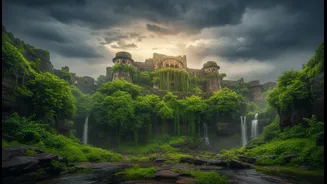
The historic capital of a diamond-rich kingdom, Golconda Fort near Hyderabad is a sprawling complex of ruins that becomes particularly atmospheric in the monsoon. The rain slicks the granite rocks to a dark polish and nourishes the wild grass and vegetation that grow between the ancient walls, making the entire site feel like a lost city being reclaimed by nature. The fort is famous for its acoustics, and the pitter-patter of raindrops enhances this feature, creating a unique auditory experience. A climb to the top offers breezy, panoramic views of Hyderabad, often through a veil of mist, making it a favourite for locals and tourists seeking a dramatic and historical escape.
Mandu, Madhya Pradesh: The Floating City of Joy
Though technically a ruined city rather than a single fort, Mandu is perhaps India's most famous monsoon destination. Its collection of Afghan architectural marvels is set on a lush plateau that becomes a verdant paradise during the rains. The iconic Jahaz Mahal, or Ship Palace, built between two artificial lakes, creates the illusion of a ship floating on water, especially when the lakes are full and mist hangs low. The love story of Sultan Baz Bahadur and Rani Roopmati permeates the air, particularly at Roopmati's Pavilion, which offers breathtaking views of the Narmada valley below. The entire city, with its tombs, mosques, and palaces draped in greenery and shrouded in mist, feels like a scene from a forgotten fairytale.