




The Grid's Big Squeeze
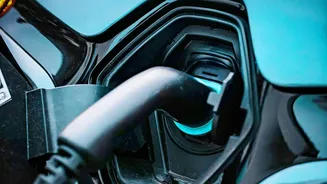
The biggest hurdle to widespread, ultra-fast EV charging isn't the vehicle itself, but the electrical grid's capacity. A single 350-kilowatt (kW) fast charger can draw as much power as 50 to 70 urban households. Now imagine a highway pitstop with ten
such chargers running simultaneously during peak evening hours. The strain on local power infrastructure would be immense, risking instability and blackouts. In India, this challenge is particularly acute, with many urban and rural distribution networks already stretched thin. Simply building more chargers without addressing this underlying power demand issue is like building a superhighway that leads to a tiny dirt road—it just creates a bottleneck. Costly and time-consuming grid upgrades have long been seen as the only solution, often taking years to approve and build.
The Stationary Storage Solution
This is where advanced energy storage systems (ESS) change the game. Instead of pulling massive amounts of power directly from the grid in a sudden spike, charging stations equipped with large, stationary batteries can act as a buffer. These systems, often housed in containers, quietly draw power from the grid during off-peak hours when electricity is cheaper and demand is low. They then store this energy, ready to be deployed at high speed to charging EVs. When a car plugs in, the stationary battery provides the bulk of the power, 'shaving' the peak demand on the grid and preventing the sudden, destabilizing surge. This not only protects the grid but also drastically cuts operational costs for charging point operators by avoiding expensive 'demand charges' that utilities levy for high peak usage.
Breakthroughs Making it Possible
Recent innovations are making these stationary storage solutions more powerful and cost-effective. While lithium-ion batteries are the current standard, new chemistries are emerging. For instance, Sodium-ion (Na-ion) batteries are gaining traction as a cheaper, more sustainable alternative for stationary storage, given the abundance of sodium. In 2026, the world's first mass-produced passenger vehicle with a sodium-ion battery was set to hit the market, signaling the maturity of this technology. In the vehicle itself, silicon anode batteries promise significantly higher energy density and faster charging speeds. Breakthroughs are also happening at the system level. Megawatt Charging Systems (MCS), capable of delivering over 1,000 kW (1 MW) of power, are being developed for heavy-duty trucks and buses. This level of power is impossible for most grids to supply directly but becomes feasible when buffered by a large on-site Battery Energy Storage System (BESS).
What This Means for India
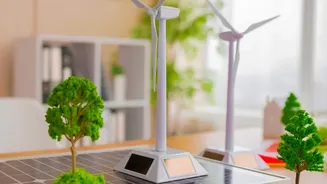
For India to reach its ambitious goal of 30% EV penetration by 2030, it needs an estimated 1.3 million public charging stations. Given the existing grid limitations and the high cost of upgrades, integrating energy storage is not just a benefit—it's a necessity. It allows for the rapid deployment of fast-charging hubs in power-constrained areas, including along highways where they are desperately needed to combat range anxiety. By creating a stable and financially viable ecosystem for charge point operators, these technologies can accelerate private investment. Furthermore, as India increases its renewable energy capacity, stationary storage at charging stations can store excess solar or wind power, ensuring that EVs are truly running on clean energy, day or night.