





A Promising Chemical Signal
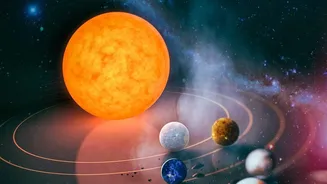
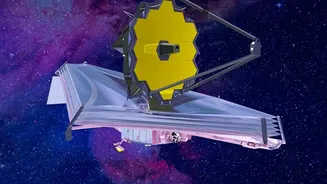
Forty light-years away, in the constellation Aquarius, lies TRAPPIST-1, an ultracool red dwarf star orbited by seven rocky, Earth-sized planets. This system has long been a prime target for astronomers, and the powerful JWST is giving us our best look
yet. The headline-making news involves the potential detection of what scientists call 'heavy' carbon compounds, such as ethane and methane. Finding these on a rocky world is significant. While carbon dioxide is common, more complex carbon-based molecules are considered potential, though not definitive, building blocks for life as we know it. The detection, if confirmed, would represent a major step forward in creating a chemical inventory of planets that could, in theory, support life.
Why the TRAPPIST-1 System Matters
The TRAPPIST-1 system is one of the most important natural laboratories discovered in our galaxy. With seven terrestrial planets, it offers an unprecedented opportunity to compare worlds that formed around the same star. At least three of these planets orbit within the star's 'habitable zone'—the region where temperatures could allow for liquid water on the surface. Previous studies of the inner planets, TRAPPIST-1b and TRAPPIST-1c, have suggested they may have very thin atmospheres or be bare rock, possibly due to the intense radiation from their star early in its life. The latest findings focus on planets further out, which are cooler and have a better chance of retaining a substantial atmosphere, making any chemical signals found there particularly exciting for researchers.
Is It Life? Not So Fast
The phrase 'life implications' can easily be misinterpreted. It's crucial to understand that detecting carbon compounds is not the same as detecting life. These molecules can be produced by geological processes, known as abiotic sources, that have nothing to do with biology. For instance, outgassing from a planet’s mantle or chemical reactions driven by volcanic activity could release carbon compounds into the atmosphere. Scientists are careful to make this distinction. The presence of these specific molecules is a 'biosignature of interest,' meaning it's a clue that warrants a much closer look. For a stronger case for life, researchers would hope to find a combination of gases that are out of chemical balance—for example, methane and oxygen coexisting, as they would normally destroy each other without a biological source, like life on Earth, to constantly replenish them.
The Challenge of Starlight
Observing these distant worlds is an immense technical challenge, even for an instrument as powerful as the JWST. Astronomers use a technique called transmission spectroscopy. When a planet passes in front of its star, a tiny amount of starlight filters through its atmosphere. Different gas molecules absorb specific wavelengths of light, leaving a unique fingerprint that the telescope can read. However, red dwarf stars like TRAPPIST-1 are known for their frequent and powerful flares. This stellar activity can contaminate the light signal, making it difficult to distinguish between features of the planet's atmosphere and the star's own behavior. Scientists must meticulously model and subtract this stellar noise to have confidence in their findings, a process that takes time and multiple observations.
What Comes Next in the Search
This detection is not an end point but a significant milestone that will guide future research. The next step is confirmation. Scientists will use the JWST to observe more transits of the planet, hoping to gather a stronger, clearer signal that confirms the presence and abundance of these carbon molecules. If the findings hold up, the focus will shift to searching for other gases in the atmosphere. The goal is to build a complete picture of the planet's atmospheric chemistry. Discovering other compounds, especially those that might hint at a biological imbalance, would be a monumental discovery. Each observation of the TRAPPIST-1 planets, whether it reveals an atmosphere or confirms a bare rock, provides invaluable data that helps scientists understand how rocky worlds form and evolve around the most common type of star in our galaxy.