

The Ultimate Real Estate Crunch
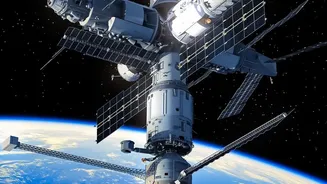
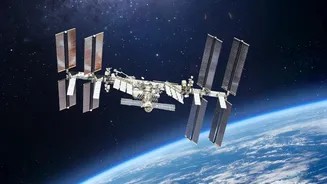
The biggest constraint in building anything in space has always been the ride there. Rockets have a limited amount of space inside their nose cones, known as payload fairings. For decades, this has meant that space station modules had to be small, rigid,
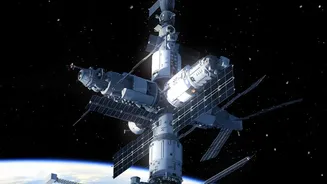
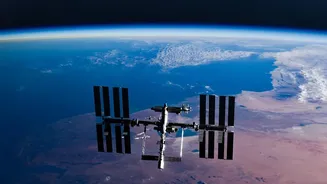
and cylindrical, like the components of the International Space Station (ISS). Assembling these pieces in orbit is a complex, costly, and time-consuming process that took 42 separate launches for the ISS. With the ISS nearing its planned retirement around 2030, and a new commercial rush to low-Earth orbit underway, the industry needs a way to build bigger, faster, and more efficiently. The old model of launching one small room at a time simply won't scale for the future of space tourism, research, and manufacturing.
The Inflatable Revolution
Enter the expandable habitat. Instead of launching a heavy, fixed-size metal can, companies are developing habitats made from advanced, flexible materials that can be folded and packed tightly for launch. Once in orbit, the module is inflated, expanding to many times its launch volume. These aren't simple balloons; they are sophisticated structures made of multiple interwoven layers of high-strength fabrics like Vectran and Kevlar. This layered approach provides robust protection against micrometeoroids and orbital debris (MMOD), and can offer radiation shielding that is equivalent to or even better than traditional aluminum-hulled modules. NASA has already successfully tested the concept with the Bigelow Expandable Activity Module (BEAM), which was attached to the ISS in 2016 and proved the viability of the technology.
Key Players in the New Space Race
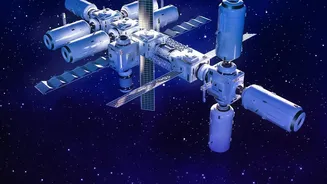
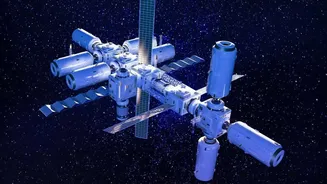
Several commercial players are vying to become the landlords of low-Earth orbit. Sierra Space is a major contender with its Large Integrated Flexible Environment (LIFE) habitat. The LIFE habitat is designed to inflate into a three-story structure with space for four astronauts, complete with labs, exercise equipment, and even gardens for growing fresh food. It is a key component of the planned Orbital Reef space station, a collaboration with Blue Origin. Another company, Max Space, is developing its own scalable habitats, emphasizing that the future of space requires more than just small modules, but genuine, human-centric real estate. Then there is Vast, which is developing the Haven-1 station, planned to be the world's first-ever commercial space station, with a launch targeted for 2027. While Haven-1 is a rigid design, it's a crucial first step in proving the commercial model for private space stations that larger, expandable modules will later serve.
More Room, More Possibilities
The primary advantage of expandable habitats is the sheer volume they provide for a given launch mass. This “packaging efficiency” means a single rocket launch can deploy a habitat with an interior volume comparable to a small house, a feat impossible with rigid structures. This extra space is more than just a luxury; it's a critical enabler for a true off-world economy. It allows for dedicated laboratory space for microgravity research, larger manufacturing facilities for novel products, and more comfortable living quarters for private astronauts on long-duration missions. The psychological benefits are also significant; larger, open-plan environments can help reduce the claustrophobia and stress associated with living in confined spaces for extended periods.
Challenges on the Orbital Frontier
Despite the promise, significant challenges remain. Long-term durability is a primary concern. These habitats must withstand the harsh environment of space—including extreme temperature swings, constant radiation, and the threat of micrometeoroid impacts—for years or even decades. While materials science has advanced considerably, proving the longevity of these soft-goods structures is a key step toward certification for human use. Companies are conducting rigorous ground tests, including pressurizing modules to failure in what are known as “ultimate burst pressure tests,” to validate their designs and meet NASA's safety standards. Furthermore, the business case for commercial space stations is still evolving, with high development costs and questions around market demand presenting financial hurdles.