






The Age of Misleading Health Halos
For years, the front of a snack packet has been prime real estate for marketing, not necessarily information. Brands have expertly used terms like “multigrain,” “low-fat,” “all-natural,” and “rich in protein” to create a “health halo” around their products.
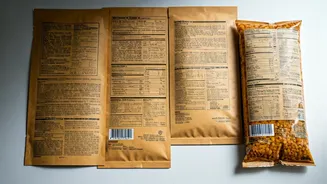
This persuades shoppers to feel good about buying items that might actually be laden with hidden unhealthy ingredients. The problem centres on foods that are High in Fat, Sugar, and Salt (HFSS). These ultra-processed foods are scientifically engineered to hit a “bliss point” that makes them highly palatable and encourages repeat consumption. While the front of the pack makes a health claim, the back often tells a different story, revealing high levels of sugar, sodium, or unhealthy fats. This disconnect is a major public health concern, contributing to a rising tide of non-communicable diseases (NCDs) like diabetes and hypertension in India.
A Tale of Two Labels: Stars vs. Warnings
At the heart of the debate is how to make labels genuinely useful. The Food Safety and Standards Authority of India (FSSAI) has been deliberating on a new Front-of-Pack Labelling (FOPL) system for years. Two main options have emerged. The first is a Health Star Rating (HSR) system, similar to what is used for energy efficiency on appliances. This model, initially favoured by FSSAI and the food industry, would assign products a rating from half a star to five stars based on their overall nutritional profile. However, public health experts and consumer organisations have strongly opposed this, arguing it creates a misleading “health halo.” They point out that a chocolate bar with some nuts might get a higher star rating, distracting from its high sugar content. The alternative, which is gaining significant momentum, is a simple, direct warning label system. This would involve clear, unambiguous symbols—like a black octagon—on the front of packs that explicitly state if a product is “High in Sugar,” “High in Salt,” or “High in Fat.” Studies from India and countries like Chile show these direct warnings are far more effective at helping consumers, including those with lower literacy, identify unhealthy products at a glance.
The Supreme Court Steps In
Frustrated by years of regulatory delays, the Supreme Court of India has recently become a key player in this debate. In early 2026, the court sharply criticised the FSSAI's slow progress and directed the regulator to seriously consider implementing mandatory front-of-pack warning labels. The court observed that the regulator's duty to protect public health is more important than opposition from food companies. This judicial push came from a public interest litigation arguing that the current back-of-pack nutrition tables are insufficient and that consumers have a right to clear health information. The court’s intervention has accelerated the process, turning a long-simmering debate into an urgent directive for action and putting the entire packaged food industry on notice.
How to Read Labels in a Post-Truth World
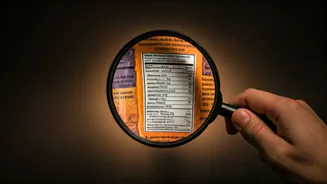
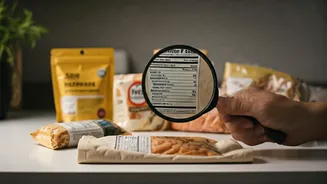
While the final regulations are still being ironised out, the principles of the reality check are already clear. As a consumer, you don’t have to wait for the new labels to become a smarter shopper. The FSSAI itself has encouraged consumers to 'flip the pack' and ignore the flashy marketing on the front. The first step is to always check the ingredients list on the back. Ingredients are listed in descending order by weight, so if sugar, salt, or refined flour (maida) are in the top three, you know what the product is primarily made of. Next, look at the nutritional information panel, specifically the 'per 100g' column, which allows for an equal comparison between products. As a general rule, be wary of products with over 15g of sugar, 600mg of sodium, or 5g of saturated fat per 100g. Finally, be critical of the serving size, which is often manipulated by manufacturers to make the numbers look smaller.