







A Milestone at 88 Percent
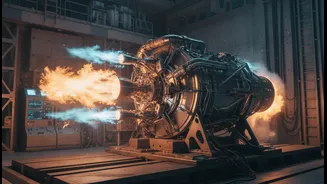
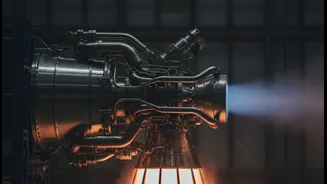
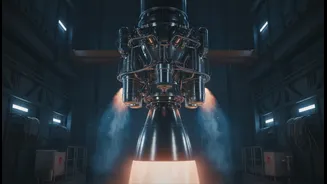
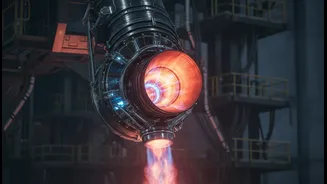
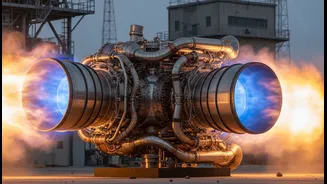
On June 24, 2026, at its Propulsion Complex in Mahendragiri, Tamil Nadu, ISRO successfully conducted a critical hot test of its Semicryogenic Engine Power Head Test Article (PHTA). This wasn't just any test; it was the eighth in a series and by far the most
powerful, achieving a thrust of 175 tonnes. This figure is significant because it represents 88% of the engine's final design target of 200 tonnes. Previous tests had only reached lower levels, around 47% and 60%. Achieving stable operation at such a high thrust level has given ISRO scientists immense confidence, clearing the path for the final demonstration at full power. This success effectively proves the viability of the engine's most complex components under extreme pressure.
Decoding the Semicryogenic Advantage
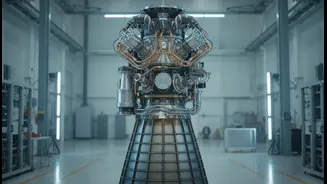
So, what makes this engine a game-changer? The SE2000, as it's known, is a semicryogenic engine. Unlike fully cryogenic engines that use super-chilled liquid hydrogen and liquid oxygen, a semicryogenic system uses liquid oxygen as the oxidizer but pairs it with a highly refined, room-temperature kerosene called Isrosene. This seemingly small change brings enormous benefits. Kerosene is much cheaper and denser than liquid hydrogen, and because it doesn't need to be kept at extremely low temperatures, the fuel tanks and handling logistics become far simpler and less costly. This combination makes the rocket more efficient, powerful, safer to handle, and cheaper to launch. Mastering this technology is a feat achieved by only a handful of nations.
From Long-Term Goal to Imminent Reality
For years, the development of a high-thrust semicryogenic engine was seen as a long-term, albeit crucial, research project for ISRO. The takeaway for most observers was that it was a complex technology that would take many more years to perfect. However, the 'fresh context' provided by the recent string of successful tests changes that narrative entirely. The success at 88% thrust isn't an incremental step; it is a clear signal that the engine is nearing operational readiness. This shifts the perception from a distant ambition to an imminent capability. The development has been fast-tracked, and with the most challenging phase of validating the power head now largely complete, ISRO is closer than ever to integrating this powerful new engine into its fleet.
Powering Up India's Heaviest Rocket
The immediate application for the SE2000 engine is to power a new booster stage, the SC120. This new stage will replace the current L110 liquid core stage of the LVM3, India's most powerful rocket. This strategic upgrade will significantly enhance the LVM3's muscle. The payload capacity to Geostationary Transfer Orbit (GTO), where large communication satellites are placed, will increase from 4 tonnes to 5 tonnes. Its capacity to Low Earth Orbit (LEO) is expected to climb from eight tonnes to ten tonnes. This means India will be able to launch heavier, more advanced satellites, or launch multiple satellites in a single mission more effectively, bolstering both scientific and commercial ventures.
A New Trajectory for Indian Space Exploration
The ripple effects of this single technological advancement are immense. On the commercial front, a more powerful and cost-effective LVM3 will make India a much stronger competitor in the global satellite launch market, which is worth billions of dollars. ISRO aims to increase its market share from about 2% to 10% by the early 2030s, a goal this engine makes far more attainable. Strategically, the upgraded rocket is essential for India's most ambitious future projects. This includes launching heavier modules for a future Indian space station, sending more complex robotic missions to the Moon and Mars, and serving as the powerhouse for the Gaganyaan human spaceflight program. Furthermore, this engine technology is a foundational element for developing next-generation reusable launch vehicles, which will be key to making space access even more routine and affordable.