





Dragon Fruit: The Vibrant Powerhouse
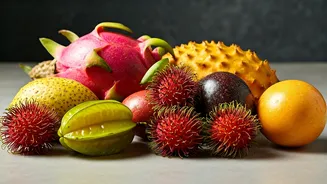
With its shocking pink skin and green scales, dragon fruit, or pitaya, looks like something from another world. But inside, you'll find a mildly sweet, white or magenta flesh speckled with tiny, edible black seeds, often described as a cross between a kiwi
and a pear. It's more than just a pretty face; dragon fruit is hydrating and offers fibre, vitamins, and antioxidants. The antioxidants, like betalains, may help protect your cells from damage. To enjoy it, simply slice the fruit in half lengthwise and scoop out the flesh with a spoon. You can eat it as is, chop it into a vibrant fruit salad, blend it into a stunning smoothie bowl, or even create a sweet salsa to top grilled fish.
Rambutan: The Hairy Cousin of Lychee
Don't be put off by its spiky, hairy appearance. The rambutan is a close relative of the lychee and longan, offering a similar sweet and slightly tart flavour. Once you peel back the vibrant red or yellow rind, you'll find a translucent, juicy flesh that easily pulls away from a central seed. Rambutans are a great source of Vitamin C, which is crucial for immune health and skin-boosting collagen formation. They also provide dietary fibre for digestive health and smaller amounts of minerals like copper and potassium. Enjoy them fresh as a snack; they are incredibly refreshing, especially in hot weather. Just peel and eat the flesh, being careful to avoid the seed.
Mangosteen: The Queen of Fruits
Often hailed as the "Queen of Fruits," the mangosteen is a true tropical delight. It features a thick, deep purple rind that, when opened, reveals fragrant, snow-white segments of fruit. The taste is a complex and exquisite blend of sweet and tangy, with notes of lychee, peach, and pineapple. Mangosteen is particularly known for its concentration of powerful antioxidants called xanthones, found mainly in the rind, which are studied for their anti-inflammatory properties. The fruit itself is a good source of fibre and Vitamin C, supporting digestive and immune health. To eat, score the rind around the equator with a knife, being careful not to cut into the fruit, then twist to separate the halves and enjoy the delicate segments inside.
Persimmon: Autumn's Sweet Treat
Looking like a vibrant orange tomato, the persimmon is an autumn fruit with a honey-like sweetness when ripe. There are two main types: the crisp, apple-like Fuyu and the acorn-shaped Hachiya, which is intensely sweet and jam-like when fully soft. Persimmons are loaded with nutrients, particularly Vitamin A, which is essential for healthy vision, and Vitamin C. They are also an excellent source of fibre, which aids in digestion and can help manage cholesterol. Fuyu persimmons can be sliced and eaten raw in salads or on their own, while the soft flesh of a ripe Hachiya is perfect for spooning out directly or using in baking and puddings.
Star Fruit: The Edible Ornament
Carambola, or star fruit, is a showstopper. When sliced crosswise, it forms perfect little stars, making it a fun and visually appealing addition to any dish. It has a waxy, edible skin and a crisp, juicy texture. The flavour is a unique mix of sweet and sour, often compared to a blend of apple, grape, and citrus. Star fruit is a great source of Vitamin C and contains other beneficial plant compounds. Use it to garnish drinks, toss it into fruit salads for an exotic touch, or simply eat the slices raw. The entire fruit is edible, though some prefer to trim the brownish edges of the ridges. It's an easy way to make any meal or snack feel a little more special.