

The Most Common, and Strangest, Planets
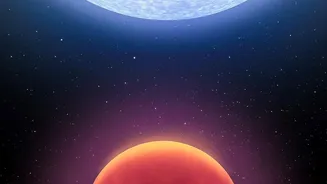
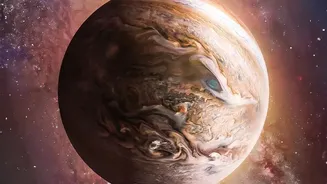
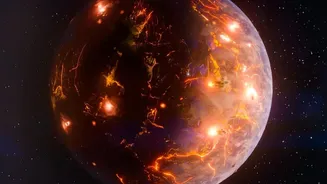
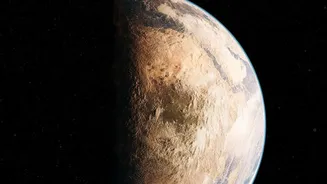
Our galaxy is teeming with planets, and the most common type discovered so far is the “sub-Neptune” or “mini-Neptune.” These worlds, larger than Earth but smaller than Neptune, have no direct comparison in our own solar system. They represent a major
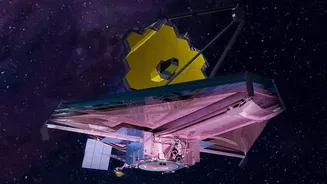
puzzle for astronomers: are they rocky worlds with thick gas envelopes, or are they water worlds with deep global oceans? The James Webb Space Telescope is our first real chance to peek into their atmospheres and find out. These planets are often found orbiting very close to their host stars, which puts them in an extreme and violent environment. Understanding them is a key focus for JWST, as their diversity provides crucial insights into how planets form and what conditions might lead to a habitable world.
An Atmosphere Under Attack
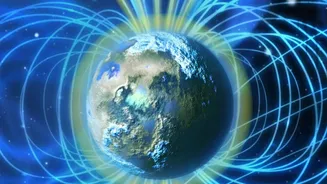
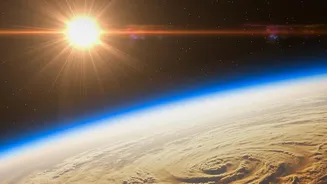
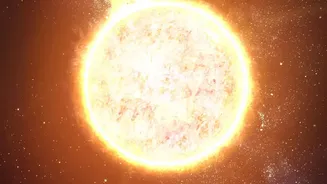
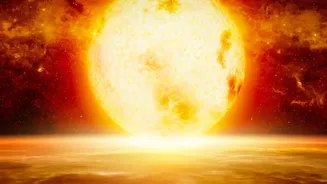
For a planet to be habitable, it needs an atmosphere. This blanket of gas protects the surface from harsh radiation and helps maintain a stable temperature for liquid water to exist. But for planets orbiting close to their stars, holding onto an atmosphere is a constant battle. The star unleashes a relentless torrent of high-energy X-ray and ultraviolet (XUV) radiation, along with a stream of charged particles known as stellar wind. This process, called atmospheric stripping or photoevaporation, can be incredibly destructive. The intense radiation heats the upper atmosphere, causing gases to escape into space. Over millions of years, this can completely erode a planet’s gaseous envelope, turning a once-promising world into a barren rock.
What JWST Is Witnessing
JWST is observing this dramatic process in action. By watching exoplanets as they transit in front of their stars, the telescope's spectrographs can detect which chemical elements are present in their atmospheres and even which ones are escaping. For example, observations of the Neptune-sized planet GJ 3470 b revealed it is losing its atmosphere at a significant rate. In another striking case, the telescope captured a giant cloud of helium evaporating from the 'super-puff' exoplanet WASP-107b. These observations confirm long-held theories about atmospheric loss and provide real-world data on how quickly it can happen. For planets orbiting very close to their stars, especially active red dwarfs, the median mass loss from photoevaporation can be 100%—total atmospheric destruction.
Redefining the 'Habitable Zone'
These findings force us to rethink the concept of the “habitable zone,” often called the 'Goldilocks zone'. Traditionally, this zone is defined as the orbital distance where a planet’s surface temperature could allow for liquid water. However, JWST's observations show that temperature is only part of the story. A planet can be in the perfect temperature range, but if its star is too active or the planet's gravity isn't strong enough, its atmosphere will be stripped away, making it uninhabitable. This means the true habitable zone is much narrower. It’s not just about being not too hot and not too cold; it's also about surviving the star's onslaught. The ability of a planet to retain its atmosphere over billions of years is now seen as a crucial ingredient for life.
A More Focused Search for Life
While discovering that many planets are losing their atmospheres might seem discouraging, it's actually a huge step forward in the search for life. It helps astronomers filter out the poor candidates and focus on the most promising ones. Instead of just looking at a planet's size and distance from its star, scientists can now factor in the star’s activity and the planet’s likely ability to hold onto its air. For instance, recent JWST studies of a mini-Neptune in a rare system suggest it formed far from its star and migrated inward, which allowed it to keep a heavy, water-rich atmosphere. By understanding the mechanics of atmospheric loss, we learn what makes a world resilient. This refined approach allows us to identify planets that not only have the potential for liquid water but also have the stable, long-lasting atmosphere necessary to support life's evolution.