


Why Venus? Earth's Hellish Twin
Venus is often called Earth's twin because of its similar size, mass, and structure. But the similarities end there. The second planet from the Sun is the hottest in our solar system, with surface temperatures high enough to melt lead. Its atmosphere
is a crushing blanket of carbon dioxide, about 92 times denser than Earth's, creating a runaway greenhouse effect. These extreme conditions make Venus a fascinating case study for scientists. By understanding why a planet so similar to our own became so inhospitable, researchers hope to gain valuable insights into planetary evolution and the delicate balance that makes life on Earth possible. Studying Venus could offer crucial lessons about climate change and the ultimate fate of planetary atmospheres.
The Challenge: A Toxic, Corrosive World
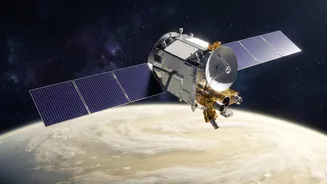
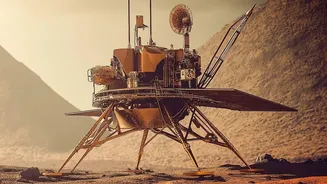
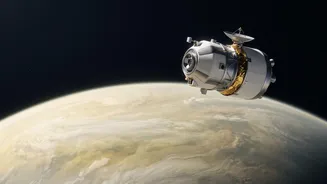
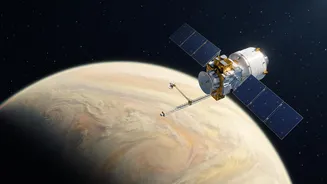
Exploring Venus is one of the greatest technological challenges in the solar system. The planet is perpetually covered by thick clouds of sulfuric acid. These clouds are not just an obstacle for cameras; they are highly corrosive to metal and electronics, making long-term missions incredibly difficult. Any spacecraft entering the atmosphere must withstand not only the acid but also immense pressure and scorching heat. While the Soviet Venera probes famously landed on the surface in the 1970s and '80s, they survived for only short periods before succumbing to the hostile environment. ISRO's Shukrayaan will be an orbiter, designed to study this brutal world from a safe distance for a planned duration of four years.
Shukrayaan's Toolkit: Sensors to Pierce the Veil
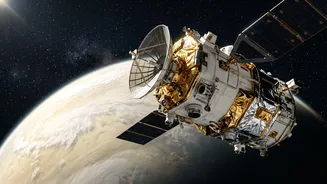
To study a world hidden by clouds, Shukrayaan will carry a suite of advanced sensors weighing around 100 kg. The headline instrument is a high-resolution Synthetic Aperture Radar (SAR), which can penetrate the thick cloud cover to map the Venusian surface in detail, searching for signs of active volcanoes and lava flows. Another key instrument is a ground-penetrating radar, a first for Venus exploration, designed to study the planet's subsurface. The orbiter will also be equipped with thermal cameras, spectrometers, and other atmospheric probes to analyse the chemical composition of the clouds, monitor for lightning, and study how the planet's upper atmosphere interacts with the solar wind.
A Global Collaboration
While a flagship Indian mission, Shukrayaan is also a global scientific endeavour. ISRO has partnered with international space agencies to enhance the mission's capabilities. Key collaborations include the VIRAL (Venus InfraRed Atmospheric Gases Linker) instrument, co-developed with Russia and France, to study atmospheric gases. Sweden is contributing the Venusian Neutrals Analyzer (VNA) to study the interaction between the solar wind and the planet's atmosphere. Germany is also collaborating on an instrument to study the ionosphere. These partnerships underscore the mission's global importance and position India as a key player in planetary exploration.
The Road to Venus
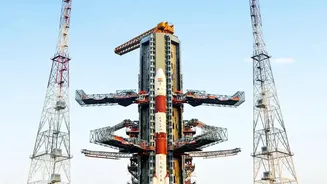
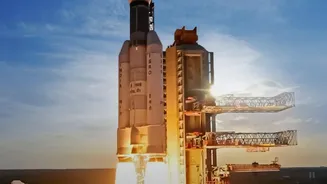
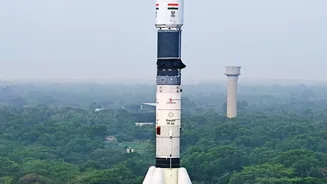
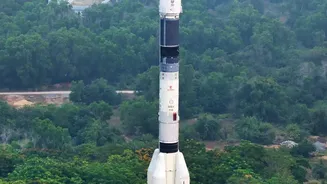
The Venus Orbiter Mission, which received cabinet approval in September 2024, is currently planned for a March 2028 launch aboard India's powerful LVM-3 rocket. After a journey of several months, the spacecraft will enter a large elliptical orbit around Venus. From there, it will perform a series of complex aerobraking manoeuvres—a first for ISRO—using the drag from Venus's upper atmosphere to gradually lower its orbit into the ideal position for scientific observations. This fuel-efficient technique will allow the spacecraft to carry more scientific instruments. If all goes to plan, Shukrayaan will begin its multi-year mission to unlock the secrets of our enigmatic planetary neighbour.