





The Science of a Secure Style
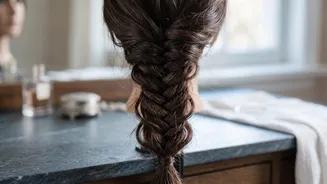
The secret to the fishtail braid's staying power lies in its fundamental structure. Unlike a classic three-strand braid, a fishtail is created by continuously crossing small sections of hair over two main portions. This intricate weaving technique creates
significantly more friction and tension between the hair strands. Each small piece of hair is locked into place by the sections crossing over it from both sides, distributing tension evenly and creating a stable, interlocking pattern. This structure is inherently more resistant to movement, humidity, and the general wear and tear of a long day compared to loose, blow-dried hair, where strands are independent and more susceptible to the elements.
The Fleeting Charm of a Fresh Blowout
There's no denying the appeal of freshly blow-dried hair. It's voluminous, smooth, and full of life. However, this style's longevity is often its downfall. Hair is primarily composed of a protein called keratin, and exposure to high heat from a blow-dryer can damage this structure over time, leading to dryness and brittleness. More immediately, blow-dried hair is vulnerable to environmental factors. Humidity can cause frizz, wind can create tangles, and even the simple act of leaning against a chair can disrupt the carefully crafted smoothness. While a blowout is perfect for a short-term event, it lacks the structural integrity to withstand a full day of activity without touch-ups.
When a Long-Lasting Braid Is Your Best Friend
A fishtail braid shines in situations where you need your hair to look polished for hours on end without a second thought. Consider it your go-to style for long workdays, outdoor music festivals, or a lengthy wedding celebration. It’s also an excellent choice for physical activities, keeping hair securely off your face. Furthermore, braids are considered a 'protective style', shielding your hair from environmental damage, reducing breakage, and helping to retain moisture. This makes the fishtail braid not just a stylistic choice, but a practical one for maintaining hair health.
How to Maximize Your Fishtail’s Grip
To ensure your fishtail braid lasts as long as possible, preparation is key. Starting with hair that isn't freshly washed can provide more natural grip. If your hair is clean and slippery, a light mist of texturizing spray or dry shampoo will add the grit needed for the strands to hold onto each other. When braiding, use small, even sections; the more intricate the weave, the more secure it will be. For beginners, starting with a low ponytail can make the process easier to manage. Once your braid is complete, secure it with a small elastic. For extra hold, finish with a light mist of a flexible-hold hairspray to tame any flyaways without making the hair stiff.
From Daytime Braid to Evening Waves
One of the best-kept secrets of a fishtail braid is the bonus style it provides. After wearing the braid all day, carefully undoing it reveals beautiful, heatless waves. The tight, intricate pattern of the fishtail creates a more defined and less uniform wave pattern than a traditional three-strand braid. This gives you a second, completely different look with zero extra effort. Just a quick tousle with your fingers and perhaps a touch of finishing cream, and you're ready for an evening out. This dual-purpose nature makes the fishtail braid an incredibly efficient and versatile styling choice.