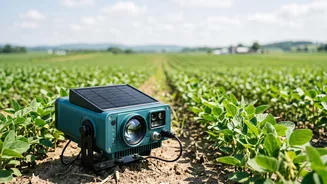








What is Local or 'Small' AI?
Forget the trillion-dollar, data-hungry models being built by tech giants. The World Bank is focusing on what it calls 'small AI'. This refers to practical, affordable AI solutions designed to solve specific, local challenges. These are lightweight models that
can run on everyday devices like basic smartphones, often with low connectivity, and in local languages. Instead of replacing workers, the goal is to amplify their capabilities. Think of an agricultural app that helps a farmer diagnose crop pests using their phone's camera, or a handheld device that allows a healthcare worker in a remote village to screen for diseases without a constant internet connection. This approach moves AI from the cloud to the 'edge', running processes directly on a user's device, which enhances privacy, speed, and drastically reduces costs.
The World Bank’s Big Bet on Adaptation
In its 2026 World Development Report, the World Bank argues that developing countries can achieve immense benefits not by creating advanced AI from scratch, but by adapting existing tools to local contexts. The institution's new digital strategy emphasizes a clear framework: adopt, adapt, and then advance. The biggest gains, according to the Bank, come from the 'adapt' phase. Simply importing AI trained in high-income countries isn't enough, as its recommendations may not align with local norms or realities. Instead, the focus is on tailoring solutions. This could mean AI-powered advice delivered via voice calls for those who cannot read, or systems trained on local data sets to solve community-specific problems. This strategy aims to prevent a repeat of past technological revolutions where developing nations were left behind.
Why This, and Why Now?
This strategic pivot comes at a critical time. Many developing economies are facing their weakest growth in decades. The World Bank believes AI offers a 'lifeline', with the potential to help these countries achieve in a decade what might otherwise have taken a century. However, the window of opportunity is closing fast. Without deliberate action, AI could widen the gap between countries, concentrate market power, and increase inequality. The most advanced AI systems are currently being built by a handful of companies and nations. By promoting small, local AI, the World Bank aims to democratise access, fostering innovation from the ground up and empowering local tech ecosystems, from startups to universities.
India's Prime Position to Lead
For India, this recommendation is less a directive and more an affirmation of a path already being forged. With its vibrant tech startup scene, vast engineering talent, and unique developmental challenges, India is a natural testbed for local AI solutions. The World Bank report itself highlights how AI-supported weather forecasts have already reached over 30 million Indian farmers. Other examples include AI tools helping to personalize education on platforms like DIKSHA or improving healthcare diagnostics. Paschal Donohoe, a senior World Bank official, specifically cited how 'small AI' can deliver crucial soil analysis to Indian farmers in their own languages, a task impossible to scale with human experts alone. India's focus on building digital public infrastructure provides a strong foundation for deploying these technologies at scale.
The Road Ahead: Challenges and Opportunities
Despite the optimism, significant hurdles remain. The World Bank is clear that the benefits of AI will not materialise without foundational support, including reliable electricity, affordable internet access, and digital skills. For many regions, these basics are still not in place. Furthermore, there are challenges related to data privacy, algorithmic bias, and the need for robust governance frameworks to ensure AI is used ethically and responsibly. To help overcome the infrastructure barrier, the World Bank has launched an AI Infrastructure and Readiness Initiative, which aims to provide shared, pay-as-you-go access to the specialized computing power needed for AI development, with an initial focus on Africa and Latin America. This signals a commitment to not just recommend, but actively enable this developmental shift.