






The Month of Renewal
Karkidakam, the final month of the Malayalam calendar, typically falls between mid-July and mid-August, coinciding with the peak of the monsoon season. Historically, it was known as a challenging period of incessant rain, leading to scarcity and a slowdown
in daily life, earning it the name 'Panja Masam' (the month of scarcity). However, this forced pause also turned Karkidakam into a time for introspection, spiritual practices, and healing. It is famously known as the ‘Ramayana Masam,’ a time when families gather to read the epic Ramayana, seeking spiritual strength. In this context, the focus shifts inward, preparing the body and mind for the year ahead, making it the ideal season for Ayurvedic rejuvenation.
The Healing Porridge: Karkidaka Kanji
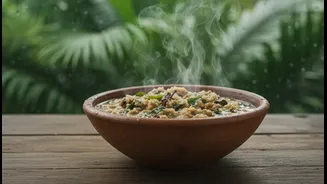
Central to this month of wellness is the Karkidaka Kanji, also known as Oushadha Kanji or Marunnu Kanji (medicinal porridge). This is no ordinary rice gruel. It is a carefully formulated dish rooted in Ayurvedic principles, designed to support the body when it is considered most vulnerable. According to Ayurveda, the damp, cool monsoon weather weakens one's digestive fire (Agni) and lowers immunity, making the body susceptible to illness. The Karkidaka Kanji is specifically designed to counteract these effects. It is a light, warm, and easily digestible food that strengthens the system from within, embodying the Ayurvedic principle of 'Ahara as Aushadha' (food as medicine).
A Symphony of Ingredients
The power of Karkidaka Kanji lies in its ingredients. The base is often Njavara rice, a medicinal variety known in Kerala for being light on the stomach and nourishing. This is cooked with a potent blend of herbs and spices. Key components include fenugreek (uluva), which helps with inflammation; dry ginger (chukku) and cumin (jeera), which kindle the digestive fire and reduce bloating; and garlic and black pepper, which bolster immunity. Many preparations also include a mix of ten sacred flowers and roots known as 'Dashapushpam' or powdered herbal formulations like 'Dashamoola'. This combination works synergistically to detoxify the body, reduce joint pain common in the damp weather, and boost overall energy.
Tradition in the Modern Age
What was once a ritual confined to family kitchens has now found its place in the modern world. While many families still prepare the porridge at home, often using herbs from their own gardens, the tradition has adapted to contemporary lifestyles. Today, one can easily find ready-to-cook 'Karkidaka Kanji kits' in stores and online, containing pre-measured packets of Njavara rice and the essential herbal powders. Ayurvedic hospitals and wellness centres also offer comprehensive 'Karkidaka Chikitsa' packages, which include specialised diets featuring the kanji, alongside therapeutic massages and detox treatments like Panchakarma. This commercial availability has made the practice accessible to a wider audience, ensuring its continuity.
Why It Still Matters
In an era of wellness trends and quick-fix health solutions, Karkidaka Kanji stands as a testament to the enduring wisdom of traditional, seasonal living. The practice is not merely about consuming a healthy meal; it is a holistic approach to well-being that aligns the body with the rhythms of nature. It encourages a period of rest, mindful eating, and spiritual focus, which are increasingly relevant in today's fast-paced world. Consuming the kanji for a week, or even throughout the month, is an act of self-care that connects individuals to their cultural heritage and the natural environment. It serves as a powerful reminder that sometimes the most profound health solutions are the ones that have been quietly practised for centuries.