




The Ritual of the Roast
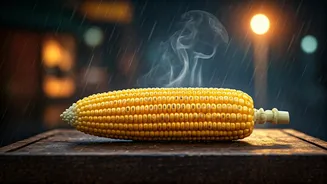
It’s a scene replayed on countless street corners. A bhutta-wallah, often positioned under a makeshift tarp, expertly fans glowing embers in a small coal stove. The air fills with the distinct, nostalgic aroma of charring corn husks and woodsmoke, a scent
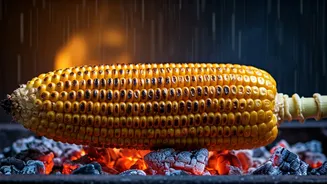
that mingles perfectly with the smell of rain. This isn't just cooking; it’s a performance. The vendor deftly turns the cobs, ensuring each kernel is kissed by the flame, creating those coveted blackened spots that offer a delightful bitterness against the corn's subtle sweetness. For many, the sight and sound—the fanning of the coals, the sizzle as stray raindrops hit the stove—are as much a part of the experience as the taste itself. It’s a multisensory ritual that announces the monsoon has truly arrived.
Anatomy of a Perfect Bite
What makes this humble snack so irresistible? It starts with the corn. Traditionally, the star is the desi bhutta, or field corn. Its kernels are chewier, less sugary, and have a more robust, earthy flavour compared to the modern, often genetically modified, sweet corn. While sweet corn has its fans, the classic bhutta’s starchy texture is the perfect canvas for the roasting process, becoming tender yet retaining a satisfying bite. Once roasted to perfection, the final, crucial act begins. The vendor takes half a lemon, dips it into a potent mix of salt, red chilli powder, and often chaat masala or black salt (kala namak), and rubs it vigorously all over the hot cob. This acidic, spicy, and salty flourish cuts through the smokiness, awakening the palate and creating a flavour explosion that is both rustic and complex.
More Than Just a Snack
The love for bhutta runs deeper than its taste. It’s an incredibly democratic and accessible pleasure. Costing very little, it's a treat enjoyed by everyone, from schoolchildren huddling under an umbrella to office-goers taking a break from their commute. It represents a pause, a moment of simple, unadulterated joy in the middle of a damp, often chaotic day. Sharing a bhutta with friends or family on a rainy evening, with fingers stained black from the char and yellow from the masala, is a core memory for millions. It’s a social currency, a conversation starter, and a tangible link to monsoons past. In a world of complex, gourmet foods, the bhutta stands as a testament to the enduring power of simplicity.
The Unsung Street-Side Artist
The bhutta-wallah is an artist whose craft is often overlooked. They possess an intuitive understanding of heat and timing, knowing the exact moment a cob is perfectly cooked—not raw, not burnt, but with that ideal smoky char. Their hands move with a practiced rhythm, turning dozens of cobs simultaneously, managing the fire, and seasoning each one to the customer's preference (“thoda aage se,” “kam teekha, please”). This is a skill passed down through generations, a form of culinary heritage that exists on the streets, not in fancy kitchens. Every time you buy a bhutta, you are supporting a micro-entrepreneur who is preserving a vital piece of India’s food culture.
The Enduring Classic
In recent years, bhutta has seen modern interpretations. You'll find boiled corn cups loaded with butter and mayonnaise, or even ‘peri-peri’ flavoured corn. While these variations have their place, they rarely evoke the same deep-seated emotional response. The magic of the original lies in its rawness and elemental nature—fire, corn, and a squeeze of lime. It doesn’t need embellishment. The classic roasted bhutta is not just a food item; it’s an experience inextricably woven into the fabric of the Indian monsoon. It’s the flavour of grey skies, of wet roads, and of the collective joy that the rains bring.