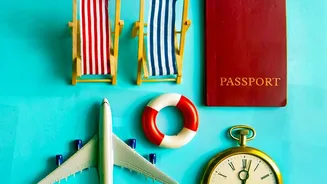









The classic two-week annual vacation, a long-held tradition of saving up time and money for one big trip, is fading. For Gen Z, a new travel philosophy is taking over: more is more. They are trading the single yearly getaway for shorter, more frequent
'micro-cations'.
The Rise of the Micro-Cation
The long-awaited annual leave is being replaced by a series of mini-adventures. Recent reports highlight a significant shift in travel habits, particularly among those born between 1997 and 2012. According to a report from Airbnb concerning travel in India, a remarkable seven in ten Gen Z travellers would rather take three short trips than one long holiday. Similarly, other research shows that 87% prefer trips that last under a week. This trend, dubbed the 'micro-cation' or 'micro-trip', involves short, high-impact getaways of just two to four days, often built around a weekend. Instead of spending months planning a single large-scale vacation, this generation is opting for spontaneity and frequency, fundamentally changing the rhythm of leisure travel.
Driven by Budgets and Burnout
This shift isn't just about a preference for novelty; it's a pragmatic response to modern economic and professional life. With rising living costs and the pressures of new careers, sprawling, expensive holidays are often out of reach. Shorter trips are simply more budget-friendly. But it's not only about money. In an 'always-on' work culture where the office lives in your pocket, the idea of completely disconnecting for two weeks can feel impossible. Micro-cations offer a manageable escape hatch—a quick reset to combat burnout without the stress of accumulating a mountain of work to return to. For a generation that reports high levels of stress, travel is seen as a non-negotiable tool for improving mental wellbeing.
The Social Media Effect
It's impossible to discuss Gen Z habits without acknowledging the role of social media. Platforms like Instagram and TikTok have created a culture where experiences are currency. A weekend trip provides fresh content—new landscapes, new foods, new stories—far more frequently than a single annual holiday. This has even spawned viral trends of people documenting whirlwind 24- to 72-hour international trips, further normalising the concept of the hyper-short getaway. For many, the choice of destination is heavily influenced by social media, with an amazing 90% saying it plays a role in their travel decisions. The constant stream of inspiration fuels a desire for a constant stream of experiences, which micro-trips are perfectly suited to satisfy.
The 'Anti-Itinerary' Generation
While you might think these short trips would be packed with minute-by-minute plans, the opposite is often true. Gen Z has been called the 'anti-itinerary' generation. Many book their trips spontaneously, just days or weeks in advance, as a reflexive response to a free weekend or a need to destress. More surprisingly, a large number of these travellers go away with the explicit intention of doing nothing at all. Data shows two in three travel simply to rest and take slow days, intentionally leaving parts of their schedule unplanned for spontaneous exploration. For them, the stay itself is the destination, prioritising unique accommodation with a personal feel over ticking off a list of famous landmarks.
How the Travel Industry Is Responding
The travel and hospitality sectors are taking notice and adapting to this new pattern of consumption. Airlines and hotels are increasingly offering weekend packages, flexible booking options, and deals tailored to short duration stays. There is a growing focus on providing unique, authentic experiences that go beyond the typical tourist fare, catering to Gen Z's desire for trips that reflect their personal taste. The emphasis is shifting from simply providing a room to creating a 'vibe'—a comfortable, aesthetically pleasing base for a short period of relaxation and local immersion. As this generation's spending power grows, the brands that understand and cater to the microcation mindset are best positioned for future success.