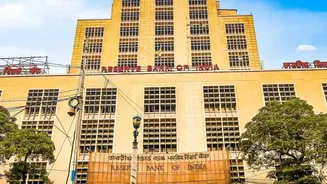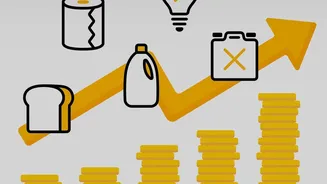







Rising prices can strain any household budget, but for homeowners, inflation often brings another worry: higher loan repayments. The Reserve Bank of India's actions to curb inflation can directly impact your monthly housing loan EMI. Here’s how.
Why Inflation Triggers RBI Action
Inflation
is the rate at which the general level of prices for goods and services is rising, and subsequently, purchasing power is falling. The RBI's primary mandate is to maintain price stability, with a target for consumer price inflation of 4%, within a tolerance band of 2% to 6%. When inflation consistently trends above this level, as it did in October 2026 when it crossed the 6% mark, the RBI steps in. To cool down the economy and control rising prices, the central bank uses several tools, the most powerful of which is the repo rate.
The Repo Rate: The RBI’s Master Key
The repo rate is the interest rate at which commercial banks borrow money from the RBI for their short-term needs. Think of it as the cost of funds for banks. When the RBI wants to reduce the amount of money in the economy to fight inflation, it increases the repo rate. This makes it more expensive for banks like SBI, HDFC Bank, or ICICI Bank to borrow from the central bank. Following an October 2026 rate hike, the repo rate stood at 5.50%. Consequently, to protect their own profit margins, banks pass this increased cost on to their customers in the form of higher interest rates on loans, including home loans.
How Rate Hikes Reach Your Home Loan
The connection between the repo rate and your home loan is now more direct than ever. Since October 2019, the RBI has mandated that all new floating-rate retail loans must be linked to an external benchmark. For most banks, this benchmark is the RBI's repo rate. This system is known as the External Benchmark Linked Rate (EBLR). Your final home loan interest rate is typically the EBLR plus a 'spread' or margin that the bank adds. When the RBI adjusts the repo rate, banks must adjust their EBLR accordingly, ensuring policy changes are transmitted to borrowers much faster than under previous systems. Banks are required to reset these rates at least once every three months.
The Impact: Higher EMI or Longer Tenure?
When your floating loan interest rate increases, lenders typically respond in one of two ways. The first and most direct impact is an increase in your Equated Monthly Instalment (EMI), meaning you pay more each month while the loan duration remains the same. The second option, which many banks prefer to avoid burdening customers' monthly budgets, is to extend the loan tenure. In this scenario, your EMI stays roughly the same, but you will be paying it for a longer period—sometimes adding months or even years to your repayment schedule. While a longer tenure keeps your monthly cash flow stable, it also means you end up paying significantly more in total interest over the life of the loan.
What Can Home Loan Borrowers Do?
For those with floating-rate loans, a rising rate environment requires proactive management. One effective strategy is to make partial prepayments towards the principal amount whenever possible. This can be done using bonuses or other windfalls to reduce your outstanding balance, which can shorten your tenure and save a substantial amount in interest. Another option is to voluntarily increase your EMI. If your finances allow, a higher EMI can help you pay off the loan faster and mitigate the impact of the rate hike. Borrowers can also explore refinancing their loan with a different lender who might offer a more competitive interest rate or a lower spread over the EBLR. Lastly, those with fixed-rate loans are insulated from these immediate changes, as their interest rate is locked in for a specific period. However, new fixed-rate loans become more expensive during a rate hike cycle.
What Lies Ahead for Interest Rates?
As of late November 2026, with inflation remaining a key concern, many economists expect further action from the RBI. Polls of economists suggest another potential 25 basis point hike in the December 2026 policy meeting, which would take the repo rate to 5.75%. Some forecasts even project the repo rate could climb towards 6.0% or 6.25% by mid-2027 if inflationary pressures persist, driven by factors like food prices and global uncertainty. For homeowners, this signals that the era of low interest rates may be firmly in the past, and preparing for higher repayment costs is a prudent financial step.