



First, Let's Define Our Terms
Before we travel to Venus, let's clarify two fundamental concepts we often take for granted here on Earth. A 'year' is the time it takes for a planet to complete one full orbit around the Sun. For Earth, that’s roughly 365 days. A 'day' is the time it takes for a planet to complete one full rotation
on its own axis. For Earth, that’s about 24 hours. On our world, this relationship is simple: we fit many, many short days into one long year. Venus, however, plays by a completely different set of rules.
The Swift Venusian Year
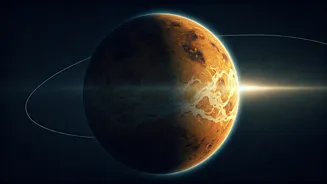
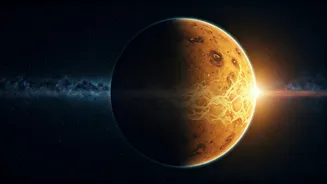
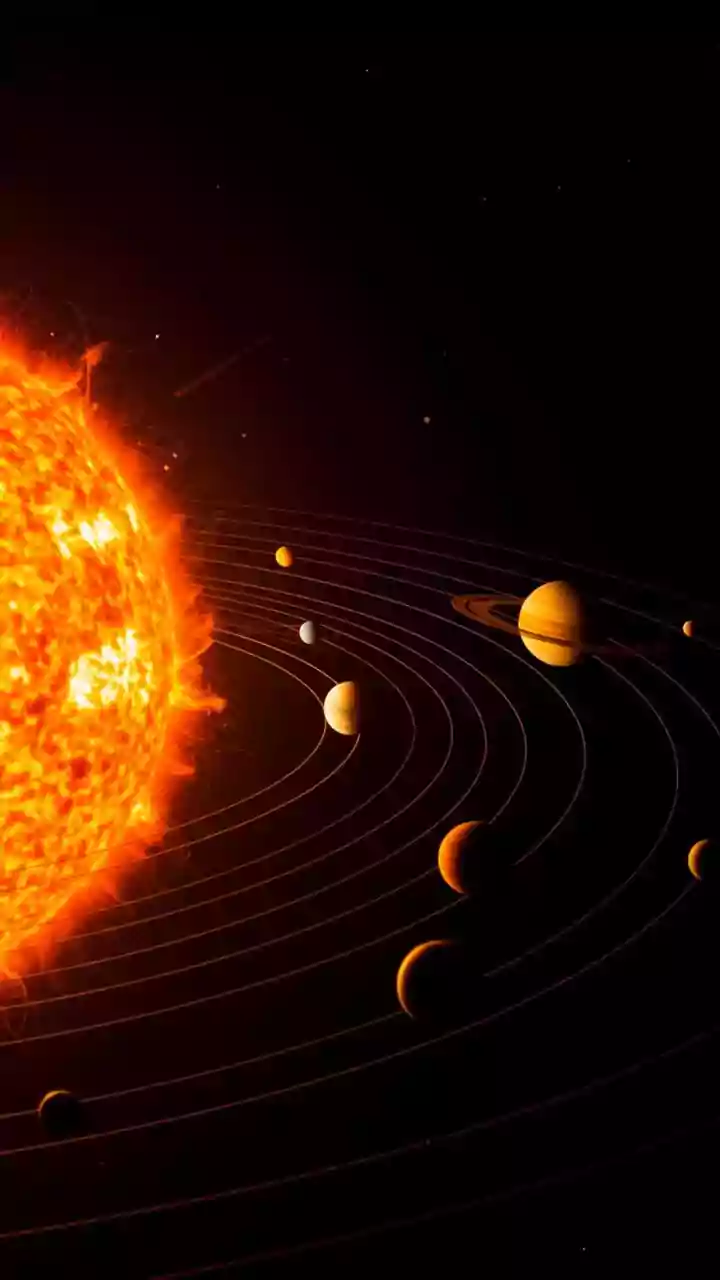
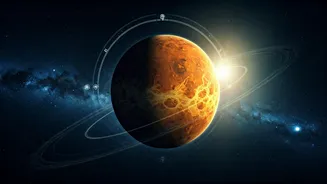
Let's start with the easy part: the Venusian year. Venus is the second planet from the Sun, making its orbital path shorter than Earth’s. It zips around the Sun at a brisk pace, completing one full orbit in approximately 225 Earth days. So, if you were to celebrate your birthday on Venus, you'd be doing it every 225 days. This is straightforward enough. A year on Venus is significantly shorter than a year on Earth. The real confusion begins when we look at its day.
The Incredibly Slow, Backward Day
This is where our brains start to bend. While Earth spins on its axis once every 24 hours, Venus moves at a glacial pace. It takes a staggering 243 Earth days for Venus to complete just one rotation. This is what scientists call a 'sidereal day'. Not only is this rotation incredibly slow, but it's also backward. Unlike Earth and most other planets in our solar system, Venus spins in a retrograde motion—clockwise, from east to west. If you could stand on Venus's surface, you would see the Sun rise in the west and set in the east.
Putting It All Together
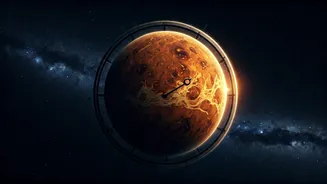
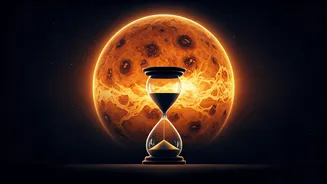
Now, let’s do the simple math that confirms the headline. The time it takes Venus to orbit the Sun (its year) is about 225 Earth days. The time it takes Venus to spin once on its axis (its day) is 243 Earth days. Therefore, a single Venusian day is about 18 Earth days longer than a full Venusian year. You would finish orbiting the sun for the year before you even finished your first day. It's a concept that completely defies our Earth-based intuition about how time and celestial motion should work.
But What About Sunrise to Sunrise?
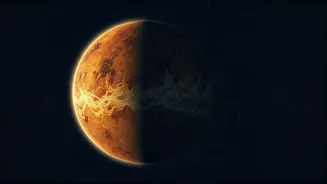
To add another layer of weirdness, the 'day' as defined by a single rotation isn't what you'd experience on the surface. A 'solar day'—the time from one sunrise to the next—is different. Because Venus rotates backward as it orbits the Sun, these two motions work against each other in a strange way. The result is that a solar day on Venus is about 117 Earth days long. So, you would experience two sunrises in a single Venusian year, with roughly 117 days of daylight and 117 days of darkness in between. Even this 'shorter' day is still a few months long.
Why is Venus So Strange?
Scientists don't have a single, definitive answer, but there are leading theories. One popular hypothesis suggests that Venus may have been struck by a massive asteroid or planetary body early in its history, an impact so powerful it reversed its rotation and drastically slowed its spin. Another theory points to its incredibly thick, heavy atmosphere. This dense blanket of gas may create strong atmospheric tides that, influenced by the Sun's gravity over billions of years, have acted as a brake, slowing the planet's rotation to its current crawl. It’s likely a combination of its formation, history, and unique atmospheric dynamics that turned Venus into the solar system's oddball.