

Seeing the Invisible Signature of Water
For years, scientists suspected water might exist on the Moon, but initial observations were ambiguous. Instruments detected hydrogen, but couldn't distinguish between water (H2O) and its chemical cousin, hydroxyl (OH). The breakthrough came from NASA’s
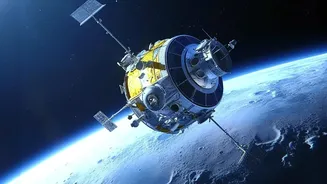
Stratospheric Observatory for Infrared Astronomy, or SOFIA—a modified Boeing 747 carrying a massive telescope. Flying high above 99% of Earth's atmospheric water vapor, SOFIA could get a clear view of the infrared universe. Using its specialized camera, it detected a specific wavelength of infrared light (6.1 microns) that is unique to H2O molecules. This wasn't just a hint; it was an unmistakable signature confirming that the familiar water we drink exists on the lunar surface, even in areas bathed in sunlight.
Not Just in the Shadows
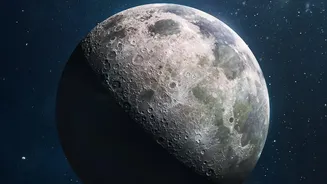
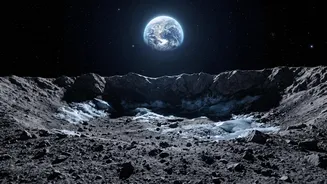
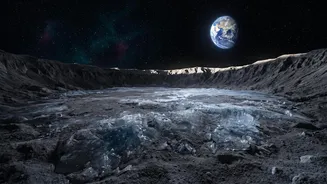
Previously, the consensus was that any lunar water would be confined to permanently shadowed craters at the poles, where temperatures are cold enough for ice to survive for billions of years. The SOFIA observations turned this idea on its head by finding water molecules in Clavius Crater, a large crater in the Moon's southern hemisphere that is visible from Earth and exposed to direct sunlight. The concentrations were small—roughly equivalent to a 12-ounce bottle of water in a cubic meter of soil—but the discovery was profound. It suggests water isn't just locked away in a few deep-freeze craters but may be distributed more widely across the lunar surface. Scientists believe this water could be trapped within beads of glass created by micrometeorite impacts or nestled between grains of lunar soil, shielded from the harsh environment.
The Ultimate Off-World Resource
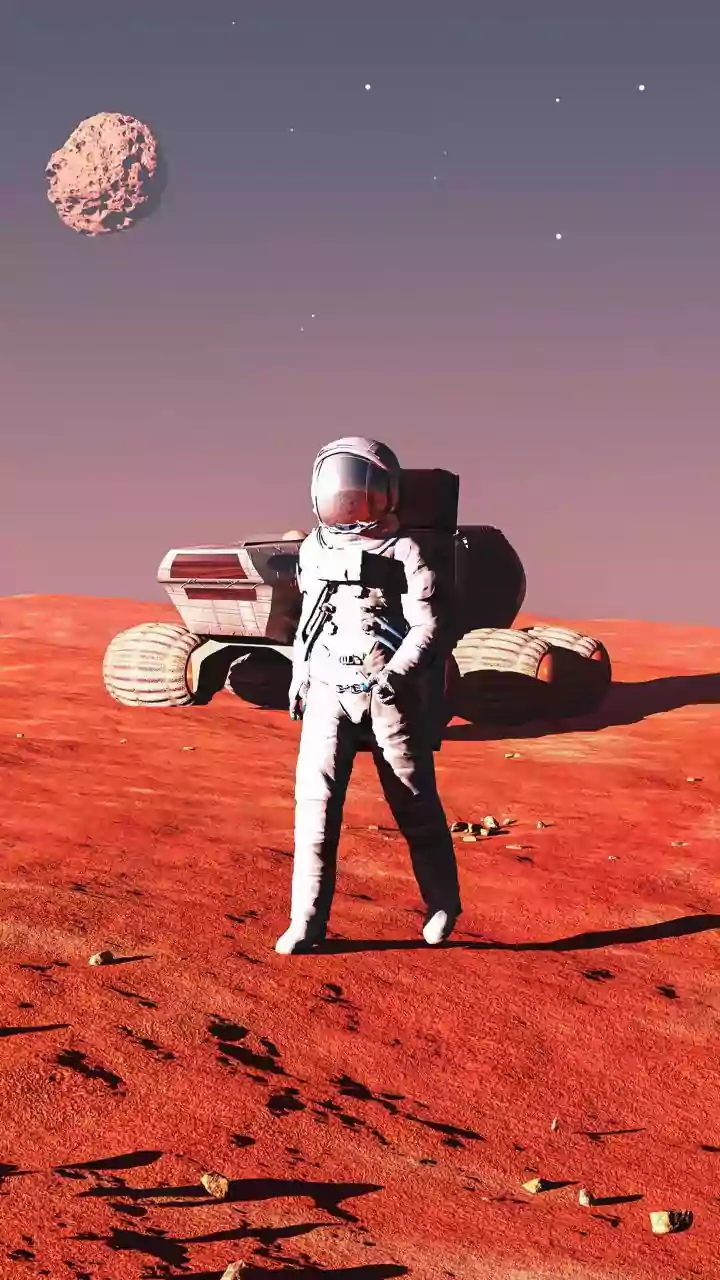
The confirmation of water is less about finding a drink for future astronauts and more about unlocking a new paradigm for space exploration. This is the core of what's called in-situ resource utilization (ISRU)—the idea of living off the land. Lunar water has three primary strategic uses. First, it can be purified for drinking and growing plants, essential for any long-term human habitat. Second, it can be split into oxygen and hydrogen. The oxygen can be used for breathable air. Third, and most crucially, the separated hydrogen and oxygen are the primary components of an efficient rocket propellant. Access to water ice means the Moon is no longer just a destination; it's a potential logistics hub and refueling station.
A Fuel Station in the Sky
Launching materials from Earth is incredibly expensive due to our planet's strong gravity. Every kilogram of supplies, equipment, or fuel must be pushed into orbit. By producing propellant on the Moon, future missions could launch from Earth with less fuel, refuel in lunar orbit, and then travel onward to Mars and beyond. This dramatically changes the economics of deep space exploration. A Deloitte report from August 2026 highlights that water ice is a key enabler for a burgeoning lunar economy, potentially unlocking hundreds of billions in economic value by 2050. The ability to refuel would make missions cheaper, more sustainable, and more ambitious, supporting a whole ecosystem of transportation, satellite servicing, and scientific research in cislunar space.
From Confirmation to Prospecting
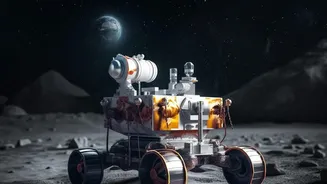
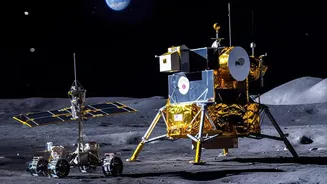
Confirming water is one thing; knowing where to find it in accessible, mineable quantities is another. That is the next critical step. Future missions are being designed specifically for this purpose. NASA's Volatiles Investigating Polar Exploration Rover (VIPER) was designed as a golf-cart-sized robot to prospect for water ice at the lunar south pole. Equipped with a drill and spectrometers, its goal was to create the first-ever resource maps of another celestial body, identifying where ice is concentrated and how deep it is buried. Although the original mission was discontinued due to funding issues, NASA is exploring partnerships to get VIPER to the Moon. Other international missions, like a planned European and Japanese rover, are also targeting the lunar poles to understand the distribution and potential of this vital resource.