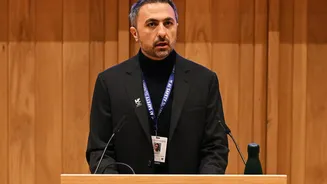







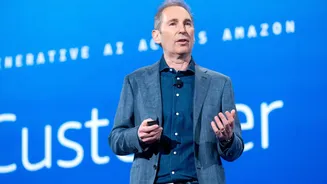
The CEO of AI firm Anthropic, Dario Amodei, recently made a bold prediction: diseases like cancer could be relics of the past in under a decade. This isn't just a hopeful soundbite; it's a claim rooted in the belief that AI can supercharge medical research.
The Billion-Dollar Question
The statement from Dario Amodei, whose company Anthropic develops the AI model Claude, has ignited both excitement and scepticism. He argues that AI can compress 50 to 100 years of medical progress into just five to ten. His optimism is shared by other tech leaders, like Google DeepMind's Demis Hassabis, who point to AI's ability to tackle problems that have stumped scientists for generations. For Amodei, the mission is personal; he was successfully treated for cancer and lost his father to Hepatitis C just a few years before a cure became widely available. This personal experience fuels his urgency, believing that accelerating research by even a few years can have a profound human impact. Anthropic is already putting this vision into practice, partnering with pharmaceutical companies like Bristol Myers Squibb to speed up drug discovery.
How AI Enters the Lab
So, how exactly could a computer program help cure cancer? The answer lies in its ability to process vast amounts of complex biological data at superhuman speed. One of the biggest breakthroughs has been in understanding proteins, the microscopic machines that drive biological processes. AI systems like DeepMind's AlphaFold have predicted the 3D structures of millions of proteins, a task that used to take years of lab work. This is a game-changer for drug discovery. Many cancer drugs work by fitting into a specific 'binding pocket' on a protein, like a key in a lock. AI can now rapidly identify these pockets, even ones previously unknown to science, dramatically speeding up the search for effective drug candidates. Instead of screening millions of compounds randomly, scientists can use AI to design molecules precisely engineered to hit a specific cancer-driving target.
From Code to Clinical Trials
The applications extend far beyond basic research. AI is already being used to make cancer care more precise and personal. In oncology, AI tools are helping to analyze medical images with a level of detail humans can't see, improving the accuracy of diagnoses. Researchers are also using AI to analyze lab-grown 'organoids'—tiny replicas of a patient's tumour—to test hundreds of drugs simultaneously and predict which therapy will be most effective for that individual. This moves medicine away from a one-size-fits-all approach. Furthermore, AI can optimize clinical trials by identifying the right patients for a study, potentially reducing the time and enormous cost—often over a billion dollars—required to bring a new drug to market.
A Reality Check on the Revolution
Despite the immense potential, the road to an AI-driven cure is filled with obstacles. Pharmaceutical executives and medical experts caution that identifying a promising molecule is only the first step. A drug must still undergo years of rigorous clinical trials to prove it is both safe and effective for humans, a process AI cannot bypass. Then there are the regulatory hurdles. Few AI-driven tools have reached the clinic yet because of challenges in validating their effectiveness and ensuring they are safe and unbiased. Many AI models are also 'black boxes', meaning even their creators don't fully understand how they arrive at a conclusion, a major concern in life-or death medical decisions. Finally, 'cancer' is not a single disease but hundreds of different ones, each with its own complex biology, making a single universal cure highly unlikely.