




A Flood of Lunar Data
In early October, NASA unveiled the complete scientific dataset from the Artemis II mission, which took four astronauts on a journey around the Moon in April 2026. The public release includes over 800 gigabytes of information, featuring more than 11,000
full-resolution images and videos. This data, gathered for the first time by human observers in deep space since the Apollo era, provides an unprecedented new perspective. The collection also contains 8.5 hours of audio recordings detailing the crew's scientific observations as they happened, along with images the astronauts annotated themselves in real-time. This combination of high-fidelity imagery and direct human insight is already helping scientists plan for future missions, including the upcoming Artemis III landing.
The Moon in True Colour
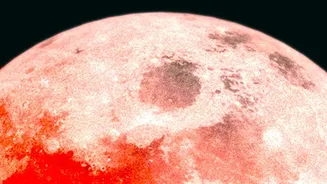
One of the most striking revelations from the mission is what the Moon actually looks like up close. While it appears greyish-white from Earth, the Artemis II crew reported seeing a surprising palette of subtle hues across the lunar surface, including shades of brown, tan, blue, and even green. These colours are not just beautiful; they are geological clues. Blue tones can point to titanium-rich volcanic rocks, while browns and reds indicate varying levels of iron. Mission Specialist Christina Koch was particularly struck by the Aristarchus Plateau, a volcanic region she described as looking like 'a jaundiced cheek of the Moon' due to its distinct yellow shades. These observations, made by a crew trained extensively in geology, help scientists map the mineral and resource composition of the Moon with far greater nuance.
Scouting for a New Era
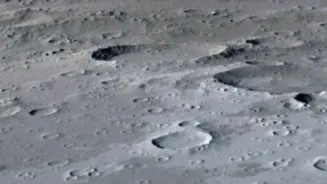
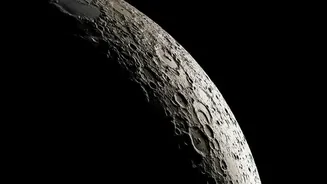
A primary objective for Artemis II was to use its unique vantage point to scout the lunar surface for future missions. The crew paid special attention to the lunar terminator—the line between day and night—where low-angle sunlight casts long shadows, revealing the rugged terrain in sharp detail. Pilot Victor Glover called it the 'most striking thing' he saw, as the lighting conditions there closely mimic those at the Moon's South Pole. This region is a top candidate for future Artemis landings and a potential long-term human presence because it contains permanently shadowed craters believed to hold water ice. The detailed imagery of crater depths, peaks, and surface textures will be critical for certifying safe landing zones for Artemis III and identifying areas of high scientific interest.
Flashes in the Dark
Beyond geological mapping, the crew's continuous observation yielded unexpected results. While orbiting the far side of the Moon, the astronauts witnessed and recorded five faint 'pinprick' flashes of light on the shadowed surface. After analysis, the science team confirmed these were meteoroid impacts—small space rocks hitting the Moon. While astronauts on Apollo 17 had noted similar phenomena, the ones seen by the Artemis II crew were likely the faintest ever observed by the human eye. These direct observations provide a valuable new dataset that helps scientists better understand the frequency of such impacts, a crucial factor for ensuring the safety of future lunar habitats and astronauts working on the surface.
Human Eyes, Scientific Value
The massive data release underscores the unique value of human explorers. While robotic probes provide invaluable data, the Artemis II mission demonstrated how astronauts can integrate and interpret their surroundings in real-time. Their ability to notice subtle colour variations, identify unexpected phenomena like impact flashes, and provide contextual descriptions adds a layer of richness that complements robotic data. The crew's training allowed them to make quick decisions about what to photograph and document, creating a curated scientific record that is far more than just a collection of random snapshots. The insights from their journey will not only pave the way for humanity's return to the lunar surface but also deepen our fundamental understanding of how the Moon, and our solar system, came to be.