


Our Sun, A Turbulent Neighbour
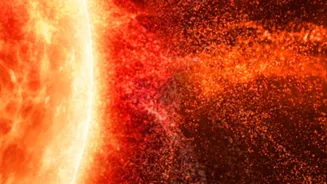
Space is not as empty as it seems. Our Sun is a dynamic and active star that constantly sends a stream of charged particles, known as the solar wind, across the solar system. Occasionally, it unleashes much more powerful bursts of energy and matter. These
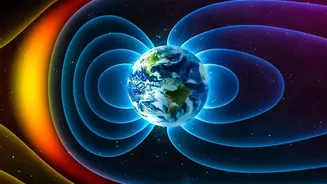
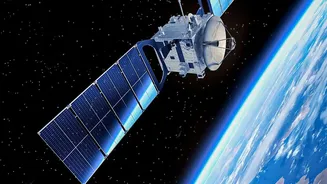
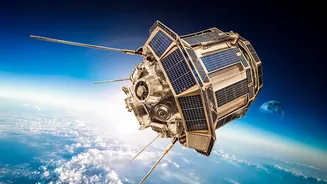
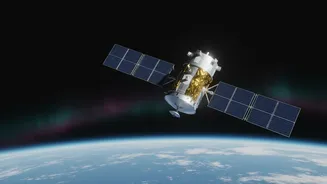
events, called solar flares and coronal mass ejections (CMEs), are the primary drivers of what we call space weather. When a CME is aimed at Earth, it can interact with our planet's magnetic field and atmosphere, creating spectacular auroras but also posing a significant threat to our technology-dependent society. While Earth’s atmosphere protects us on the ground, the hundreds of thousands of satellites orbiting above are on the front line.
The Danger to Orbital Assets
Space weather affects satellites in two main, destructive ways. The first is atmospheric drag. During a geomagnetic storm, energy from the Sun heats and expands Earth's upper atmosphere. For satellites in Low Earth Orbit (LEO)—home to massive constellations like Starlink—this increased atmospheric density acts like a brake, causing them to lose altitude. In a dramatic 2022 incident, a moderate solar storm caused the premature re-entry and loss of up to 40 newly launched Starlink satellites. The second threat is radiation. High-energy particles from a solar storm can bombard a satellite, damaging its electronics, causing phantom commands, and degrading its solar panels, shortening its operational lifespan by years. In severe cases, this can lead to total system failure.
A Race Against the Solar Wind
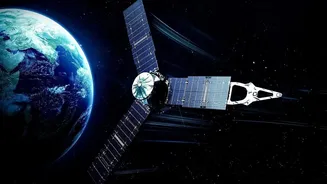
Until now, our best warning system has been a fleet of satellites positioned at a point 1.5 million kilometres from Earth, called Lagrange Point 1 (L1). These spacecraft, like NOAA’s DSCOVR, directly measure the solar wind as it rushes past. This gives forecasters crucial data, but a major drawback is time. For the fastest-moving CMEs, the warning time between the satellite detecting the storm and it hitting Earth can be as short as 15 to 30 minutes. While this is better than nothing, it leaves satellite operators and power grid managers scrambling to react. In a world where every minute counts, a longer lead time is desperately needed.
Smarter Forecasts with Artificial Intelligence
One of the most promising breakthroughs comes from the world of artificial intelligence. Researchers are now developing AI models that can analyse vast amounts of data from solar observations far more quickly and accurately than previous methods. A leading example is a model called DAGGER (Deep Learning Geomagnetic Perturbation), which can predict where a solar storm will strike on Earth with a 30-minute warning. Notably, the lead author of the paper on DAGGER, Vishal Upendran, is from India’s Inter-University Centre for Astronomy and Astrophysics, highlighting Indian expertise in this global effort. Another model, Surya, developed by IBM and NASA, also uses AI to forecast solar activity. These tools don't necessarily increase the warning window, but they provide much faster and more precise predictions, helping to pinpoint the specific regions and infrastructure at greatest risk.
A New Sentinel in Deep Space
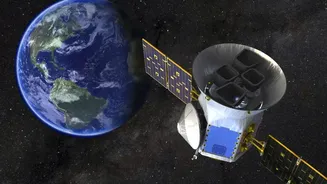
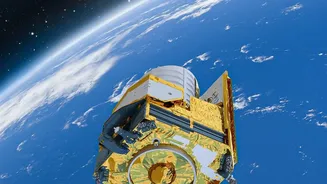
While AI is making our forecasts smarter, another initiative is pushing to make them earlier. The European Space Agency’s HENON mission, scheduled for launch in 2027, will place a small satellite in a special orbit 15 million kilometres from Earth—ten times farther out than our current L1 monitors. By sampling the solar wind much farther 'upstream', HENON is expected to extend the warning time for severe storms from tens of minutes to several hours. A two-to-three-hour heads-up is a game-changer. This isn't just a minor improvement; it's a fundamental shift in how we can prepare for space weather events.
The Value of Extra Time
What can a satellite operator do with a few extra hours of warning? A lot. With more time, operators can calmly and methodically take protective measures. They can put sensitive electronics into a 'safe mode', adjust the satellite's orientation to shield critical components, or even perform small orbital manoeuvres to raise its altitude and counteract the coming atmospheric drag. This proactive approach not only saves the satellite from damage or destruction but also conserves precious onboard fuel that would otherwise be used for emergency corrections. For India's booming digital economy—from the UPI payment systems that rely on precise timing to the logistics and ride-sharing apps that depend on flawless GPS—the stability of this orbital infrastructure is non-negotiable. Better forecasts mean more resilience for the services millions of Indians use every day.