



The Universal Chemistry Hurdle
Remember staring at the periodic table, trying to make sense of valencies, or struggling to balance a chemical equation? You're not alone. Chemistry is consistently ranked as one of the most challenging subjects for students. Its mix of abstract theory,
rigorous mathematics, and spatial reasoning (imagining molecules in 3D) creates a steep learning curve. Traditional classroom settings, with one teacher addressing dozens of students, often can't provide the individual attention needed to bridge these conceptual gaps. This is the problem that Indian and global ed-tech companies are now tackling with a powerful new tool: Artificial Intelligence.
Introducing the AI Chemistry Tutor
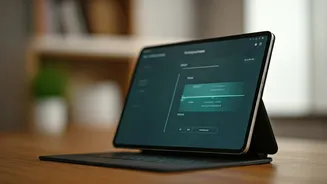
When e-learning first emerged, it was largely a repository of video lectures and digital textbooks—a static library of information. The revolution happening now is far more dynamic. Advanced platforms are integrating AI not just as a content delivery system, but as a personalized pedagogical engine. Think of it less as a pre-recorded lecture and more as a patient, infinitely knowledgeable tutor that adapts to your specific learning style. This AI doesn't just know chemistry; it's designed to understand how *you* learn chemistry, identifying your specific weaknesses and tailoring the experience to help you overcome them.
How AI Actually Explains Molecules
So, how does an AI smoothly explain something as complex as covalent bonds? It’s a multi-pronged approach. First, there's Personalised Learning Paths. The AI will start with a diagnostic quiz to pinpoint your knowledge gaps. If you struggle with stoichiometry but excel at organic nomenclature, it won't waste your time. Instead, it will generate a custom-made lesson plan with more practice problems and simplified explanations for the areas you find difficult. Second, Interactive Simulations are a game-changer. Instead of just reading about a reaction, you can see a 3D model of molecules breaking and forming bonds. You can manipulate variables like temperature and pressure to see the outcome in real-time, turning abstract concepts into tangible, visual experiences. This active participation fosters a much deeper understanding than passive reading.
Socratic Feedback and Conceptual Mastery
Perhaps the most significant innovation is the shift in how feedback is given. If you get a problem wrong, older systems would simply show you the correct answer. An AI-powered tutor employs a Socratic method. It might ask, “That’s close, but have you considered the number of electrons in the outer shell of that atom?” or “What usually happens when a halogen reacts with an alkali metal?” By asking guiding questions, the AI encourages you to think critically and arrive at the solution yourself. This method builds true problem-solving skills and conceptual mastery, which is crucial for competitive exams like the JEE and NEET, where rote memorization is not enough. The goal is to teach you *how* to think like a chemist.
The Ed-Tech Landscape in India
In India's hyper-competitive education market, this technology is finding fertile ground. Major players like Byju's and Vedantu, as well as global platforms like Khan Academy with its Khanmigo AI tutor, are increasingly leveraging these tools. They are marketed as a secret weapon for exam preparation, offering students a way to get round-the-clock, one-on-one support without the high cost of private tutors. By providing endless practice questions that adapt in difficulty and offering instant, detailed feedback, these platforms promise to level the playing field, giving any student with an internet connection access to high-quality, personalized instruction.
Limitations and the Human Element
Despite the immense potential, AI tutors are not a silver bullet. The effectiveness of the technology depends heavily on the quality of the data it was trained on and the pedagogical principles embedded in its design. Furthermore, issues of digital access and affordability remain significant hurdles for many students in India. Most importantly, AI cannot fully replicate the motivational and emotional support of a great human teacher. The ideal future isn't one where AI replaces teachers, but one where it augments them. AI can handle the repetitive drills and personalized practice, freeing up human educators to focus on inspiring curiosity, mentoring students, and fostering collaborative learning in the classroom.