






The Dark Store: An Invisible Factory
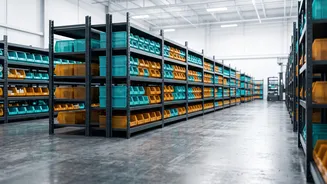
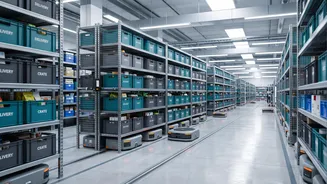
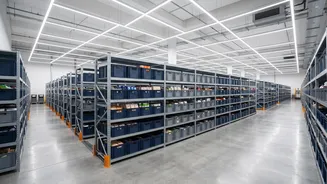
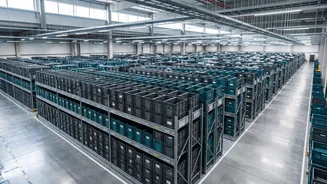
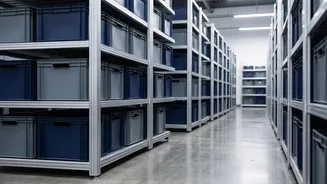
First, let's define the term. A 'dark store' is not a store at all. It’s a small, hyper-local warehouse, typically 2,000 to 5,000 square feet, that is completely closed to the public. Inside, there are no shopping aisles or checkout counters. Instead,
the space is meticulously optimized for a single purpose: speed. Workers, known as 'pickers', navigate shelves to assemble an order in under two minutes, ready for a delivery partner to whisk it away. These facilities are the engine of quick commerce, or q-commerce, allowing companies like Blinkit, Zepto, and Swiggy Instamart to fulfill their promise of delivery in minutes. They achieve this by placing these mini-hubs within a dense two-to-three-kilometre radius of their customers.
Bengaluru: The Epicenter of the 10-Minute War
Bengaluru has become India's dark store capital, with over 629 locations—more than any other city. This concentration is no accident. The city’s notorious traffic, tech-savvy population, and high density of young professionals create the perfect conditions for q-commerce to thrive. For a commuter facing a long journey home, the ability to have groceries arrive in minutes is a powerful value proposition. The result is a fiercely competitive market where Blinkit (165 stores), Zepto (159), and Swiggy Instamart (116) are locked in a battle for neighbourhood dominance, with Flipkart Minutes and BigBasket also in the race. This intense competition means that in areas like HSR Layout, Koramangala, and Bellandur, multiple platforms operate within overlapping delivery zones, a density unseen in most other parts of India.
The National Job Promise vs. The Local Reality
Quick commerce companies often announce staggering national employment figures, positioning themselves as major job creators. Projections suggest the gig economy could engage 23.5 million workers by 2029-30. However, a city-level snapshot of Bengaluru paints a far more nuanced picture. These jobs are overwhelmingly in the gig economy, comprising delivery partners and dark store pickers. While offering flexibility, these roles often come with income instability, a lack of social safety nets like health insurance or paid leave, and long hours for those relying on it as their primary income. The high attrition rate means platforms are constantly hiring; one estimate suggests Bengaluru's market needs 11,300 to 22,600 new hires annually just to maintain its workforce. This churn, combined with the nature of the work, challenges the narrative of stable, long-term employment presented in national forecasts.
More Than Jobs: The Reshaping of Urban Space
The focus on job numbers also obscures a more profound transformation happening to Bengaluru's urban fabric. Dark stores are fundamentally altering the real estate market. They are taking over ground-floor commercial spaces once occupied by traditional retailers, driving up rental rates in residential neighbourhoods by as much as 20-25%. This creates a ripple effect. Landlords may now favour the higher, more reliable rent from a q-commerce company over a local kirana store, contributing to the displacement of small, community-based businesses. Furthermore, the constant buzz of delivery riders creates new pressure points, with resident complaints about noise and chaotic parking in residential zones becoming more frequent. These stores also exist in a regulatory grey area, often operating as warehouses in zones designated for retail, posing a challenge for urban planners.
Why the City-Level View Is Critical
A national statistic claiming hundreds of thousands of jobs is an abstraction. It tells you nothing about the quality of those jobs, the pressure on local infrastructure, the displacement of legacy businesses, or the changing character of a neighbourhood. The story of Bengaluru's dark store boom reveals that the true impact of this business model is hyperlocal. It is felt on specific streets, in the viability of the corner kirana store, and in the daily lives of gig workers trying to make a living. By examining the trade-offs at a city level—convenience for consumers versus precarity for workers, real estate booms for landlords versus displacement for small retailers—we get a far more honest assessment of what this 'revolution' truly costs and who pays the price. The granular, on-the-ground reality of one city provides a better forecast for the future of urban India than any national number ever could.