








Beyond the Smoky Skies
For years, the conversation around the environmental impact of fireworks, especially during massive celebrations like Diwali, has centred on air quality. The thick smog that blankets cities, the spike in particulate matter, and the immediate respiratory
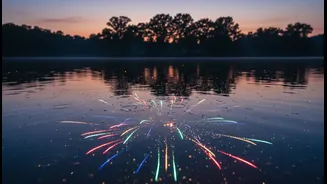
effects are well-documented problems. This has led to public health advisories and calls for 'green crackers'. However, new and emerging research is shifting the focus from what goes up to what comes down, and more specifically, what washes into our water systems after the celebrations end. This growing body of evidence shows that the fallout from fireworks introduces a cocktail of chemicals into rivers, lakes, and even groundwater, presenting a different kind of environmental challenge.
The Chemical Fallout in Our Water
When fireworks explode, they release a variety of substances. The brilliant colours are produced by burning metal salts: strontium for reds, barium for greens, and copper for blues. The propulsion is often powered by oxidisers like perchlorate. After the show, the debris—including partially burned fuel, charred packaging, and chemical residues—settles on the ground. Rain and cleanup efforts then wash these materials into storm drains, rivers, and lakes. Laboratory studies have confirmed that when this firecracker litter comes into contact with water, it leaches significant amounts of metal ions and other compounds, altering the water's fundamental chemistry.
Perchlorate: A Primary Concern
A key chemical of concern is perchlorate. Used as an oxidant to help fireworks burn, this compound dissolves easily in water. Studies conducted near fireworks display sites have shown dramatic spikes in perchlorate levels in adjacent water bodies shortly after events. One study found concentrations can increase by 24 to over 1000 times the baseline level within 14 hours of a fireworks display. While these levels often decrease over several weeks, the repeated, annual shock to the system is a worry for ecologists. Perchlorate is known to interfere with iodine uptake in the thyroid gland, which can affect hormone production and metabolism in both wildlife and humans who may rely on that water.
A Cocktail of Heavy Metals
It's not just perchlorate. Heavy metals used for colouration also end up in the water. One study of New York's East River after a major display found that levels of zinc, lead, and copper more than doubled in water samples. These metals don't break down; they persist in the environment. In aquatic ecosystems, they can be toxic to fish and other organisms, affecting their growth, reproduction, and overall health. This chemical influx can disrupt microbial communities that form the base of the aquatic food web, with potential ripple effects throughout the ecosystem.
What Can Be Done?
The research highlights a clear path toward mitigating this form of pollution. The most effective step is rigorous and prompt cleanup of all firework debris, preventing it from ever reaching waterways. For large, organised displays, particularly those near water, containing runoff and properly disposing of duds and shell fragments is critical. On a broader scale, the findings add urgency to the development and adoption of cleaner firework technologies. Some manufacturers are exploring formulations with lower perchlorate content. For the public, awareness is the first step. Understanding that the impact of a firecracker extends beyond the initial bang and flash encourages more responsible celebration and better post-festival cleanup practices. This shift in scientific focus from air to water pollution doesn't diminish the concerns about air quality, but rather adds a new, critical dimension to understanding the full environmental cost of our most explosive celebrations.