




A Sanctuary for Starlight
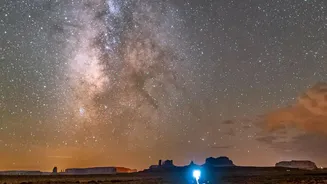
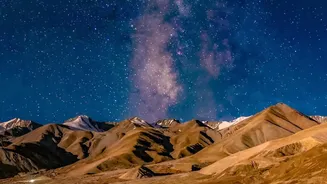
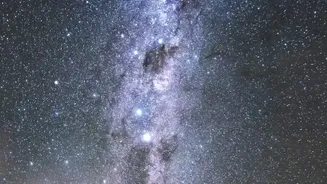
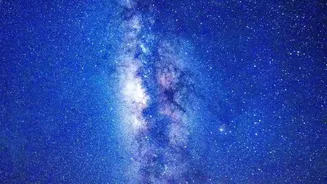
Imagine a sky so dark that the Milky Way appears not as a faint haze, but as a brilliant, textured river of light. This is the nightly reality in Hanle, Ladakh, which was officially designated as India's first Dark Sky Reserve in December 2022. A Dark Sky Reserve is a dedicated
area that restricts artificial light pollution to conserve and protect the natural darkness of the night sky. The Hanle Dark Sky Reserve (HDSR) covers a roughly 22-kilometre radius within the larger Changthang Wildlife Sanctuary, creating a protected zone for astronomical observation and ecological preservation. This initiative, a collaboration between the Ladakh Union Territory administration, the Ladakh Autonomous Hill Development Council (LAHDC), and the Indian Institute of Astrophysics (IIA), marks a significant milestone for science and conservation in India.
Why Hanle is India's Cosmic Vantage Point
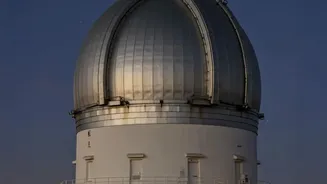
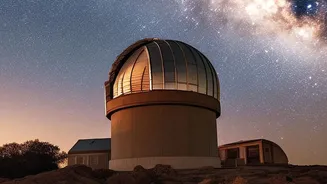
Hanle's selection was no accident. Located on the Changthang plateau at a breathtaking altitude of 4,500 metres, it is one of the highest and driest places on Earth. This cold desert environment offers exceptionally clear skies, minimal humidity, and around 300 cloud-free nights a year, creating near-perfect conditions for peering into the universe. Its remoteness has been its greatest asset, keeping it naturally free from the light pollution that plagues urban areas. These unique attributes are why the Indian Institute of Astrophysics established the Indian Astronomical Observatory (IAO) here back in 2001. The reserve’s skies are rated Bortle 1, the darkest classification possible, a rare honour shared by only a handful of places worldwide, making it an invaluable asset for scientists studying faint celestial objects.
The Network of People and Policy
The term 'network' in the headline refers not to a physical chain, but to the robust partnership between scientists, local communities, and administrators. The reserve operates under a formal memorandum of understanding to manage and minimise light pollution. This includes strict guidelines for local villages, where homes are now fitted with downward-facing, low-intensity lamps and thick curtains to prevent light spill. Even vehicle headlights are regulated within the core zone to maintain the pristine darkness. This collaborative effort ensures that as the region develops, its most valuable natural resource—the dark sky—remains untarnished for scientific research and a new wave of sustainable tourism.
From Pastoralism to Astro-Preneurs
The Hanle Dark Sky Reserve is more than a scientific project; it is a powerful engine for socio-economic change. The initiative is transforming the local economy, which traditionally relied on pastoralism. A key component is the promotion of astro-tourism, creating new livelihoods for the local community. The administration, in partnership with the IIA, has trained dozens of local villagers, many of them women, as 'Astronomy Ambassadors' or 'astro-preneurs'. These guides are equipped with telescopes and trained to lead stargazing sessions for tourists, offering an authentic and expert-led experience. Local homestays are being upgraded to cater to tourists, ensuring that the economic benefits of tourism are directly channeled back into the community, fostering a sustainable model where science and local culture thrive together.
Visiting This Celestial Paradise
For travellers seeking an experience beyond the ordinary, Hanle offers a journey to the cosmos. Reaching the reserve involves a multi-hour drive from Leh, traversing stark and beautiful high-altitude terrain, for which special permits are required due to its proximity to the border. Visitors should be well-prepared for the high altitude, which necessitates proper acclimatisation, and the basic but comfortable accommodation in local homestays and guesthouses. The reward is an unparalleled view of the universe. Beyond stargazing, visitors can explore the 17th-century Hanle Monastery and experience the unique culture of the Changthang region. The reserve is a testament to how we can protect our natural heritage, advance scientific knowledge, and empower remote communities all at once.