

The Sun’s 11-Year Temper Tantrum
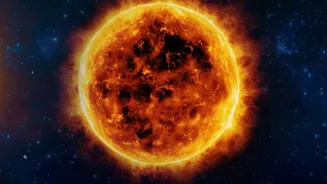
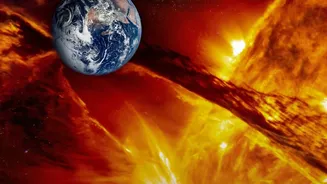
The Sun isn't the steady, unchanging ball of fire it appears to be. It goes through an approximately 11-year cycle of activity, moving from a quiet period (solar minimum) to a turbulent peak (solar maximum). We are currently in Solar Cycle 25, which has
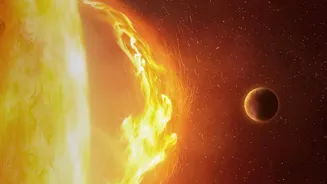
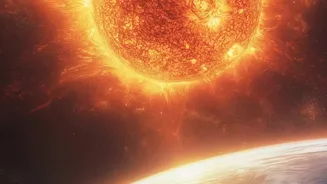
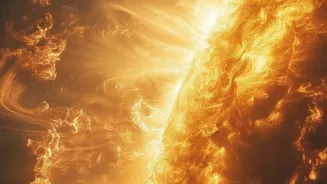
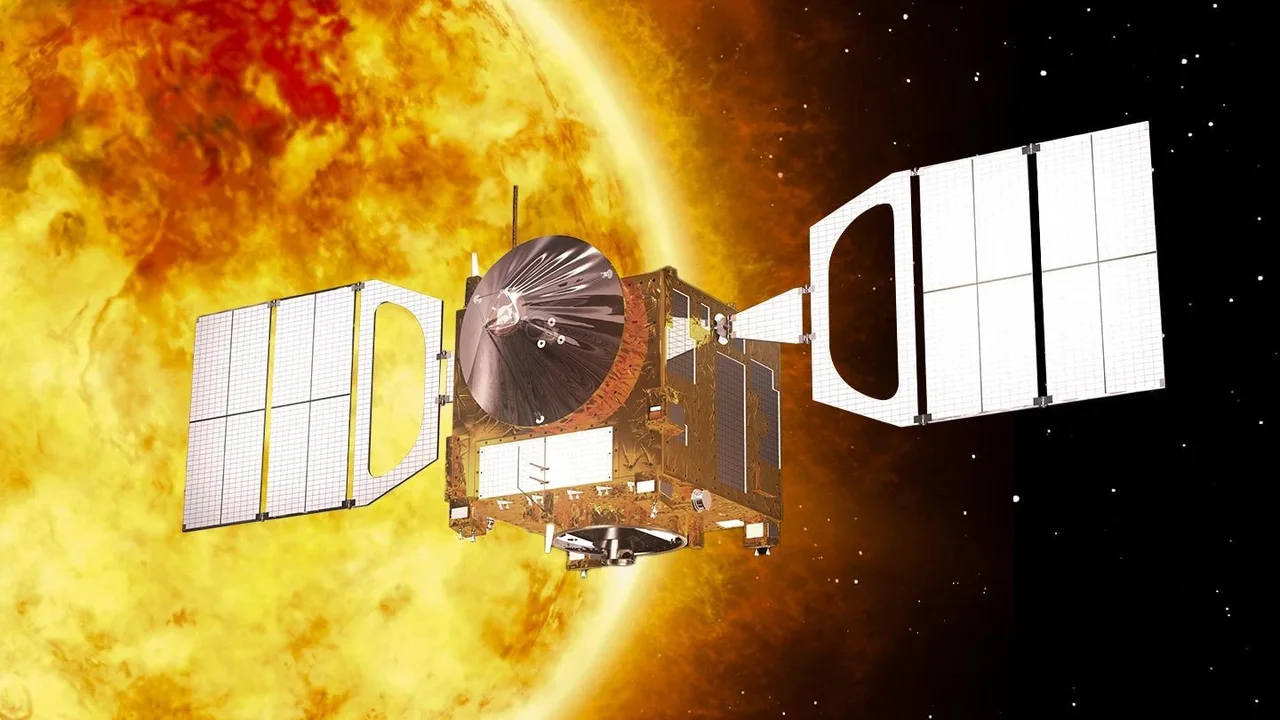
been ramping up faster and more intensely than initially predicted, with its peak activity expected around 2024-2025. During a solar maximum, the Sun's surface erupts with more solar flares and massive explosions of plasma called Coronal Mass Ejections (CMEs). These events send enormous amounts of energy and charged particles hurtling through space. If Earth is in the path of one of these blasts, it can trigger what's known as a geomagnetic storm.
How Your Phone Finds Its Way
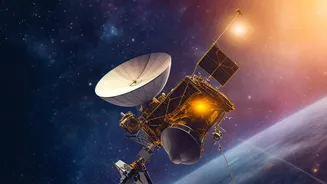
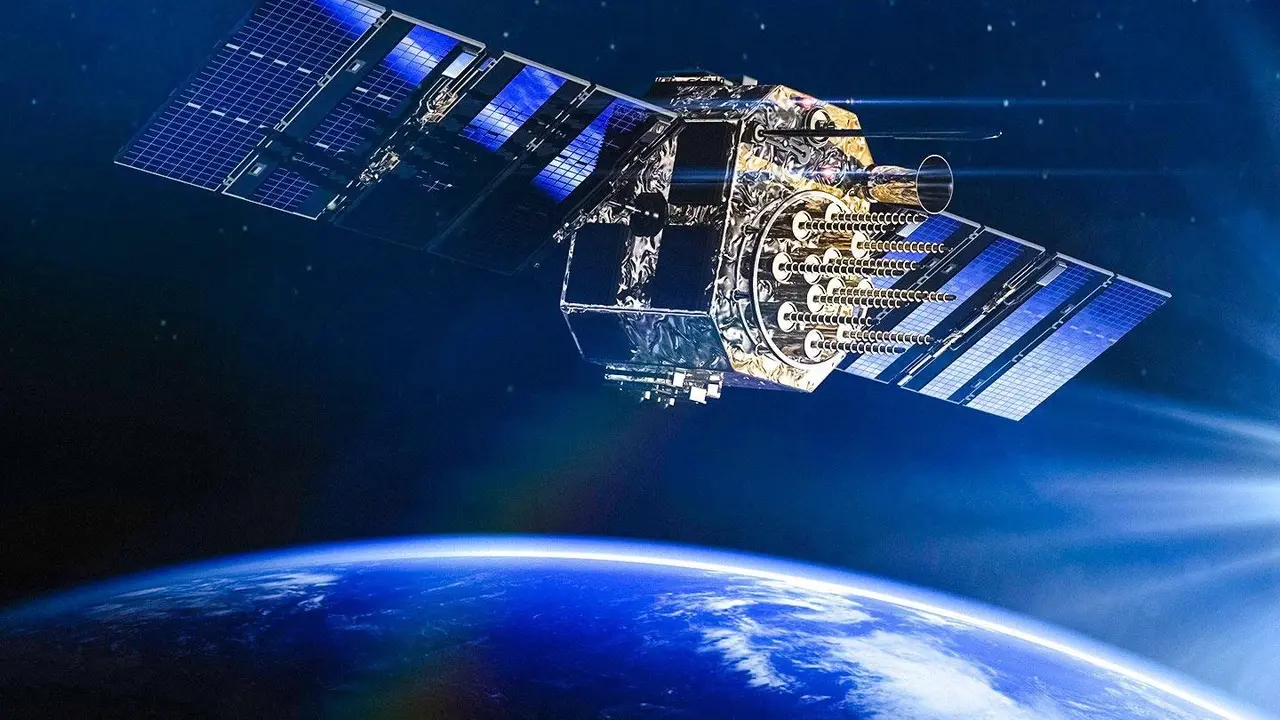
Before we connect the dots, let's quickly recap how Global Navigation Satellite Systems (GNSS), including the familiar GPS, work. A network of satellites orbiting Earth constantly broadcasts signals. Your receiver—whether in your smartphone, car, or an airplane—picks up signals from multiple satellites. By calculating the time it takes for each signal to arrive, the receiver can triangulate its precise location on the planet. For this to work, the signals need a clear and predictable path from the satellite to your device. The system is designed to account for a normal, 'quiet' state of the atmosphere.
Earth's Charged Atmospheric Shield
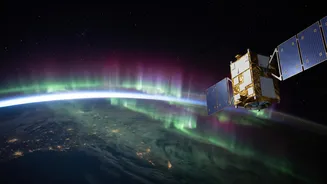
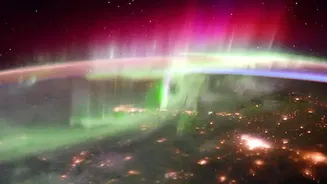
The problem starts in a layer of Earth's upper atmosphere called the ionosphere, which extends from about 50 to 1,000 kilometres high. This layer is full of electrically charged particles (ions and electrons) created when the Sun's radiation interacts with atmospheric gases. GNSS signals must pass through this layer to reach us. Normally, navigation systems can model and correct for the standard delay caused by the ionosphere. However, during a solar maximum, this atmospheric layer becomes supercharged and highly unstable.
When Solar Storms Scramble Signals
When a CME or a powerful solar flare hits Earth, it bombards the ionosphere with energy and particles. This dramatically increases the density of electrons, a measure known as Total Electron Content (TEC). This supercharged environment slows down and bends the GNSS signals much more than usual, introducing significant delays and errors that standard models can't predict. Furthermore, the turmoil creates small-scale, rapid fluctuations in the signal's strength and phase, a phenomenon called 'scintillation'. Imagine trying to see a light at the bottom of a swimming pool while someone is splashing vigorously—the light appears to flicker and move erratically. That's scintillation, and it can be so severe that a receiver loses its lock on a satellite's signal entirely.
Real-World Glitches and Consequences
These errors aren't just a minor inconvenience. A deviation of a few metres might make your ride-hailing app think you're across the street, but it can have serious consequences for industries that rely on centimetre-level accuracy. In agriculture, precision farming equipment can malfunction, as seen during storms in 2024 when GPS-guided tractors were disabled. In aviation, flight paths may need to be rerouted to avoid polar regions where effects are strongest. Shipping, logistics, construction, and autonomous vehicle development are all vulnerable to these solar-induced navigation errors, which can be as large as 10 metres or more during severe events.
Forecasting and Fighting Back
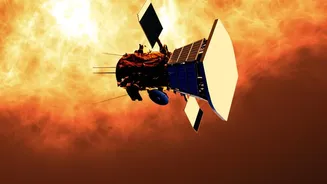
Fortunately, we are not entirely defenseless. Scientists at agencies like NASA and NOAA constantly monitor the Sun, providing forecasts for space weather. On the technology side, using receivers that can track multiple GNSS constellations (like GPS, Galileo, GLONASS) provides more satellite options, improving the odds of maintaining a stable lock. Advanced techniques like Real-Time Kinematic (RTK) positioning, which uses a fixed ground station to correct for atmospheric errors, can dramatically improve accuracy even during a storm. Researchers are also developing machine learning models to better forecast where ionospheric disturbances will occur, aiming to make our navigation systems more resilient.