






A New Philosophy of Ambition
The Indian Space Research Organisation (ISRO) is undergoing a fundamental strategic shift. Historically celebrated for its frugal engineering and high success rate on the first attempt, the agency is now embracing a more dynamic and risk-tolerant approach.
This 'test mode' signifies a pivot towards rapid, iterative development, where missions are designed to push technological boundaries, even if it means not every test is a complete success. It's a philosophy necessitated by the accelerating pace of the global space race, where powers like the US, China, and private entities like SpaceX are making giant leaps. This new strategy isn't about abandoning caution, but about accepting that to innovate quickly, one must also be prepared to test, learn, and iterate at a much faster rate.
Pushpak: The Reusable Revolution
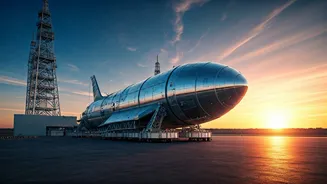
The most visible symbol of this new era is the Reusable Launch Vehicle (RLV), nicknamed 'Pushpak'. This winged vehicle is India's answer to the space shuttle and aims to drastically cut the cost of launching satellites and, eventually, humans into orbit. In June 2024, ISRO successfully completed the third and final Landing Experiment (LEX-03) in Chitradurga, Karnataka. In this critical test, Pushpak was released from a Chinook helicopter at an altitude of 4.5 km and had to autonomously navigate severe wind conditions to perform a precise, high-speed landing at over 320 kmph. The successful completion of these landing tests has validated the complex guidance algorithms needed for a vehicle returning from orbit and paves the way for the next phase: an orbital re-entry test. Pushpak is the cornerstone of India’s ambition for affordable and routine access to space.
Gaganyaan: India's Human Frontier
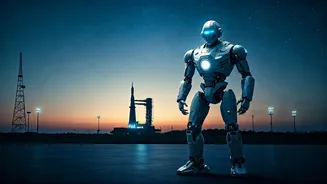
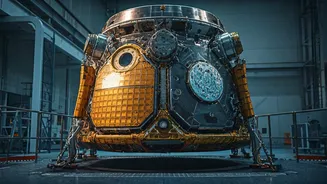
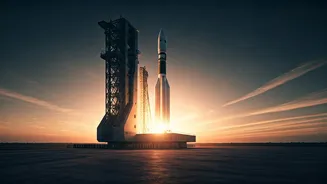
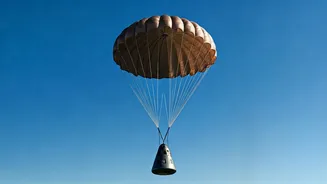
The ultimate test of any major space power is the ability to send humans into space and bring them back safely. The Gaganyaan mission is ISRO's program to do just that, sending a crew of three astronauts into a 400 km orbit for three days. This is an incredibly complex undertaking, requiring a human-rated launch vehicle (HLVM3), advanced life support systems, and a foolproof crew escape system. The program is in a deep testing phase, with thousands of ground tests already completed. Before the first crewed flight, currently anticipated around 2027, ISRO will conduct a series of uncrewed missions to validate every system. The first of these, the G1 mission, will carry the humanoid robot Vyommitra to simulate human presence and test life support systems. The relentless focus on testing and safety underscores the immense stakes of human spaceflight.
Building a Home in the Heavens
Beyond Gaganyaan, ISRO's ambitions are even grander. The roadmap includes the Bharatiya Antariksh Station (BAS), India’s own modular space station. The plan is to launch the first module by 2028, with the full station expected to be operational by 2035. This orbiting laboratory will allow astronauts to stay for three to six months, conducting long-term experiments in microgravity and serving as a platform for deep-space missions. The development of the BAS, a crewed lunar mission by 2040, and new propulsion systems like the semi-cryogenic engine are all part of this accelerated push. These aren't distant dreams but active projects on ISRO's agenda, signaling a long-term vision for a sustained human presence in space.