





More Than Just Ice
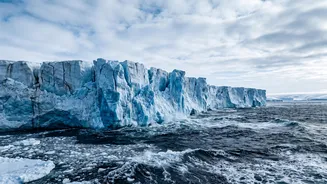
First, it's important to understand why we drill for these ice cores. Each year, snowfall accumulates, compressing the layers below it. Over centuries, this snow turns into solid ice, trapping tiny bubbles of the atmosphere from that time. These bubbles are
pristine samples of past air, allowing scientists to directly measure historical levels of greenhouse gases like carbon dioxide and methane. The ice itself contains chemical isotopes and dust that act as proxies for past temperatures, volcanic eruptions, and even forest fires. By drilling deep, scientists can retrieve a continuous record stretching back hundreds of thousands of years, providing critical context for our planet's current climate changes.
The Heart of the Operation: The Drill
You can't just use any drill to plunge kilometres into an ice sheet. For deep projects, scientists rely on sophisticated cable-suspended electromechanical drills. Picture a long, hollow sonde, sometimes over 13 meters in length, suspended by an armoured steel cable that provides power and communication. At the bottom is a rotating cutting head with sharp blades that shave away a ring of ice, allowing a central, intact cylinder—the core—to slide up into a hollow barrel inside the drill. The entire assembly is a self-contained unit with its own motor, pump, and electronics, all housed in a pressurized compartment to withstand the crushing force of the ice deep below.
Keeping the Hole Open
One of the biggest challenges in deep ice drilling is the immense pressure. Once the drill is more than a few hundred meters down, the weight of the overlying ice will cause the borehole to collapse and squeeze shut as soon as the drill is removed. To counteract this, the hole is filled with a specialized drilling fluid. This fluid must have a density similar to that of ice to provide hydrostatic compensation, a very low freezing point, and be as environmentally benign as possible. Kerosene-based liquids, ester fluids, or other hydrocarbon mixtures are often used. This fluid not only keeps the hole stable but also helps lubricate the drill and circulate ice cuttings away from the cutting head.
The Delicate Process of Retrieval
Drilling happens in stages. The drill cuts down for a few meters, filling its core barrel, which is typically around 4 meters long. When the section is complete, the operator stops the rotation and pulls up on the cable. This engages small, spring-loaded 'core catchers'—sharp knives that grip the bottom of the core and break it free from the ice sheet below. The entire drill sonde is then winched thousands of meters back to the surface, a trip that can take hours. On the surface, the crew disassembles the drill to carefully slide the pristine ice core out. The ice cuttings are removed, the drill is reassembled, and it is sent back down the borehole for the next section. A deep drilling project may require hundreds of these runs over multiple years to reach bedrock.
From Borehole to Laboratory
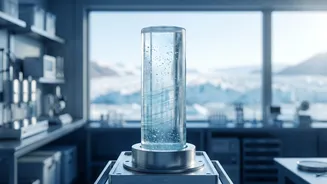
Once an ice core section is extracted, its journey has just begun. The drilling fluid must be cleaned from its surface. The core is logged, measured, and cut into smaller, more manageable pieces for transport. Extreme care is taken to keep the cores frozen at very low temperatures, often below -30 degrees Celsius. If the ice warms up too much, even while remaining frozen, the trapped gas bubbles can be compromised, potentially corrupting the precious atmospheric data within. The cores are eventually shipped in specialized containers from remote field camps in places like Antarctica to laboratories around the world for detailed analysis, unlocking the secrets of Earth's climate past.