




The Hidden Dangers of Mud and Moisture
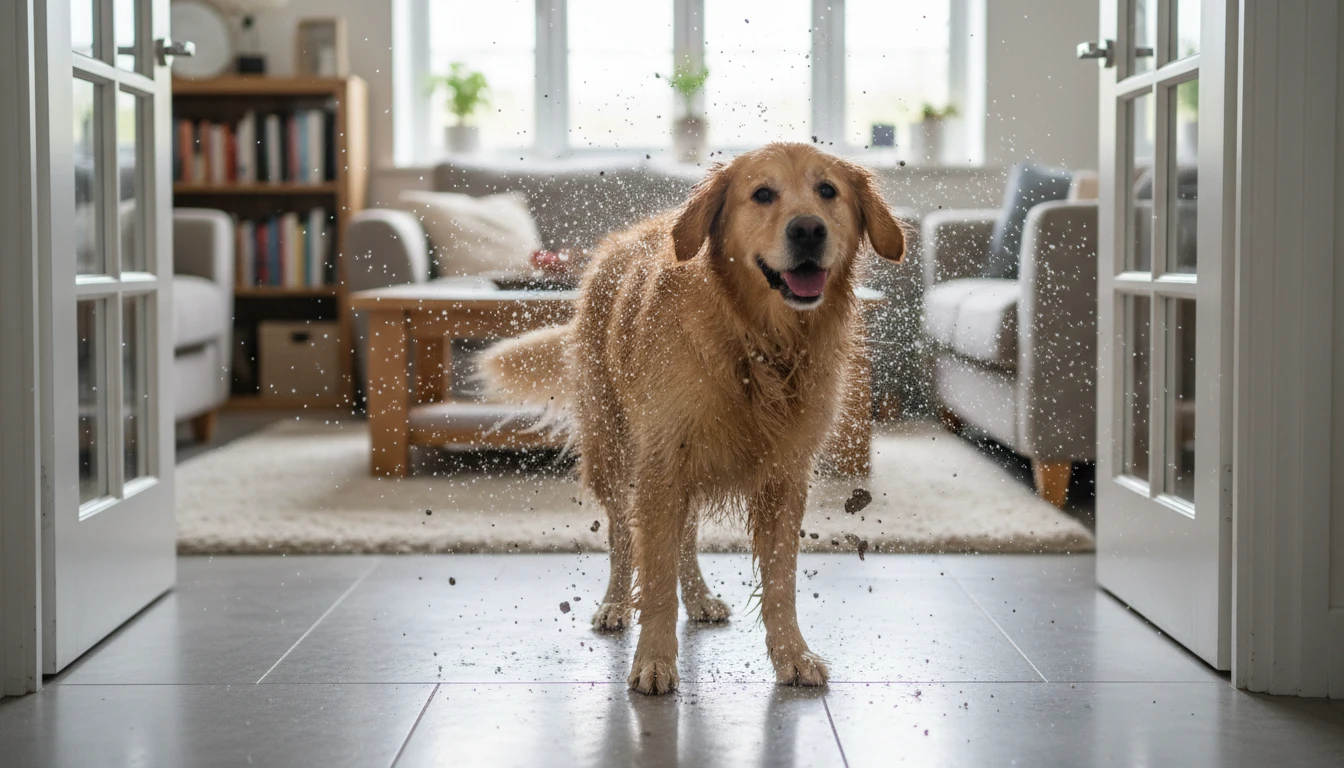
It’s not just about keeping your floors clean. When your dog’s paws are caked in mud and stay damp, it creates a perfect environment for health problems. The spaces between their paw pads can trap moisture, leading to bacterial and fungal infections,
like yeast dermatitis. Signs of trouble include redness, excessive licking, swelling, or an unusual odor. Furthermore, mud and street puddles can hide more than just dirt; they can contain allergens, pesticides, road salts, or even sharp debris like broken glass or thorns that can cause chemical burns, allergic reactions, or painful cuts.
Step 1: Inspect Before You Clean
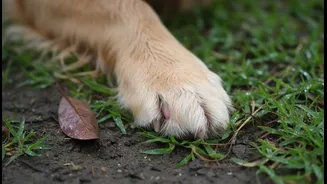
Before you start washing, take a moment for a quick paw inspection. This is easiest when your dog is relaxed. Gently spread their toes and check the pads and the webbing in between for any cuts, scrapes, blisters, or foreign objects. Things like small stones, splinters, or thorns can get lodged in the paw and cause pain or infection if not removed. Also, check for any signs of irritation or inflammation. Regular checks help you catch potential issues early before they become serious problems. For dogs with longer hair, it's also a good idea to keep the fur between their toes trimmed to prevent mud and debris from getting trapped.
Step 2: The Gentle Cleaning Method
For heavily soiled paws, a simple wipe won't be enough. The best approach is a thorough but gentle wash. Set up a cleaning station by your door with a shallow basin of lukewarm water, a few soft towels, and a mild, dog-safe shampoo. Dip each paw into the water, using your fingers or a soft cloth to gently massage and loosen the mud from the pads and between the toes. If you use shampoo, make sure to rinse it off completely, as leftover residue can cause irritation. Convenient tools like paw-washing cups can also be effective for this process.
Step 3: Why Thorough Drying is Crucial
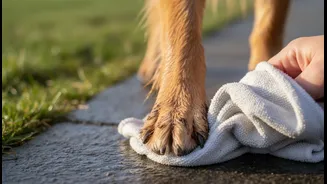
This step is non-negotiable for paw health. Trapped moisture is a primary cause of fungal and bacterial growth, so drying your dog's paws completely is just as important as washing them. Use a clean, absorbent towel to pat each paw dry. Pay special attention to the areas between the toes, where moisture loves to hide. For dogs with thick or long fur, a quick once-over with a hairdryer on a low, cool setting can ensure the paws are perfectly dry, preventing the damp conditions that yeast and bacteria thrive in.
Step 4: Soothe, Moisturize, and Protect
After cleaning and drying, a little extra care can go a long way. Frequent exposure to wet and rough surfaces can leave paw pads dry, cracked, and sore. Applying a thin layer of a dog-safe paw balm or wax can help moisturize the pads and restore their natural barrier. Look for balms with natural, soothing ingredients like shea butter, coconut oil, and beeswax. This not only heals existing dryness but also creates a protective layer that shields the paws from harsh elements on your next walk.