



The Sun's Hidden Temper
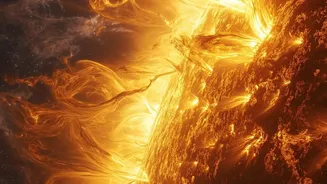
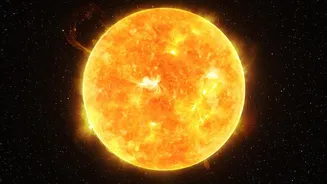
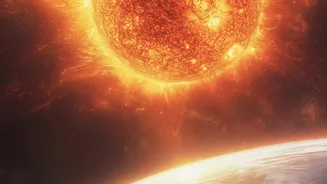
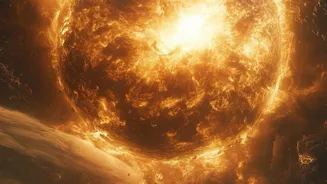
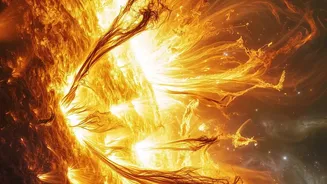
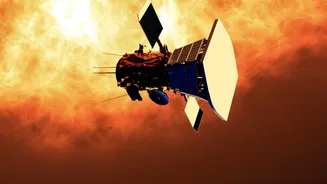
The sun, our life-giving star, has a volatile side. It occasionally erupts, blasting enormous clouds of charged particles and magnetic fields into space. These events are known as Coronal Mass Ejections (CMEs). While most CMEs miss Earth entirely, a direct
hit can have serious consequences. These are not just bigger solar flares; they are massive expulsions of plasma that travel through space and can interact with Earth's own magnetic field, triggering what is known as a geomagnetic storm. The most famous example, the Carrington Event of 1859, fried telegraph systems across the globe and produced auroras visible as far south as the Caribbean. In today's electricity-dependent world, the stakes are unimaginably higher.
Why Power Grids Are Vulnerable
When a powerful CME slams into Earth's magnetic field, it creates rapid and intense fluctuations. This process, through Faraday's law of induction, generates powerful electrical currents on the planet's surface called Geomagnetically Induced Currents, or GICs. These currents seek out the path of least resistance, which often means long-distance, high-voltage transmission lines—the backbone of our power grids. GICs are problematic because they are a quasi-DC current trying to flow through a system designed for AC current. This can cause giant transformers to saturate, overheat, and even suffer permanent damage. The result can be voltage instability, equipment failure, and widespread blackouts, as seen during the 1989 storm that left Quebec without power for hours.
A Planetary Defense Network
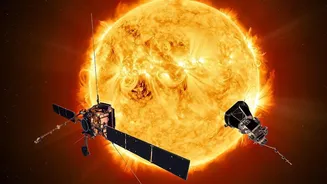
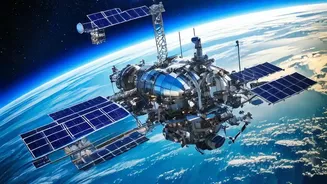
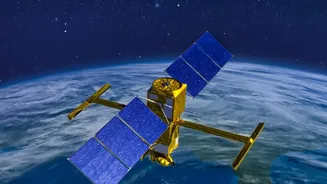
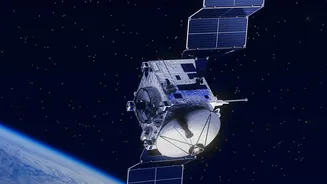
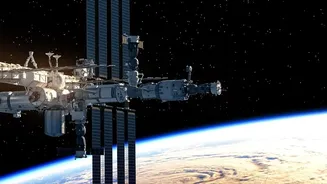
To counter this threat, a sophisticated global network of space and ground-based observatories keeps a constant watch on the sun. Satellites like NOAA's Deep Space Climate Observatory (DSCOVR), positioned at a stable point a million miles from Earth, act as an early-warning buoy. It directly measures the solar wind, providing a crucial 20 to 60 minute lead time before a CME's impact. These satellites work in concert with a host of ground-based observatories and international partners, from ESA in Europe to the new Chinese Meridian Project. Data from all these sources flows to hubs like NOAA’s Space Weather Prediction Center (SWPC) in the United States, which operates 24/7 to analyse the data and issue forecasts, watches, and warnings.
From Warning to Action
An early warning is useless unless someone acts on it. When the SWPC issues a geomagnetic storm alert, power grid operators around the world spring into action. Armed with this precious lead time, they can take a series of protective measures to make the grid more resilient. These actions can include postponing non-critical maintenance, bringing extra power generation online to increase system stability, adjusting the load on certain lines, and in some cases, strategically disconnecting sensitive transformers to protect them from damaging GICs. It's a carefully orchestrated dance of operations and engineering, all designed to absorb the blow from the storm and prevent a cascading failure that could lead to a long-term outage.
The Shield Holds Firm
The threat of a grid-crippling solar storm is real, and as our sun enters a more active phase of its 11-year cycle, the risks are increasing. However, the combination of advanced forecasting and proactive grid management has proven effective time and again. Numerous storms that could have caused significant disruption have been weathered with minimal impact thanks to these systems. The ongoing work involves not just better forecasting but also hardening the grid itself. This includes installing devices that can block or redistribute GICs, redesigning transformers to be more resilient, and conducting detailed studies to identify the most vulnerable points in the network. This constant vigilance and innovation ensures that when the next big storm comes, our global power grids are not left in the dark.